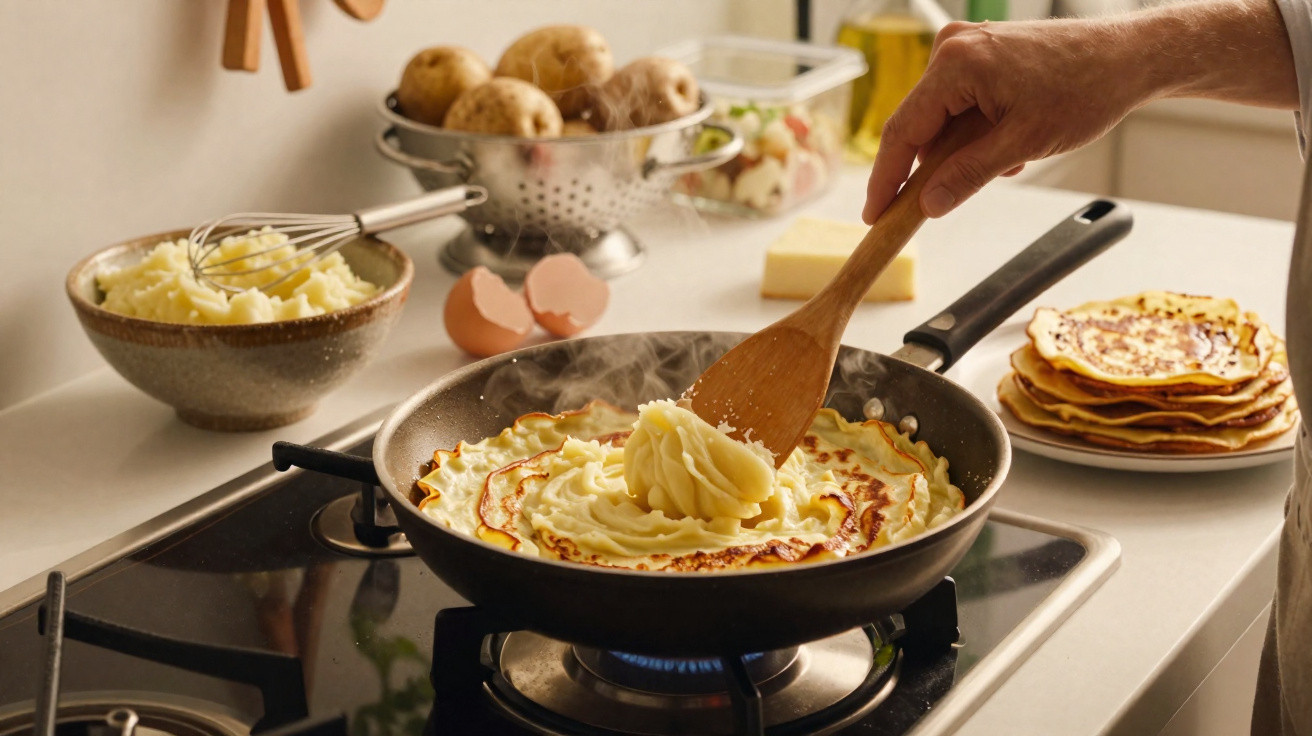
French television chef Laurent Mariotte has transformed the familiar near-empty-cupboard dilemma into an inventive dish: thick, golden parmentier crêpes made with mashed potatoes rather than simply flour and milk. Falling between a pancake and a potato cake, they work equally well for hurried weekday suppers and leisurely weekend brunches.
From classic crêpes to parmentier style
In France, crêpes are generally thin, delicate rounds enjoyed on Candlemas or for Sunday supper, commonly folded with sugar or jam inside. Mariotte’s take is a clear departure from that tradition. His parmentier crêpes are compact, plump and tender, substantial enough for generous toppings while remaining comforting rather than resembling a heavy fried breakfast.
The term “parmentier” provides the essential clue. In French cuisine, it describes a potato-based preparation, referring to the 18th-century agronomist Antoine Parmentier, who promoted the tuber. In this recipe, boiled or steamed potatoes become the batter’s main structural ingredient.
Instead of relying mainly on flour, these crêpes start from creamy mashed potatoes thinned with hot milk and enriched with eggs.
This method links them to “crêpes vonnassiennes”, a speciality from eastern France. Traditionally, these crêpes are thick, buttery and prepared with potato purée, making them more like small potato pancakes than paper-thin Brittany-style crêpes.
What goes into Laurent Mariotte’s potato crêpes?
The ingredients are largely everyday cupboard and fridge staples. That accessibility is central to their appeal: this is a practical Tuesday-night meal, rather than something reserved for a polished television cookery set.
- Cooked potatoes, mashed into a smooth purée
- Hot milk to thin the mash
- Thick cream for added richness
- A little flour
- Eggs to bind the mixture and make it light
- Neutral oil for frying
- Salt and pepper for savoury crêpes, or icing sugar for sweet ones
In the recipe published on French cookery websites, the quantity for four people contains around half a kilogram of cooked potato flesh and four eggs. Potato starch takes the place of some of the flour, creating a soft, pillowy consistency. The mixture is thicker than ordinary pancake batter, more akin to a soft dough that naturally spreads when spooned into a hot frying pan.
The result is a stack of rounded, golden discs that stay moist inside while developing a light crust on the surface.
Step-by-step: from purée to pan
The process has more in common with preparing mashed potato than with making conventional crêpes. That distinction is important to achieving the intended texture.
Preparing the potato purée
The potatoes must first be thoroughly cooked and reasonably dry. Mariotte recommends a microwave to save time, although boiling or baking them is equally suitable. When soft, they are peeled and pushed through a food mill or potato ricer. This prevents lumps while keeping the purée light.
Next, gradually mix in hot milk. Warm liquid allows the starch to loosen without turning the mash gluey. Thick cream is added afterwards, contributing flavour and ensuring the crêpes stay soft once fried.
Mixing the batter
Sift the flour over the potato purée, then fold it in gently. Only a modest quantity is needed: enough to give the mixture stability so each crêpe stays intact in the pan. Add the eggs individually, beating well after every addition. Cooks can then decide whether to make a savoury or sweet version:
- For savoury crêpes: season well with salt and cracked pepper.
- For sweet crêpes: use very little salt, leave out the pepper and dust with icing sugar after cooking.
The finished batter needs to be thick but easy to spoon. When a ladleful is placed in an oiled pan, it should spread into a small circle roughly the size of a traditional American pancake.
Frying until golden and fluffy
A neutral oil, such as grapeseed oil, is ideal because it withstands high temperatures without affecting the flavour. When the pan begins to shimmer, add a small ladleful of batter. Fry each crêpe for several minutes on each side, until deeply golden and cooked through at the centre.
Think of them as mini potato pancakes with a crêpe soul: soft inside, nicely coloured outside.
For four people, the complete recipe takes around 30 minutes to prepare and 30 minutes to cook. Using leftover mashed potato rather than making fresh purée cuts the time considerably, making it a realistic answer to a dish of potato left from the previous evening’s meal.
Sweet, savoury and zero-waste ideas
The appeal of parmentier crêpes lies largely in their versatility. Depending on their topping, they can be served for breakfast, dinner or pudding.
Sweet versions for brunch or dessert
Simply served warm and dusted with icing sugar, they already make an appealing treat. The mild potato taste recedes, leaving a soft, almost custard-like middle that suits familiar accompaniments including:
- Fresh berries or sliced apples
- Fruit compote or jam
- Greek yoghurt or crème fraîche
- Maple syrup or honey
As the batter contains less flour than most pancake recipes, the result is a little denser without becoming heavy. This makes it especially good with tart fruit or tangy dairy toppings.
A full savoury plate in minutes
When made savoury, these crêpes function more like a main meal. Stack them with cheese, fold them around bacon, or serve them beside a bowl of salad leaves. Some French home cooks use them in place of rösti or hash browns, with toppings such as:
- Crisp lardons or streaky bacon
- Soft onions, slowly sautéed
- Grated cheese melted across the warm surface
- Thinly sliced leftover roast chicken or beef
A simple green salad with a sharp vinaigrette offsets their richness. Since the crêpes warm through well in a pan, they can be prepared in advance and refreshed quickly in hot oil.
How this recipe turns leftovers into an asset
One understated advantage of Mariotte’s method is that it reduces waste. Cooked potatoes often sit in the fridge after Sunday roasts or large family meals. Rather than throwing them away two days later, they can form the basis of a complete meal.
| Ingredient | Typical leftover | Role in parmentier crêpes |
|---|---|---|
| Plain mashed potatoes | Side dish from roast dinner | Main base of the batter |
| Roast meat scraps | End pieces and trimmings | Savoury topping or filling |
| Cheese ends | Small leftover chunks | Grated over hot crêpes |
| Wilted salad | Last leaves in the bag | Pan-wilted side or quick garnish |
It also reflects the wider French “cuisine anti-gaspi” movement: food designed to reduce household waste without seeming restrictive. The recipe is useful both as a planned leftover meal and as a way of saving ingredients before they go off.
Why potatoes change the crêpe game
Nutritionally, potatoes offer more than a comforting flavour and texture. They supply carbohydrate, some fibre, potassium and vitamin C. Alongside eggs and dairy, the crêpes can make a fairly balanced meal, particularly when vegetables are served with them.
For families, the recipe offers a way to serve potatoes in a new form that feels fun, especially for children used to fries or mash.
In terms of texture, potato starch retains moisture, keeping the crêpes tender after they cool and even after reheating. Standard crêpes may dry out rapidly, whereas these stay soft, making them useful for batch cooking or meal preparation.
Practical tips and variations at home
Home cooks can adjust the framework of Mariotte’s recipe to suit their own routines without losing what makes it work. A handful of minor changes can alter the result considerably:
- Baked potatoes create a drier, slightly smokier purée with a stronger flavour.
- Replacing some of the cream with yoghurt makes the batter lighter and introduces a subtle tang.
- Herbs such as chives, parsley or thyme move the flavour towards savoury brunch territory.
- Substituting part of the wheat flour with buckwheat flour produces a nuttier finish.
For anyone limiting fat, a non-stick frying pan with only a thin coating of oil will still give a pleasing crust. Potatoes provide a naturally satisfying texture themselves, meaning rich toppings are optional rather than essential.
There is scope to experiment beyond the original style, too. Spoon small portions of batter into the pan to make bite-sized fritters for an apéritif. Alternatively, make larger crêpes as the foundation for a quick “fake pizza”, adding tomato, cheese and herbs before finishing it beneath a hot grill. In every variation, the same uncomplicated principle applies: turn humble or leftover potatoes into something deliberate, warming and slightly special, without needing unusual ingredients or spending hours in the kitchen.

















Comments
No comments yet. Be the first to comment!
Leave a Comment