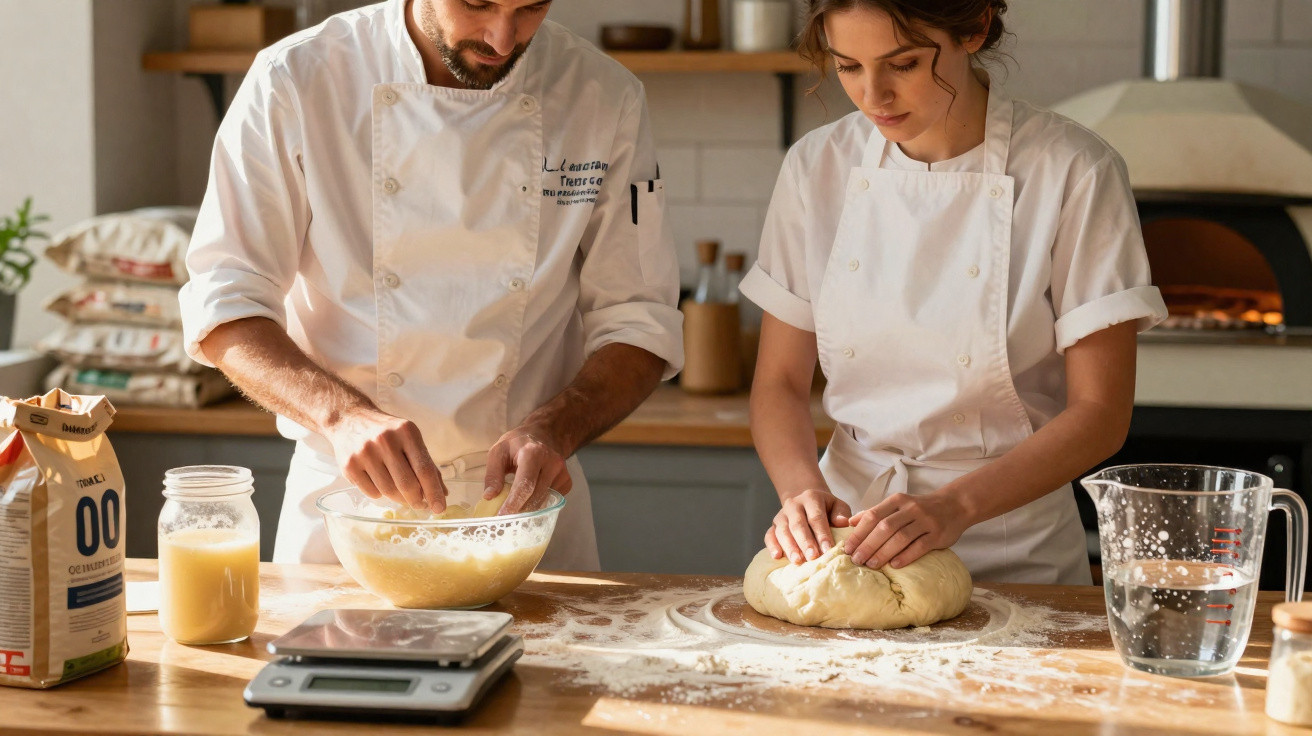
Last Tuesday evening, I watched my neighbour Giuseppe, an Italian man in his seventies who runs three pizzerias in Brooklyn, prepare pizza dough in his garden kitchen. What caught my attention was not the flour scattered across the worktop or the expressive movements he made while kneading. It was his sincere surprise when I mentioned hydration percentages and autolyse methods. “You know about that?” he asked, stopping halfway through a knead. Over the following two hours, he revealed techniques that many home cooks never encounter: methods professional pizzaiolos have discreetly handed down for generations rather than recorded in cookbooks. The difference between restaurant pizza and a homemade version is not simply a matter of the oven.
The Professional Edge Hidden in Plain Sight
Step into the kitchen of any dedicated pizzeria and its dough routine may seem unusual. Flour is weighed rather than scooped into cups. Water temperature is checked with a thermometer, occasionally more than once. More revealing still, the recipe is continually adapted to suit the weather outdoors.
At Tony’s Pizza in Chicago, for instance, the head baker alters the water temperature by 5-10 degrees according to humidity. When it rains, he uses warmer water to offset the additional moisture in the air. In dry winter weather, he puts an extra tablespoon of water into each batch. These are not arbitrary changes; they are deliberate reactions to environmental conditions that most home recipes overlook entirely.
In reality, professional pizza dough does not come from a rigid recipe; it comes from knowing the underlying principles. Temperature, humidity and even altitude influence gluten formation and yeast activity. This is why pizza can fall short when you follow a recipe precisely: the real-time adjustments that matter most are absent.
The Secrets They Actually Use
Giuseppe shared one lesson that changed everything for me: professional pizzaiolos use a preferment. It is not merely any starter, but a 24-hour poolish made with exactly 0.1% yeast by flour weight. That small quantity allows slow, controlled fermentation, producing flavour compounds that standard recipes cannot replicate.
Many home cooks try to hurry the process by adding excessive yeast. We have all wanted pizza this evening rather than tomorrow. Commercial kitchens, however, schedule their dough cycles several days ahead. They understand that patience is not only a virtue; it is a chemical requirement for developing the right gluten structure.
“The dough tells you when it’s ready, not the clock. You have to listen with your hands, not your eyes,” Giuseppe explained while showing me his windowpane test.
Professional pizzaiolos look for these essential signs:
- The dough should pass the windowpane test without tearing
- Surface tension when shaped into a ball
- A slight jiggle when the container is gently shaken
- No strong yeasty smell-just clean, slightly sweet aroma
Beyond the Recipe Books
The most important secret has nothing to do with ingredients. Every batch of flour behaves differently, including batches from the very same brand. Professional bakers recognise this instinctively. Rather than obeying the recipe, they change the water content according to how the dough feels as it is mixed. Some flours take up more moisture, while others build gluten more quickly.
| Key point | Detail | Value for the reader |
|---|---|---|
| 24-hour preferment | Use 0.1% yeast by flour weight | Develops complex flavours impossible with quick methods |
| Environmental adjustments | Modify water temperature based on humidity | Consistent results regardless of weather |
| Flour variability | Adjust hydration by feel, not strict measurements | Perfect texture every time, any brand of flour |
Giuseppe’s lesson in the garden showed me why certain knowledge remains unspoken: not because it is deliberately concealed, but because touch and instinct are difficult to describe. The divide between amateur and professional pizza is not closed with secret ingredients or expensive equipment. It is crossed by recognising that baking is a conversation between you, the ingredients and the environment. Let’s be honest: hardly anyone checks water temperature every time they make dough. Perhaps that is a habit worth adopting.

















Comments
No comments yet. Be the first to comment!
Leave a Comment