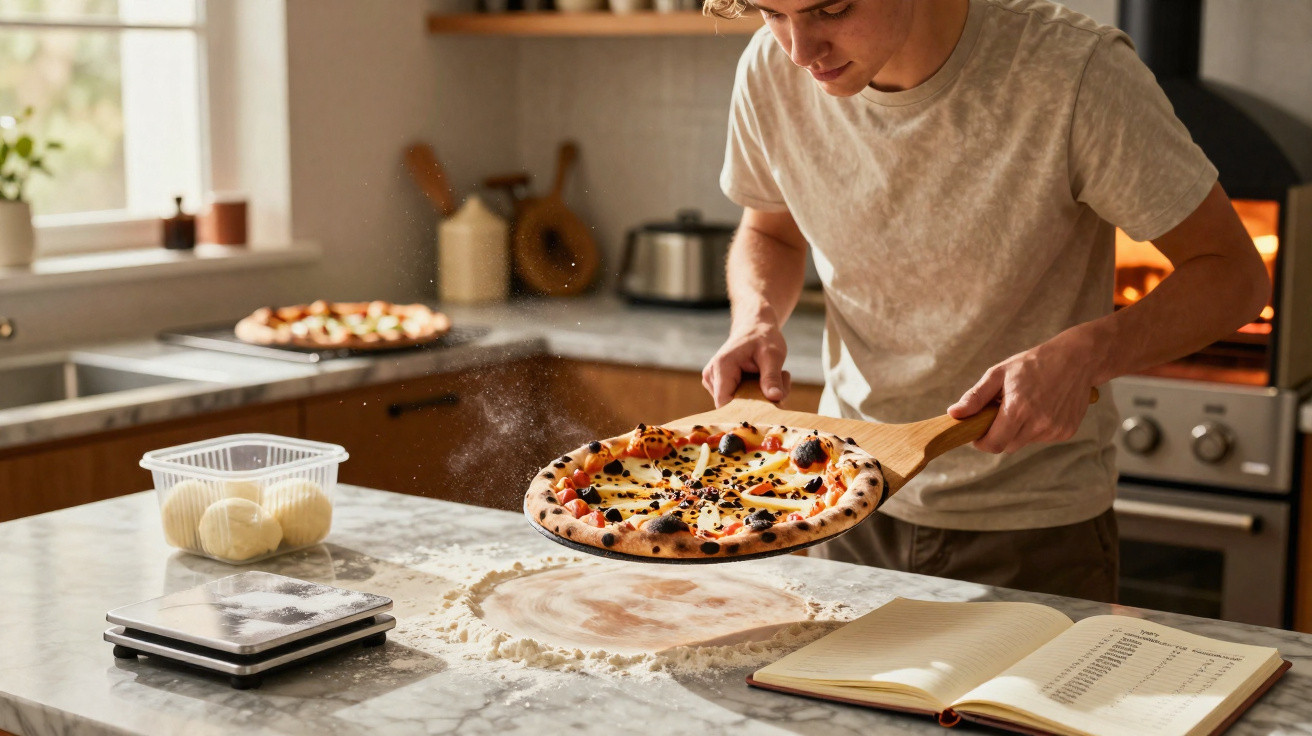
Saturday evening. You are in the kitchen, with flour scattered over the worktop like fresh snow, looking at the dish that was meant to be your triumph. An hour earlier, the dough seemed full of promise. You stuck rigidly to the recipe, chose quality ingredients and heated the oven as though everything depended on it. Then comes the first underwhelming mouthful and the truth becomes unavoidable. It is not the crisp, beautifully chewy slice you ate at that small Italian restaurant last week. It is simply… homemade pizza that tastes homemade - and not in a flattering way.
The uncomfortable truth about homemade pizza failures
Most of us know that feeling: the instant you realise your kitchen is not Tony’s Pizzeria around the corner. Your homemade effort looks rather sorry and unpolished beside your memory of restaurant-level pizza. The crust ends up either thick and stodgy or so thin it resembles cardboard.
Here is a sobering fact: most domestic ovens reach only about 260°C, whereas professional pizza ovens operate at roughly 425–480°C. That is more than a technical distinction - it separates an average pizza from an exceptional one. At those higher temperatures, a proper Neapolitan pizza cooks in 90 seconds, producing its characteristic charred finish and satisfying chew.
That temperature shortfall is also why your cheese fails to bubble and brown properly. Rather than receiving the fast, fierce heat that forms steam pockets in the dough, your pizza is warmed slowly and gently, leaving the base closer to a flatbread. It’s like trying to sprint in quicksand.
The essential fixes for homemade pizza
Begin with dough hydration - many home cooks hold back water because wet dough feels intimidatingly sticky. Professional pizzaiolos typically use hydration levels of 65-70%. In practical terms, that means using at least 65-70g of water for every 100g of flour.
Do not attack the dough with a rolling pin as if you were making pastry. Doing so presses out the valuable air bubbles that provide a light, textured crust. Stretch the dough carefully by hand, allow gravity to assist and accept an uneven outline. No one expects flawless circles to emerge from a kitchen worktop.
“The secret isn’t in fancy ingredients or expensive equipment. It’s in understanding that pizza dough is alive, and you need to work with it, not against it.” – Marco Fuso, third-generation pizzaiolo
Make these immediate adjustments to your oven arrangement:
- Buy a pizza stone or steel, then preheat it for a minimum of 45 minutes.
- Position the stone on the lowest shelf rather than the middle one.
- Switch on the grill for the final 2-3 minutes of baking.
- Use far less sauce than you assume is necessary.
Why better homemade pizza matters beyond dinner
Learning to make pizza at home offers a particular sense of achievement that extends beyond spending less on a takeaway. It may come from the instinctive connection with bread-making, a craft humans have refined for thousands of years. Or it could be the reward of finally knowing why certain methods succeed while others fail. Let’s be honest: nobody really makes perfect pizza on their first try. Once you have worked out the formula, though, restaurant prices will never look quite the same. A casual weekend project could become your standout dinner-party skill, or something your children remember from growing up at home.
| Key point | Detail | Value for the reader |
|---|---|---|
| Temperature control | Use a pizza stone + grill technique | Recreates restaurant-oven conditions at home |
| Dough hydration | 65-70% water-to-flour ratio | Produces an authentic texture and chewiness |
| Stretching method | Hand-stretch rather than using a rolling pin | Retains air bubbles for a superior crust |

















Comments
No comments yet. Be the first to comment!
Leave a Comment