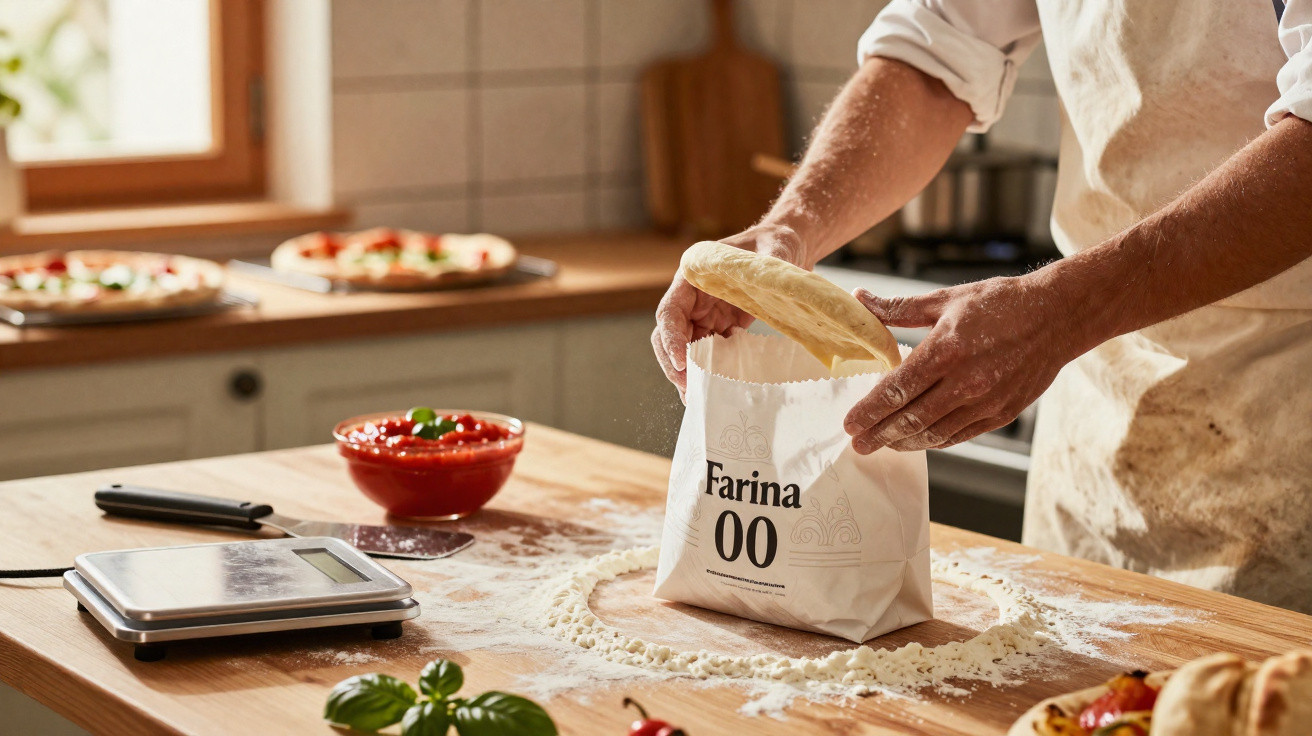
Last Tuesday evening, I saw my neighbour Marco working pizza dough on his kitchen worktop through the window facing our shared courtyard. For twenty minutes, he kneaded relentlessly, with sweat on his brow as he battled what appeared to be a stubborn, uncooperative lump of dough. Three hours later, the smell of his homemade pizza wafted through my open window - and it was genuinely magnificent.
The following morning, he arrived at my door carrying a few leftover slices and wearing an embarrassed smile. “Finally figured out the secret,” he said, raising a bag of flour I had never noticed before. Its label displayed “00” in large print. After one mouthful of that cold pizza, I could see exactly why he had been so intent on perfecting it.
The crisp but tender crust was unlike any homemade pizza I had tried before.
The mysterious numbers that transform your dough
00 flour is more than simply another cupboard ingredient: it is the difference between amateur pizza and the kind that makes you close your eyes with the first bite. This very finely milled Italian flour takes its name from the “doppio zero” classification, which describes how finely the wheat has been ground. It is, in effect, the Ferrari of pizza flours.
When making pizza, most home cooks reach for plain flour, without realising they are bringing a bicycle to a Formula 1 race. With roughly 11-12% protein, 00 flour develops precisely the gluten structure needed for an excellent pizza base. It feels almost silky when rubbed between your fingers, a world away from the rougher texture of standard flour.
This is where it becomes particularly useful: because it is so finely ground, the flour takes up water more effectively, producing dough that is easier to handle and more forgiving. That irritating tendency for pizza dough to spring back while you are trying to stretch it is almost eliminated with 00 flour, as its gluten develops more gently.
Getting your hands dirty with 00 flour
Begin with a straightforward proportion: 500 grams of 00 flour and 325 millilitres of lukewarm water. Mix in one teaspoon of salt and half a teaspoon of active dried yeast. Your dough should be smooth and a little tacky rather than sticky. Let it rest for at least 24 hours in the refrigerator - the slow fermentation is where the magic happens.
Everyone knows the frustration of stretching pizza dough only for it to split straight through the centre. With 00 flour, the dough is noticeably more willing to extend, almost as though it wants to become pizza. Still, do not hurry it: even outstanding flour cannot compensate for impatience. Dough at room temperature stretches more effectively than chilled dough, so remove it from the refrigerator around an hour before shaping.
“The difference between good pizza and extraordinary pizza often comes down to the flour,” says pizzaiolo Giuseppe Romano, who’s been making pizza in Naples for thirty years. “00 flour gives you that characteristic chew with the crispy edges-it’s what separates authentic Neapolitan pizza from everything else.”
- Weigh flour rather than measuring it by volume - precision matters.
- Keep 00 flour in an airtight container to retain its delicate texture.
- Avoid overworking the dough - a light touch protects those air bubbles.
- Heat the oven to its maximum setting, with a pizza stone already inside.
The flour that changes everything
After you have started making pizza with 00 flour, ordinary pizza dough can feel like a compromise you no longer wish to accept. At high temperatures, the crust develops attractive leopard spots, while its texture reaches that sought-after point between crispness and chew. This is not merely a matter of flavour; it changes your entire relationship with homemade pizza.
Let’s be realistic: no one expects a domestic kitchen to compete with a wood-fired pizzeria. Yet 00 flour brings you remarkably close, especially when you consider that many pizza restaurants you enjoy are likely using the very same flour. It feels like a worthwhile purchase when the pizza on your plate genuinely tastes as though it came from somewhere special.
Your friends will spot the improvement straight away, even if they cannot identify precisely what is different. That is the understated confidence of using the right ingredient for the job: suddenly, homemade pizza night is the occasion everyone hopes to be invited to.
| Key point | Detail | Value for the reader |
|---|---|---|
| Finer grind texture | 00 flour is milled to a silky, powder-like consistency | Produces smoother, more manageable dough that stretches easily |
| Optimal protein content | 11-12% protein creates perfect gluten structure | Delivers the ideal combination of a crisp crust and chewy interior |
| Better water absorption | Fine grind absorbs moisture more efficiently | Creates more consistent dough texture and flavour development |

















Comments
No comments yet. Be the first to comment!
Leave a Comment