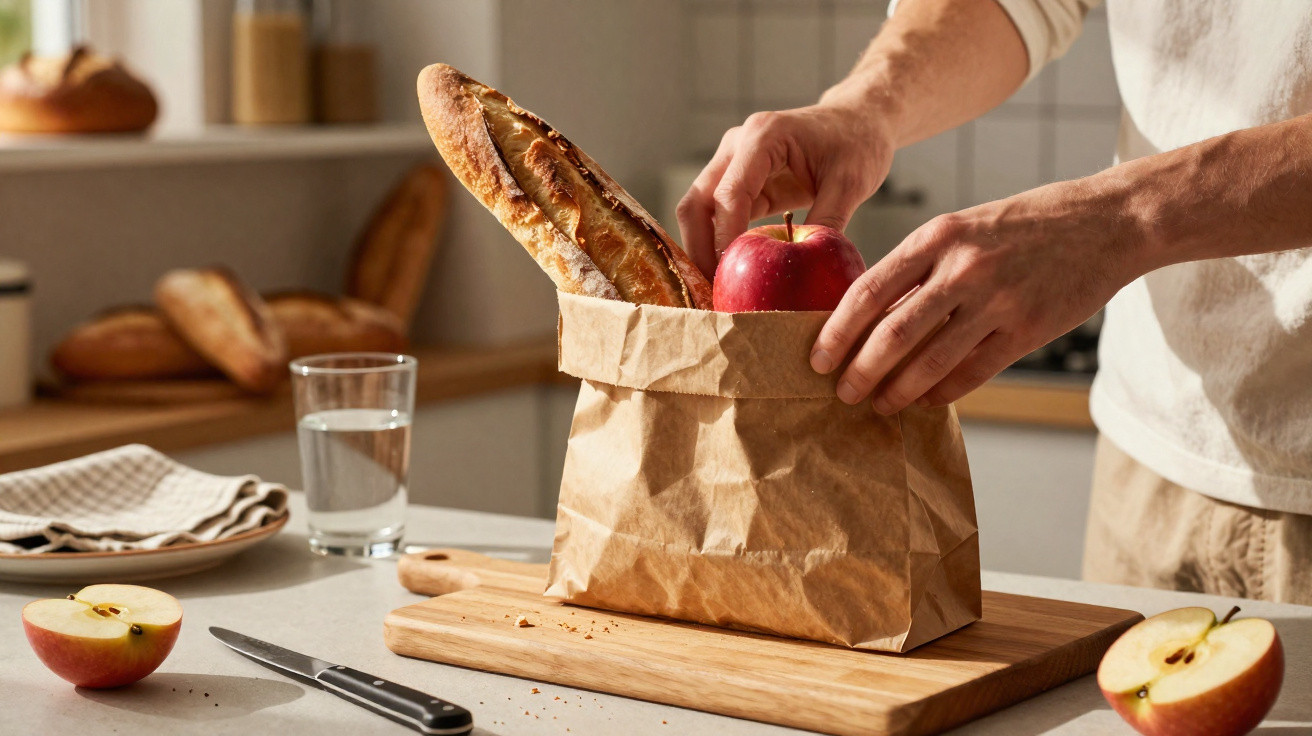
You would not put a baguette in the fridge, and sealing it in plastic leaves it rubbery. So how do French chefs keep yesterday’s loaf tasting closer to today’s? The solution is quietly waiting in the fruit bowl rather than the cupboard.
I am in a slim Paris kitchen, where the final afternoon light falls across a paper bag holding a partly eaten bâtard. The cook tells me to take another look. Hidden inside is a slender, pale, fragrant wedge of apple, sitting close to-but not against-the crumb. She gives a shrug, as though it is nothing special. Yet the crust is not brittle and dry, while the inside still springs back when pressed with a thumb. The loaf has a subtly sweeter aroma, not distinctly appley, simply fresher. We cut it, hear it, and eat it. Its crunch is gentle rather than harsh. This technique predates the oven itself.
The unexpected French pantry trick
French bakers and chefs place a piece of fresh apple in the bread bag to help a loaf retain its natural softness for longer. It is not a way to preserve bread for days, but it can carry good bread through the following day’s lunch without making it gummy. In a paper-bag microclimate, the apple behaves like a miniature humidifier, returning moisture to the crumb while allowing the crust to keep its character.
I first came across it in Lyon. A chef took a quarter of an apple from a linen pouch and placed it beside a country loaf. He made no fuss about it. “New apple in the evening, new bread in the morning,” he joked, before cutting generous tartines from the loaf the next day; they tasted surprisingly fresh. Everyone knows the feeling of finding that a baguette from the previous evening has become a hard baton by breakfast. This makes breakfast less of an emergency.
The explanation is largely physics, with a little fruit chemistry involved. Bread becomes stale as its starches recrystallise and moisture moves out, rather than simply because it dries. A cut apple gives off light humidity along with a small amount of malic acid. That moisture travels into the crumb and loosens the starch structure just enough. The crust will not become as crisp as it was on day one, but the bread avoids a chalky crack and a cardboard-like chew. It is about balance, not a miracle.
How to use the apple bread trick at home
Choose a small wedge from a crisp, fresh apple, roughly the size of two coins stacked together. Loosely cover it with a little kitchen paper so that it can still breathe. Put it beside the bread in a paper bag-nearby but without contact-then fold down the top. Keep the bag on the worktop, out of direct heat and sunlight. Replace the apple every 24 hours to maintain freshness. If the loaf has no bag, drape a clean tea towel over both the bread and apple to form a breathable enclosure.
Keep the apple clear of the crust if a crisp bite matters to you. When a loaf has already become overly hard, position the apple a little closer to the crumb for an hour, then move it back. Avoid plastic, which makes bread spongy and encourages mould growth. Equally, do not leave a large piece of fruit in the bag throughout the weekend. Let’s be honest: nobody really does that every day. This is a small, nightly move that pays off in the morning.
“A slice of apple is like turning the dial on time, just one notch back,” a Paris baker told me. “Not yesterday’s bread. Almost.”
- Pick tart, firm apples such as Granny Smith or Pink Lady for consistent moisture and a clean aroma.
- For substantial boules, an inch-wide wedge is sufficient; use a slimmer piece for a baguette.
- If aromas bother you, peel the apple first for a more neutral effect.
- For a little fragrance, add a strip of lemon peel beside the apple to keep the scent bright.
What happens inside the bread bag
Staling is a gradual rearrangement of water and structure. Baking transforms dough into a fragile network, then time steadily tightens it. The apple returns a trace of humidity to that network, relaxing the crumb without soaking it. Some softening of the crust is unavoidable, but it does not become limp. The fix is hiding in your fruit bowl. Treat it as an overnight compromise, not an attempt to rescue a ruined loaf.
Baguettes do benefit, although they remain the sprinters of the bread world. Country loaves, pain de campagne and rye blends deliver the strongest results because they naturally retain more moisture. For sandwiches the next day, the apple trick keeps slices pliable without that sad, stale drag. For added crunch, warm the loaf briefly in a low oven after its night with the apple: five minutes at 150°C (300°F), then leave it for one minute before cutting. The crumb remains soft while the crust comes back to life.
There is a subtle flavour benefit, too. Apples contain malic acid and pectin, both of which gently influence the loaf’s scent-not enough for it to taste fruity, but enough to make it seem fresher. This is common-sense pantry practice rather than laboratory science. Let’s be honest: nobody really does that every day. But on the week you do, you waste less and eat better.
Variations, mistakes and small chef rituals
In some kitchens, a slice of raw potato takes the apple’s place. Its scent is more neutral and it releases moisture steadily, although it may look less appealing in the bag. A stick of celery also works, particularly alongside darker rye breads. For extra aroma, leave a fine strip of orange zest with the apple for a day; it gives the bread a subtle lift without turning it into something dessert-like. Tiny adjustments, quick rewards.
The usual errors are straightforward. Plastic wrap creates a damp pocket that ruins the crust and promotes mould. A bruised apple releases moisture too rapidly and perfumes the bread too strongly. Fruit resting directly against the loaf produces wet patches. And expecting dramatic results only leads to frustration. This is a method for the next day, not a storage solution for an entire week. In my experience, 18 to 24 hours is ideal. Any longer and the crust becomes overly soft; any shorter and the crumb has not had time to loosen fully.
“Bread likes breath,” said an old chef in Bordeaux, tapping a linen bag. “Give it a little air, a little fruit, and it says thank you.”
- Best bag: paper or linen, folded rather than sealed.
- Ideal apple size: a narrow wedge weighing about 8–10 grams.
- Timing: overnight is enough; replace the apple the following evening.
- Storage spot: a cool, shaded area of the worktop, never beside the hob.
A small apple habit that changes how you treat bread
There is something caring about looking after a loaf. It may sound old-fashioned until you slice into day-old bread that still feels lively beneath the knife. The apple trick requires almost nothing, yet it turns leftovers into tomorrow’s pleasure rather than today’s disappointment. It is neither freshly baked nor stale, but somewhere in that forgiving, human middle ground.
It also encourages a more seasonal way of viewing the cupboard. Autumn apples supporting autumn bread make sense. Summer stone fruit may be too aromatic, while winter citrus can be overpowering, so apple remains the understated favourite. Although it is not a cure-all for every crust, it offers an elegant way to reduce waste without gadgets or fuss. Pass it on to a friend who bakes, or to someone who insists they are “not a bread person.” The next morning could change their mind.
| Key point | Detail | Benefit for the reader |
|---|---|---|
| Apple-in-bag method | A thin apple wedge sits with the loaf in a paper or linen bag | Extends next-day freshness without refrigeration |
| How it works | Light humidity slows starch retrogradation and softens the crumb | Improves texture and aroma with very little effort |
| Common pitfalls | Avoid plastic, oversized pieces of fruit and prolonged contact with the crust | Prevents sogginess and mould while retaining crust character |

















Comments
No comments yet. Be the first to comment!
Leave a Comment