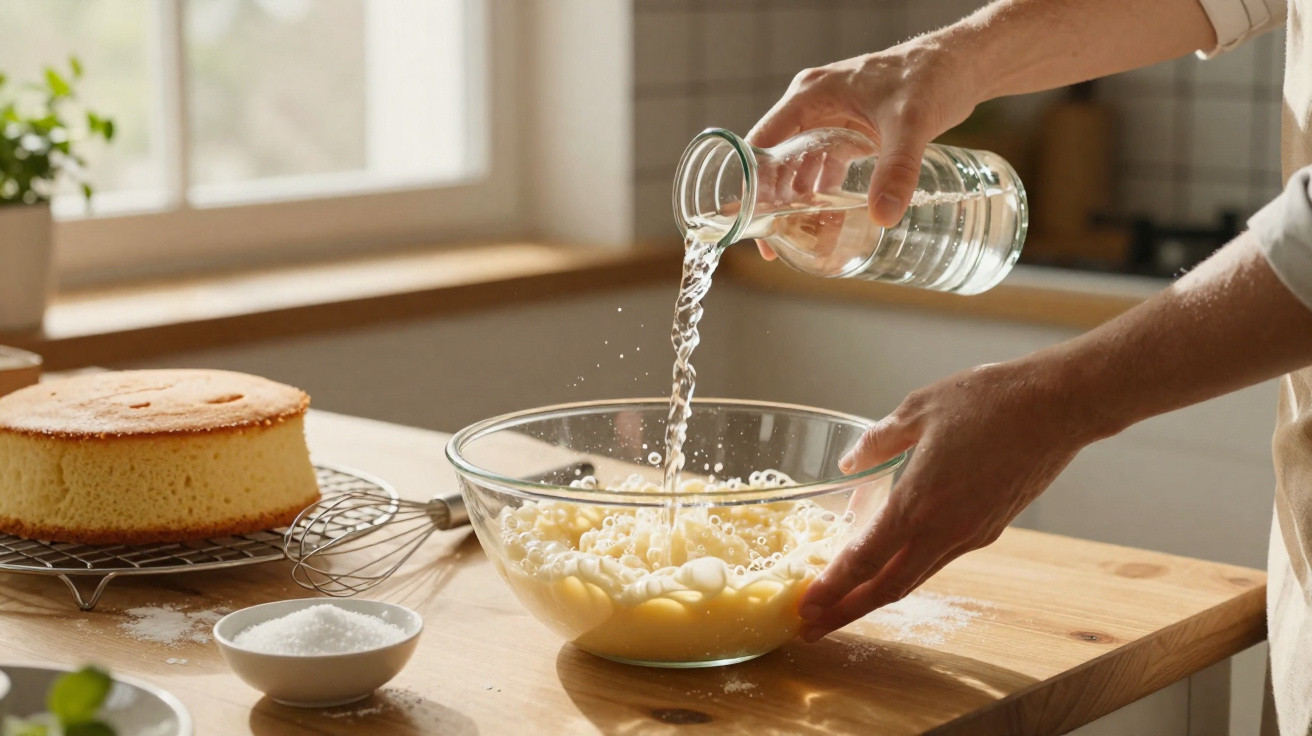
The first time I watched it happen, I was convinced my neighbour had gone mad. She was bent over a mixing bowl with a standard vanilla cake batter prepared, then reached for a bottle of sparkling water in the fridge and tipped it straight in. There was no recipe and no measuring jug involved. Just a brief fizz, a light stir, and the batter went into the oven.
Forty minutes later, her cake emerged higher, fluffier and noticeably lighter than the cakes I had been trying to perfect for years. The flour, sugar and eggs were all the same. Yet the texture was different, and it somehow felt different on the plate too.
She cut me a slice, gave me a wink and said: “The secret’s in the bubbles.”
The quiet revolution inside your mixing bowl
You may recognise the situation: you follow a recipe exactly, wait for the bake, open the oven door… and find a cake that is dense, low and slightly underwhelming. It tastes perfectly acceptable, but lacks the airy crumb you admire in bakery displays. This is where a modest splash of sparkling water can quietly transform the result.
The small bubbles may appear insignificant, but they have a practical purpose. They work their way through the batter, creating lift from within and producing a softer, more delicate crumb. The result moves from “homemade but heavy” to “bakery-style, but from your kitchen”.
A home baker in Lyon told me she began adding sparkling water after a challenge from her teenage son. “Put soda in it, you’ll see,” he joked. She made two small cakes to test the idea: one with ordinary tap water and one with sparkling water. Every other ingredient and step remained the same.
Her family then held a blind taste test at the table. Without hesitation, they chose the sparkling-water cake. “It’s softer,” “It melts faster,” “It feels lighter,” they said in turn. The flavour had not changed. Only the mouthfeel was different, but that was enough to make everyone reach for another slice almost automatically.
The explanation is more physics than magic. Sparkling water is simply water containing dissolved carbon dioxide. When the fizzy liquid is added to cake batter, pockets of gas become trapped throughout the mixture.
During baking, heat expands those bubbles, giving the cake additional lift and supporting the rise created by baking powder or bicarbonate of soda. Sparkling water cannot take the place of your raising agents, but it can subtly enhance their effect. The finished crumb is lightly aerated rather than tight and compact, like a mattress that has finally had its springs restored.
How to use sparkling water in cakes
This is the stage people often make more complicated than necessary. You do not need a completely new recipe, an unusual flour or professional pastry training. Begin with your usual sponge, yoghurt cake or straightforward chocolate loaf, and replace some of its liquid with chilled sparkling water.
As a useful starting point, substitute roughly one third of the milk or plain water with sparkling water. For a recipe requiring 150 ml of milk, for instance, use 100 ml of milk and 50 ml of sparkling water. Add it right at the end, after the other ingredients have been combined, then stir briefly and gently. The aim is to retain the bubbles rather than let them escape from the bowl.
The biggest pitfall is using too much. It is easy to think, “If a little is good, a lot must be amazing,” then end up with half the batter fizzing like a science experiment. Excess sparkling water may make the mixture too thin and reduce its structure, causing a cake to rise quickly before sinking.
Another error is beating the mixture too enthusiastically once the sparkling water has gone in. Heavy stirring drives out the gas, removing the very advantage you wanted. Mix slowly, scrape down the bowl, then stop. Allow the oven to do the rest. Realistically, nobody follows this approach every day, but it is worth taking your time for cakes made for special occasions.
“I used to think sparkling water was just for drinking,” laughs Sara, a self-taught baker who runs a tiny Instagram bakery from her studio apartment. “Now I keep a small bottle next to my vanilla extract. It’s my secret weapon when I want a cake that feels like a cloud.”
- Try it first in lighter batters, including sponges, chiffons and yoghurt cakes, before experimenting with dense brownies.
- Add sparkling water last and mix as little as possible to preserve as many bubbles as you can.
- Choose plain sparkling water rather than flavoured or sweetened types, which may alter the recipe.
- Put the batter in the oven soon after mixing so the gas has less opportunity to escape.
- Test the technique with a small cake or cupcakes before relying on it for a large celebration dessert.
Why this small trick feels more significant than it is
There is something unexpectedly comforting about this trend. In a world of complicated recipes and elaborate appliances, the idea that a basic bottle of sparkling water can improve an everyday cake feels almost defiant. You are not purchasing a new mixer; you are simply handling your batter in a slightly different way.
We’ve all been there, that moment when you want to bring a cake to a dinner or office party and quietly hope it doesn’t look “second tier” next to store-bought desserts. A small change such as this can alter that feeling without requiring you to become somebody else.
The next time you bake, you may pause at the sink with your hand above the tap and think of the faint hiss that comes when you open a chilled bottle. You may remember the cake that rose a little more, had a slightly softer crumb and disappeared from the plate more quickly.
It is a restrained gesture, nearly unnoticeable to anyone else in the kitchen. Still, it changes the story your cake tells once it is sliced. Less effort, more enjoyment. It is one of those straightforward kitchen tricks that travels quietly from neighbour to neighbour, conversation to conversation, Sunday to Sunday.
| Key point | Detail | Value for the reader |
|---|---|---|
| Use sparkling water as a partial liquid swap | Replace about one third of milk or water with chilled sparkling water | Achieve a lighter, airier crumb without rewriting your recipe |
| Add it at the very end, stir gently | Minimal mixing preserves carbonation and bubble structure | Maximizes lift and texture without needing extra tools |
| Start with simple, light cakes | Try sponges, yoghurt cakes, or basic chocolate loaf before dense bakes | Reduces risk of failure and builds confidence with the technique |

















Comments
No comments yet. Be the first to comment!
Leave a Comment