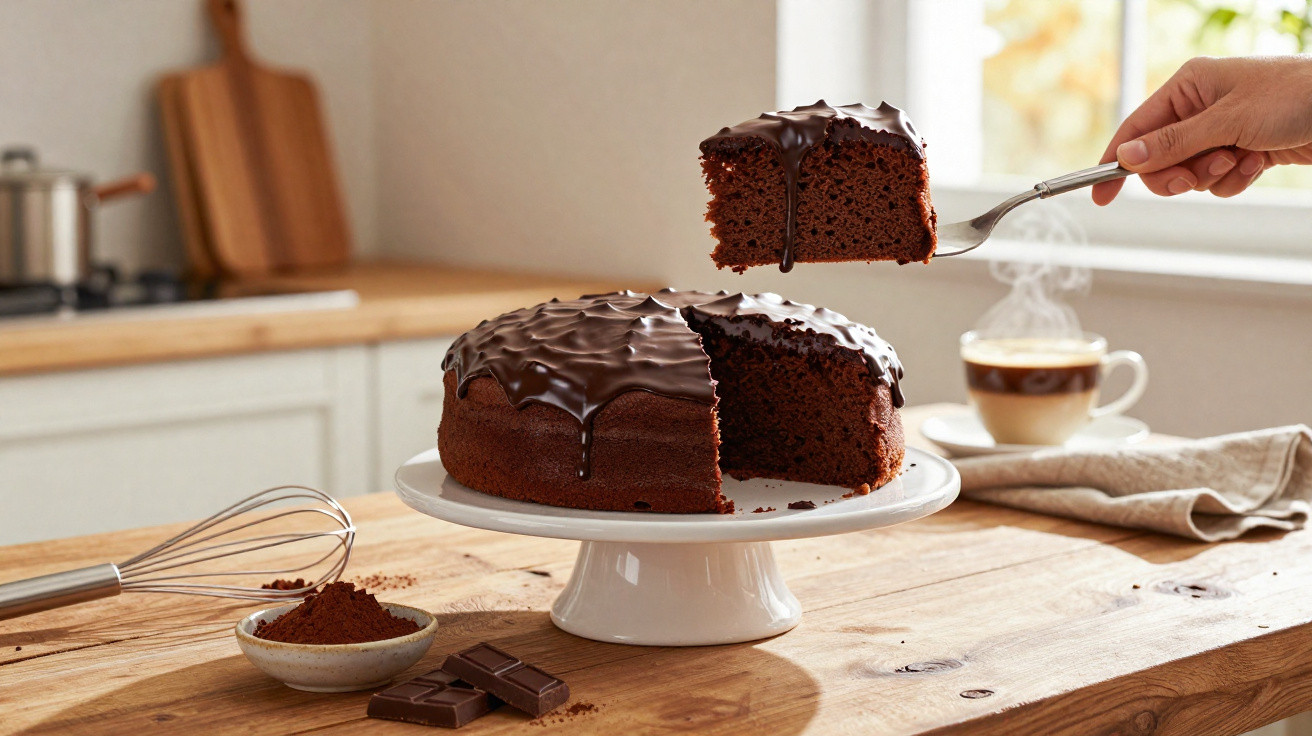
Rainy afternoon, kettle boiling, and that unmistakable scent of chocolate beginning to drift through the kitchen.
For plenty of home bakers, the gap between a parched chocolate sponge and a meltingly soft-centred treat can seem extremely narrow. Based on traditional French home baking, this soft chocolate cake recipe explains how a handful of decisions about ingredients, timing and method can consistently work in your favour.
Why this soft chocolate cake has cult status
This is not a lofty, airy birthday cake smothered in icing. Instead, it is shallow, rich, soft and almost truffle-like at its centre. Its crumb falls somewhere between a brownie and a fondant, making it better suited to an afternoon slice than an extravagant celebration pudding.
What sets this cake apart is the decision to skip baking powder, relying instead on whipped eggs for a soft but compact texture.
Avoiding baking powder creates a tight, silky crumb that remains moist as the cake cools, rather than taking on the slightly springy texture of a standard sponge. It also makes the bake more forgiving once you grasp one essential factor: depth. A 20 cm tin gives the cake the ideal thickness, allowing the outside to set while the centre remains soft and slightly gooey.
The basic recipe is also appealing because it can be adapted so easily. Finely grated orange zest makes it feel like a winter tea-time cake; a spoonful of espresso intensifies the chocolate for coffee fans; and a pinch of chilli creates something worth serving with whipped cream after dinner. These additions need no extra technical skill, only a little curiosity.
The core ingredients and what they actually do
The foundation of this gâteau-style cake is pleasantly simple:
- Dark chocolate (around 70% cocoa) – flavour and structure
- Butter – richness and that melt-in-the-mouth feel
- Eggs – lift, moisture and binding
- Sugar – sweetness and tenderness
- Plain flour – just enough to hold the slice together
- A 20 cm round tin – crucial for getting the right thickness
Every ingredient serves a purpose. The generous quantity of chocolate and butter pushes the result closer to confectionery than a conventional cake. When eggs and sugar are whisked until pale and foamy, they capture tiny pockets of air that give the batter a gentle lift. With no raising agent included, this stage performs the role baking powder would normally play.
Beat the eggs and sugar until they’re noticeably lighter in colour and increased in volume; that short moment with a whisk dictates the final texture.
The amount of flour is intentionally restrained. Add too much and the cake will set more like a firm brownie; use only enough and it will cut neatly while remaining luxuriously soft on the fork.
Step-by-step: how to keep it soft, not soggy or dry
Getting the chocolate right
The first important choice comes when melting the chocolate and butter. Applying direct heat on the hob can easily scorch the mixture. In most home kitchens, two safer options work best: a bain-marie or a microwave.
- Bain-marie: Place a heatproof bowl over gently simmering water, ensuring the bowl does not touch the water, and stir slowly.
- Microwave: Heat in 20–30 second intervals at medium power, stirring very well after each burst.
With either approach, it is useful to remove the bowl from the heat while a few lumps are still visible. The remaining warmth will melt them fully, without taking the chocolate into a burnt or grainy state.
Building the batter
After the chocolate mixture becomes smooth and shiny, turn to the eggs and sugar. A large bowl and electric hand mixer make this easier, although a balloon whisk and sufficient patience will also work. The mixture should become thicker, paler and lightly frothy. That incorporated air allows the cake to set tenderly instead of sinking into a dense, heavy block.
Add the flour next, ideally sifted, and fold it in rather than vigorously beating it. Fast mixing may deflate the air you have just created. Finally, gradually incorporate the warm chocolate and butter mixture, keeping your movements light. Once finished, the batter should be rich yet pourable, rather like a thick custard.
The 20-minute rule – and how to judge doneness
This is the stage at which many soft chocolate cakes lose what makes them special. A conventional oven heated to around 180°C (thermostat 6) is the usual starting point. In a 20 cm tin, baking generally takes 18–22 minutes, although ovens differ more than recipe cards often suggest.
The cake is ready when the top is set and slightly shiny, with a faint wobble in the centre when you nudge the tin.
A skewer is not always a reliable guide for this style of cake. When it emerges entirely clean, the fondant-like centre has probably baked too long. Instead, look for a few damp crumbs attached to the skewer. Patience is valuable after baking, too: the cake continues to firm up as it cools, so resting it in the tin before turning it out makes breakage less likely.
Strategic tweaks: lighter, richer or more adventurous
Minor adjustments can tailor this cake to different tastes without sacrificing its essential character.
Textural tweaks
- For extra lightness: include one additional egg and bake for a few extra minutes, keeping a close eye on the centre.
- For a denser, almost fudgy result: slightly reduce the flour and shorten the baking time.
- For a crunchy base: press crushed biscuits combined with melted butter into the greased tin before pouring the batter over it.
Chocolate choices: dark, milk, or white?
Replacing dark chocolate changes both the flavour and the texture. Milk chocolate contains more sugar and fat, so it produces a sweeter cake that sets a little more softly and has less cocoa intensity. White chocolate takes the result further away again, moving it towards blondie territory and losing the classic “gâteau au chocolat” character.
Dark chocolate keeps the flavour decisive and the crumb balanced; milk and white versions are pleasant but less intense and usually less fondant.
Reading the nutrition numbers without guilt
Rich chocolate cake does not claim to be health food, and its nutritional values reflect that straightforwardly. The original French recipe lists approximate figures for a generous slice and for 100 g.
| Nutrient | Per portion (approx. 142 g) | Per 100 g |
|---|---|---|
| Carbohydrates | 77.6 g | 54.7 g |
| Fats | 59.6 g | 42 g |
| Saturated fat | 36.8 g | 25.9 g |
| Protein | 10.9 g | 7.7 g |
| Fibre | 4.7 g | 3.2 g |
| Sugars | 58.8 g | 40.2 g |
In a home kitchen, portion sizes often vary according to the occasion. Dividing the cake into ten smaller slices rather than six brings each serving nearer to an everyday dessert, while it can still feel generous with a spoonful of crème fraîche or yoghurt alongside.
Classic mistakes and how to dodge them
Burnt chocolate syndrome
It is difficult to disguise burnt chocolate. It develops a dusty, bitter flavour and a grainy consistency. Short microwave bursts or a low, gentle bain-marie are the most dependable methods. Stirring often distributes heat evenly and helps you recognise the moment to stop before the mixture goes too far.
The temptation of raising agents
For many British and American bakers, reaching for baking powder feels automatic, but it works against the intended result here. It makes the batter rise and then fall, potentially leaving a dome, a hollow or a spongy texture that does not suit the French café-style slice this recipe is designed to produce. Allow the whisked eggs to provide the lift instead.
Beyond the recipe: serving ideas and real-life scenarios
In real life, this sort of cake often turns up in mildly hectic circumstances: unexpected visitors, a child’s playdate, or an office coffee break where somebody promised “just something simple”. A dependable approach is to bake it earlier in the day, keep it at room temperature, then gently warm individual portions before serving. Ten seconds in the microwave or a short spell in a low oven restores the soft centre without drying the edges.
What you serve with it can alter the whole feel of the cake. A modest scoop of vanilla ice cream gives it a restaurant-style finish. A strong espresso balances its richness. For a weekend family snack, a jug of cold milk or a pot of tea works quietly and perfectly well.
Think of this soft chocolate cake less as a showpiece and more as a dependable backdrop to everyday moments – the kind of bake people actually finish.
For anyone still gaining confidence, the recipe is a worthwhile place to practise. It develops control over oven timing, an understanding of properly melted chocolate, and an eye for eggs that have been whisked sufficiently. These abilities transfer to brownies, tortes and even straightforward sponges. In other words, one afternoon cake can build instincts that prove useful across dozens of future bakes.

















Comments
No comments yet. Be the first to comment!
Leave a Comment