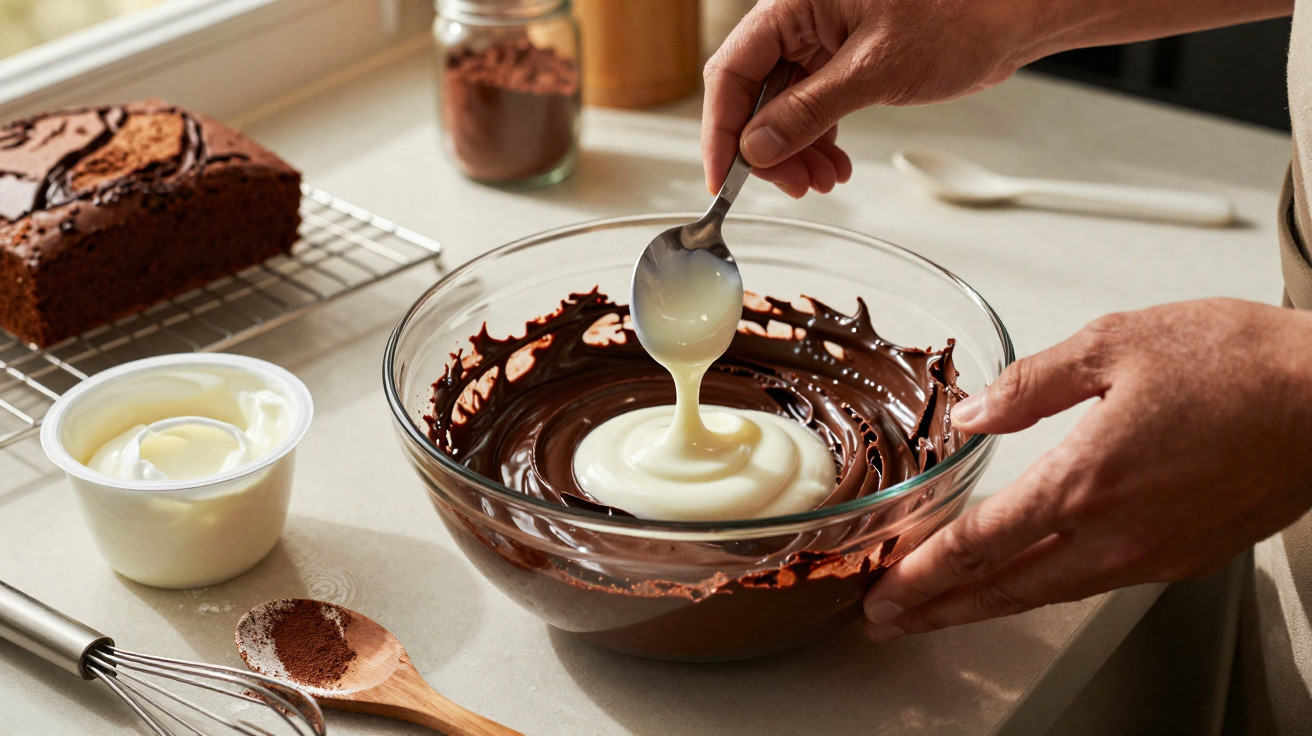
The first time I used a “foolproof” chocolate cake recipe from the internet, I took a flawless fraud from the oven. It was beautiful: a tall dome, a shiny surface and a kitchen scented like a Parisian patisserie. Then I cut into it. It was as dry as a Monday morning meeting. I smothered it in cream to conceal the offence and vowed that, one day, I would solve the puzzle.
Years afterwards, amid the low whirr of a professional pastry kitchen, I saw a baker add one final, odd-looking bowl to a chocolate batter. “That,” she said, tapping the bowl, “is the secret everyone forgets.”
It was not extra butter. Nor was it more chocolate.
It was something far more modest.
The ultra-moist chocolate cake secret professional bakers don’t shout about
Step into almost any proper pastry kitchen and look over the mise en place for a chocolate cake. You will find the usual ingredients: flour, eggs, cocoa, sugar, butter or oil. But there is often another bowl set quietly to one side, almost unnoticed. It holds a thick, pale and tangy ingredient that seems entirely out of place in a dessert.
That understated bowl contains plain yoghurt. It is frequently full-fat, sometimes Greek yoghurt, with buttermilk occasionally used as a related alternative. Yet yoghurt is the ingredient that repeatedly appears when bakers want a chocolate cake to remain moist for days rather than only for its first hour.
A French-trained pastry chef in London once told me that she will not put a chocolate cake on the menu without yoghurt. She had previously depended on double cream and extra butter, until a heatwave arrived and her lovely cakes had become dusty by 4 p.m. Service was a disaster. The staff soaked slices in sauces and syrups in an effort to save face.
In desperation, she tried six versions of the same cake overnight: oil-based, butter-based, with extra egg yolks, and even one containing grated courgette. By the following morning, the only batch that was still velvety smooth at room temperature was the one finished with a generous cup of plain yoghurt.
There is straightforward science behind this unobtrusive miracle. Yoghurt provides both fat and water, combined in a creamy emulsion. While the cake bakes, this moisture does not simply disappear; some of it binds with the starches and cocoa, helping the crumb stay tender. Its mild acidity also softens gluten, producing a finer, more delicate texture rather than a chewy, bread-like one.
Chocolate, and cocoa powder in particular, naturally has a drying effect. Yoghurt acts as a small internal humidifier, balancing the batter so each mouthful remains soft from the crust to the centre, even on the third day.
How professionals use yoghurt in chocolate cake - and where home bakers go wrong
The approach used by most professionals is remarkably uncomplicated. First, they whisk together the wet ingredients: eggs, sugar, oil or melted butter, and vanilla. Next comes the yoghurt, generally at room temperature, which is whisked in until the mixture is glossy and a little thicker. The dry ingredients - flour, cocoa, baking powder and salt - are folded in only afterwards.
The important point is not to regard yoghurt as a random extra. It forms part of the liquid balance. For a standard 20 cm chocolate cake, many pastry chefs discreetly replace around a third of the milk or other liquid with yoghurt. Some replace it all, using yoghurt with a small splash of coffee or water to loosen the batter to that ideal ribbon-like consistency.
Home bakers tend to go wrong in two areas: amount and consistency. Use too little yoghurt and it makes no difference. Use too much, and the cake turns dense or gummy, more like a pudding than a proper crumb. For a family-sized cake, the ideal quantity generally falls between 120 and 200 grams (½ to ¾ cup) of plain full-fat yoghurt.
The other mistake is using yoghurt straight from the fridge. Cold yoghurt can shock the fat, make tiny lumps and cause uneven baking. Leave it on the worktop while the oven heats and you weigh the ingredients. That brief wait is where the magic begins, quietly, before anything reaches the heat.
“People think the secret is expensive chocolate,” a pastry chef in New York told me. “That matters. But if your cake is dry, nobody remembers the percentage of cacao. They only remember they needed water with every bite.”
- Choose plain full-fat yoghurt. Low-fat versions have more water but less creaminess. They add moisture, certainly, but not the rich mouthfeel that makes a cake seem luxurious.
- Mix gently once the flour is added. As soon as yoghurt meets flour, gluten begins to develop. Overmixing removes the tenderness you are trying to preserve.
- Match yoghurt with cocoa, rather than chocolate alone. Yoghurt excels in cocoa-heavy batters, offsetting cocoa’s drying qualities while enhancing a dark, almost fudge-like character.
From secret weapon to a daily habit in your own kitchen
Once you spot it, it becomes impossible to miss. That bakery chocolate cake which tastes even better the following day. The café slice with a faint tang lingering at the back of the tongue, just enough to make you want another forkful. Chances are, yoghurt is in the recipe.
You do not need a professional mixer or a marble worktop to use the same technique. The next time you make your regular chocolate cake, stick with the recipe you trust. Just substitute roughly a third of the milk or liquid with plain yoghurt, and remove a tablespoon of flour from the total. The batter will appear a touch thicker and slightly glossier. That is the first sign that you are heading in the right direction.
There is a quiet assurance in serving a cake that you know will not let you down after two hours on the table. No frantic wrapping in cling film. No last-minute brushing with syrup to imitate moisture. Simply a cake that remains soft by itself.
We have all known that moment: cutting into a birthday cake and silently hoping it will not be dry in front of everyone watching. Yoghurt will not rescue a burnt cake or one that has been drastically overbaked, but it provides a much broader margin for human error. Real life baking needs those safety nets.
Let’s be honest: hardly anyone does this every single day. Most of us bake on hurried evenings, between emails and laundry, rather than in some cinematic calm. That is why the yoghurt trick feels so generous. It forgives the extra two minutes spent looking for the candles. It forgives an oven that runs slightly hot.
The professionals might not advertise it on their menus, but their mixing bowls tell the tale. Once you begin adding that one spoon of tangy insurance to your own batter, returning to the old approach is difficult.
| Key point | Detail | Value for the reader |
|---|---|---|
| Use yoghurt as part of the liquid | Replace 1/3–1/2 of the milk or liquid with plain full-fat yoghurt | Produces a reliably moist crumb without changing your entire recipe |
| Room-temperature ingredients | Leave yoghurt out while you make the rest of the batter | Encourages even mixing and avoids a dense, uneven texture |
| Gentle mixing at the end | Whisk yoghurt into the wet ingredients first, then lightly fold in the dry ingredients | Maintains tenderness and prevents a tough, overworked cake |

















Comments
No comments yet. Be the first to comment!
Leave a Comment