The muffins were flawless at 10 a.m. Golden crowns, little crackly domes of sugar, and a crumb that gave a soft sigh as you pulled one apart. By 4 p.m., they had already lost some appeal. Come the following morning, they had turned into what every home baker dreads: low, slightly rubbery and quietly stale.
You wrap them, warm them up and make promises to the Tupperware gods. Even so, muffins on day three rarely deliver the magic of day one.
Yet some bakers have a modest trick that leaves their muffins soft for days, as though they had only just come out of the oven. A trick that has been there all along.
The muffin disappointment nobody mentions
Anyone who bakes at home will recognise the routine. Straight from the oven, muffins are soft, fragrant and almost too hot to pick up. The kitchen carries the scent of butter and Sunday mornings. Then everyday life gets in the way: work, school, emails, that one message you “quickly” answer. When you next remove the lid from the container, the muffins are different.
They may look unchanged, but their crumb has become firmer. You chew more, enjoy them less and silently fault the recipe.
Claire, a home baker I spoke with, summed it up exactly. Every Monday, she made a large batch of blueberry muffins, intending them to last as school snacks. On the first day, her children gobbled them up. On day two, they accepted them politely. By day three, half-eaten muffins were coming back in their lunchboxes.
She tested everything: extra butter, less sugar, reheating them in the microwave, keeping them in the fridge and buying costly airtight containers. Nothing halted their gradual move towards dryness. Although she followed recipes down to the gram, she even began to wonder whether she was simply “bad at baking,”.
The cause has less to do with skill than with science. While muffins cool, the starches in the flour rearrange themselves and become firmer. Moisture moves out of the soft crumb towards the surface, before escaping into the air. That is why muffins seem to tighten and toughen over time.
The real challenge, quietly, is managing where that moisture travels and how quickly it disappears. The technique used by many professionals is not another piece of kit or an elaborate recipe adjustment. It is a small, almost absurd step in storing muffins after they are baked. And once you spot it, you cannot ignore it.
The unusual bread trick that keeps muffins soft
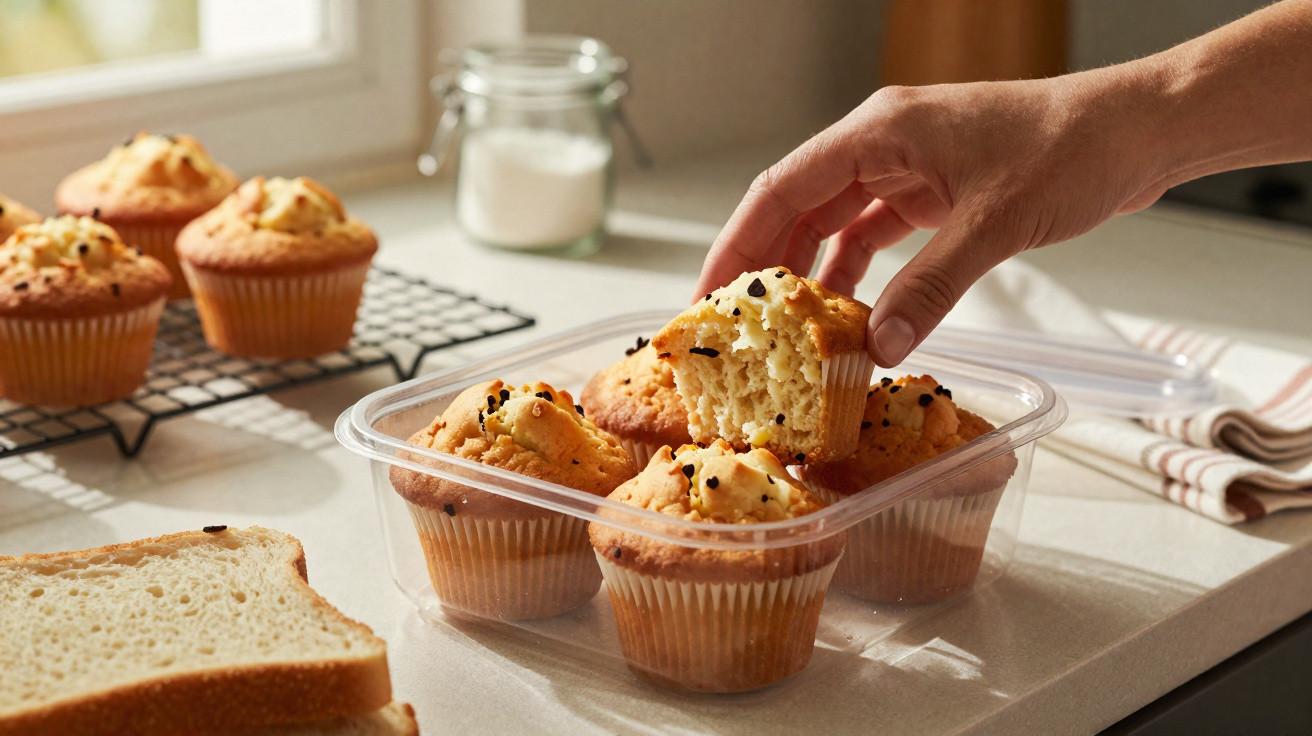
Here is the lesser-known step: when your muffins are fully cool, place them in an airtight container… along with a slice of plain bread.
That is all. One slice of sandwich bread, placed inside the box beside the muffins, works as a miniature moisture guard. The bread slowly gives up its own softness so that the muffins remain tender. After a day, the bread will be slightly dry at its edges, while the muffins retain their freshly baked texture.
If it sounds far too easy to work, you are not the only one who thinks so. Most people assume the secret is some fancy ingredient or a complicated baking schedule. But this bread trick has been used in professional kitchens and behind bakery counters for years, passed around more as a knowing nod than a formal instruction.
What matters is cooling the muffins completely before adding the bread slice and closing the container. Trap steam inside and the tops will become soggy. Leave the container open and moisture will escape into the air. Timing is important, though not in an anxious, stopwatch-driven way. Muffins at room temperature, one piece of bread, lid secured. That is the entire routine.
There are pitfalls, however, and almost every home baker encounters them. Refrigerating muffins, for example, can feel “safe” but actually makes them dry out faster because of the effect cold air has on starch. Leaving them uncovered on the worktop, “so they don’t get soggy,” simply turns them into small sponges for dry air.
In truth, nobody manages this perfectly every day. We throw muffins into whatever bag is nearby, partly wrap them in foil and hope they will be fine. The bread slice trick does not demand precision. It only asks you to regard muffins as something still active for a few hours after baking: changing, cooling and releasing steam. Once they have settled, you give them that small protection.
Why bakers use the muffin bread trick
Léa, a pastry chef who runs a small bakery and sells out of muffins before mid-morning, laughed when I asked her about the bread slice. She then opened a large plastic container behind the counter. It held the next day’s muffins. Tucked among them were two thin slices of white bread, already becoming a little dry around the edges.
“People think it’s our special recipe,” she said. “The recipe matters, of course. But soft muffins on day three? That’s mostly how you store them.”
As well as using the bread trick, she firmly recommends avoiding overbaking and leaving muffins in their tin for only a few minutes before transferring them to a rack.
The principle is straightforward. Muffins lose moisture. Bread supplies moisture. The container holds it all within one small ecosystem. Both the bread and muffin starches retain water, but bread gives it up more readily, so it acts as a buffer.
A few additional steps work well alongside the bread slice:
- Use a little more brown sugar than white sugar.
- Stir a spoonful of yoghurt or sour cream into the batter for added tenderness.
- Take muffins from the oven as soon as the centre springs back gently.
Individually, none of these is magic, but combined with that bread slice, they can alter the fate of your muffins the next day.
There is a quieter, more familiar emotional side to this, too. We have all had that moment when we proudly offer somebody a homemade muffin from “yesterday,” only to see in their expression that it is… fine, rather than brilliant. You put in the effort, but time took away part of the reward.
That is why small kitchen secrets like this can feel unexpectedly powerful. They are not shortcuts to perfection; they are ways to be kind to your future self. One ordinary slice of bread becomes a shield for softness. A box of muffins can still taste of an unhurried morning, even when you eat one in the car two days later. It is a small change, but it extends how long your hard work tastes like itself.
What the bread trick changes in everyday baking
Once you begin using the bread trick, muffins no longer seem like delicate treats that only last for one morning. Baking a dozen on Sunday evening to cover the whole week suddenly feels realistic. You know that your Wednesday self will still bite into something tender, rather than reluctantly work through a dry snack while looking at your phone.
You may also start planning muffins differently: larger batches and more flavours. Chocolate chip for Monday, lemon poppy seed for Tuesday and berry-filled muffins for the midweek slump. When softness lasts, your effort goes further.
A subtle shift in mindset happens as well. You stop blaming “bad recipes” or your own ability whenever baked goods do not keep well. You begin to understand that much of a kitchen success story happens not only in the hot, hectic baking hour, but also in the quiet minutes afterwards, while everything cools and waits.
You start paying attention to texture as well as flavour: how the crumb feels on day two, and how one simple slice of bread can transform a plastic container into a miniature humidity chamber. That awareness often spreads to cake, biscuits and even the way you wrap leftover pizza. Storage stops seeming like an afterthought and starts feeling like part of the recipe.
Perhaps that is the real point of this small trick. It is not about becoming someone who labels every container or keeps three types of flour. It is about making your effort last a little longer, so your future self gets something genuinely good rather than merely “good enough.”
The next time you bake muffins and see them cooling on the rack, you may find yourself reaching for a slice of bread without thinking. It will seem a little strange, like a kitchen joke. But two days later, when you break open a muffin and it is still soft, you will realise this is the part of baking that nobody included in the recipe notes. And you may well share the secret too.
| Key point | Detail | Value for the reader |
|---|---|---|
| Bread slice trick | Keep cooled muffins in an airtight container with a slice of plain bread | Keeps muffins soft and moist for several days |
| Cooling and timing | Allow muffins to reach room temperature before sealing the container | Avoids soggy tops and retains a tender crumb |
| Recipe tweaks | Use some brown sugar plus a little yoghurt or sour cream | Enhances texture and prolongs that “fresh-baked” feel |
FAQ:
- Question 1 Can I use any type of bread for the muffin trick? Plain white bread or soft sandwich bread is best, as it releases moisture easily without adding an overpowering flavour to the muffins.
- Question 2 How long do muffins stay soft with the bread slice? Generally, they remain soft for 3 to 4 days at room temperature, provided the container is tightly sealed and the kitchen is not extremely hot.
- Question 3 Should I refrigerate the muffins anyway? Only when they contain highly perishable fillings; for most ordinary muffins, room-temperature storage keeps them softer.
- Question 4 Do I need to replace the bread slice? When storing muffins for more than three days, you can replace the first slice with a fresh one once it feels very dry.
- Question 5 Will this trick work for cupcakes or cake, too? Yes, the same principle can help preserve many baked goods, although bread should not touch delicate icing directly.

















Comments
No comments yet. Be the first to comment!
Leave a Comment