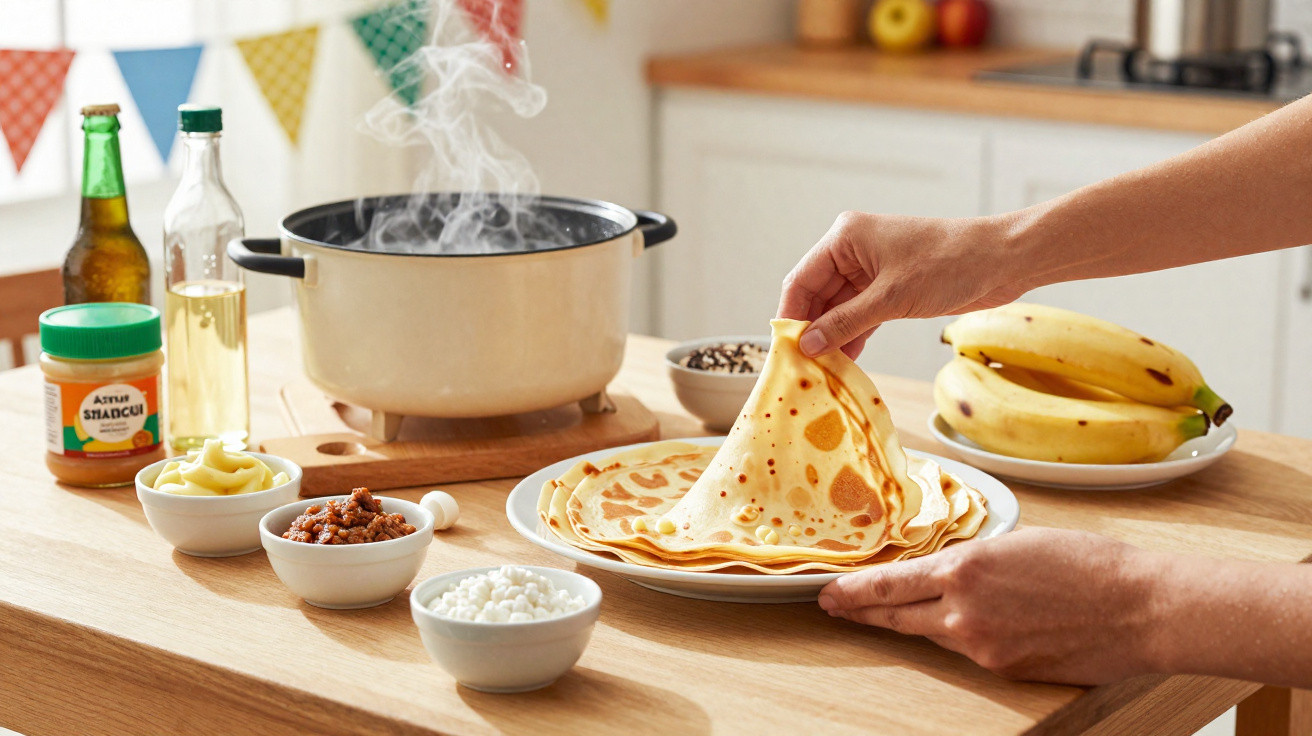
Throughout France, Candlemas falls in early February, bringing the comforting midwinter tradition centred on one uncomplicated delight: a high pile of crêpes. But plenty of home cooks now peer into the fridge only to discover there is no milk, no butter, or that the last eggs were used the day before. Some are also reducing dairy or avoiding animal products altogether. Fortunately, tender, delicate crêpes remain perfectly achievable.
Why crêpes no longer need butter, milk or eggs
Classic crêpe batter is based on a straightforward combination of flour, eggs and milk, usually enriched with a little butter. Today’s kitchens, food allergies and evolving diets have put that familiar formula to the test. Instead of causing a setback, this has encouraged some resourceful alternatives.
Crêpes work thanks to three things: liquid to hydrate the flour, fat for softness, and a binder that holds everything together. Swap those smartly, and the crêpe survives any empty fridge.
Dairy milk can be replaced by plant-based alternatives, starch can take the place of eggs, and fizzy liquids can provide lightness without butter. A handful of carefully selected cupboard essentials lets you make crêpes that are lighter, easier to digest or simply more appropriate for your eating habits.
The handy swap chart for crêpes without butter, milk or eggs
Stocking a small number of useful ingredients can make Candlemas-or any pancake night-a far more relaxed occasion. This practical guide explains what to reach for when an ingredient is unavailable.
| Missing ingredient | Swap-in option | Effect on texture & taste |
|---|---|---|
| Milk | Beer, sparkling water, plant milk (oat, soy, almond) | Lighter, airier crêpes, sometimes with a subtle malty note |
| Eggs | Cornflour or potato starch, mashed banana, ground flaxseed | Soft, tender crumb; banana adds flavour, starch keeps things neutral |
| Butter / oil | Non-stick pan + extra liquid, fruit purée, yoghurt or plant yoghurt | Thinner and lighter; fillings take centre stage |
| Everything at once | Flour + water + a flavour booster (vanilla, rum, orange blossom) | Rustic, crisp edges, relies on toppings for richness |
When there’s no milk: the magic of beer and sparkling water
Running out of milk need not bring pancake night to an end. French home cooks have used beer, cider and sparkling water for years to give batter a light, almost lace-like finish.
The bubbles in beer or sparkling water act like tiny balloons in the batter, lifting it and creating beautifully thin, light crêpes.
How to replace milk in pancake batter
- Combine half light beer with half sparkling water for especially airy crêpes.
- Pick a gentle lager or a mild cider if you want the flavour to stay subtle.
- Stir in the liquids last, preserving as many bubbles as you can.
- Rest the batter for at least 30–60 minutes to allow the flour to hydrate completely.
This dairy-free method produces an easily pourable batter that cooks quickly. The edges turn crisp, while the middle remains pliable enough to wrap around sugar, chocolate spread or lemon juice.
Plant milks for a gentler option
If dairy is the concern rather than milk generally, plant-based drinks are an effective choice. Oat and soy offer a body close to that of cow’s milk, whereas almond provides a gentle nutty flavour. Go for unsweetened varieties and adjust the sugar yourself, particularly when using savoury fillings such as mushrooms or cheese alternatives.
Crêpes without eggs: starch as the quiet hero
Eggs normally bind crêpe batter and help it hold its shape in the pan. If they cannot be used, starch performs that job remarkably well.
Cornflour or potato starch swells in the liquid and locks everything together, giving you soft, supple crêpes that fold neatly without cracking.
Smart ways to bind batter without eggs
- Cornflour or potato starch: neutral taste, silky texture.
- Mashed banana: adds sweetness and a faint banana aroma.
- Ground flax or chia “egg” (1 tbsp seeds + 3 tbsp water): brings a rustic look and extra fibre.
Resting is particularly important for starch-based batters. Leaving the mixture in the fridge for a full 30 minutes gives the starch time to swell as it should. Although the finished batter may appear runnier than an egg-based version, it handles reliably in a hot pan.
Keeping flavour in eggless crêpes
As eggs usually add richness, flavour boosters become especially useful. Vanilla extract, citrus zest, a small amount of rum or orange blossom water restore the nostalgic, dessert-like fragrance associated with a Candlemas crêpe. Cook the crêpes gently, lightly greasing the pan between each one to keep the surface smooth.
Crêpes without butter or oil: lighter, but not boring
Leaving fat out of the batter suits anyone moderating their intake or looking for lighter weekday treats. Dryness can be a drawback, so the texture needs support from other methods.
Whisking plenty of air into the batter and using a quality non-stick pan keeps fat-free crêpes soft enough to roll, without sticking.
How to manage without added fat
- Whisk the eggs (or egg substitute) energetically to incorporate air.
- Keep the batter thin so it spreads fast before it begins to set.
- Preheat the pan thoroughly, then turn the heat down slightly to colour the crêpes without scorching them.
- Use fillings-fruit compote, chocolate, nut butter-to add richness.
Adding a little lemon or orange zest to a fat-free batter brings a bright freshness. After cooking, these lighter crêpes work particularly well with sharp jams and deeply flavoured honeys, as there is nothing to overshadow the topping.
Emergency “student crêpes”: just flour, water and flavour
French crêpes include a style often called the “student” or “broke” crêpe: an uncomplicated mixture of flour and water with whichever flavouring happens to be available. It is made for those Sunday afternoons when the cupboards are nearly empty but a snack still feels essential.
Flour, water, a bit of sugar and a bold dash of rum or orange blossom can turn into a crisp-edged, satisfying treat in minutes.
How to make them work
Warm water incorporates into flour more quickly and helps the sugar dissolve. If you have some, a little melted fat improves browning and creates a softer texture, though the batter works without it. Since the mixture itself is so plain, flavouring is vital. Vanilla sugar, citrus zest, cinnamon or a dash of rum can elevate a basic batter into a genuine dessert.
These crêpes are better with a little extra time in the pan. Spread the batter in thin layers and cook until the edges are a deep golden colour, creating an enjoyable crunch that pairs well with a sprinkling of icing sugar.
How to choose the right substitution for your needs
The best replacement depends on the circumstances. A household managing allergies has different requirements from someone who simply forgot to buy milk.
- For allergies or intolerances: prioritise plant milks and starch-based egg replacements; check labels for traces if needed.
- For a lighter treat: cut down or omit butter, use sparkling water or plant milk, and choose fruit-based toppings.
- For budget cooking: a water-based “student” batter keeps spending low and relies entirely on shelf-stable ingredients.
- For flavour lovers: beer, cider, rum, citrus zest and vanilla can make even the most basic batter feel special.
Key terms and practical examples
When discussing doughs and batters, recipe writers frequently refer to “hydration” and “resting”. Hydration is simply the amount of liquid taken up by the flour. Greater hydration makes crêpes thinner and more flexible. Resting gives flour and starch granules time to absorb the liquid, preventing a gritty texture in the mouth.
Picture two Candlemas-night situations. In the first, there is no milk left, but two beers are sitting in the fridge. Replacing the milk with beer and tap water keeps the celebration going, while the light malt note may even attract compliments. In the second, a guest has an egg allergy. Use the same flour, swap the eggs for cornflour and add an extra splash of plant milk, then scent the batter with vanilla. Everyone at the table can take part.
These alternatives offer additional advantages as well. Flax or chia “eggs” provide fibre and healthy fats. Plant milks reduce saturated fat. Beer and sparkling water make crêpes feel less heavy after a substantial meal. In homes accommodating several diets, learning these swaps just once can change Candlemas from a logistical headache into an easy, inclusive tradition centred on a shared plate of warm, fragrant crêpes.

















Comments
No comments yet. Be the first to comment!
Leave a Comment