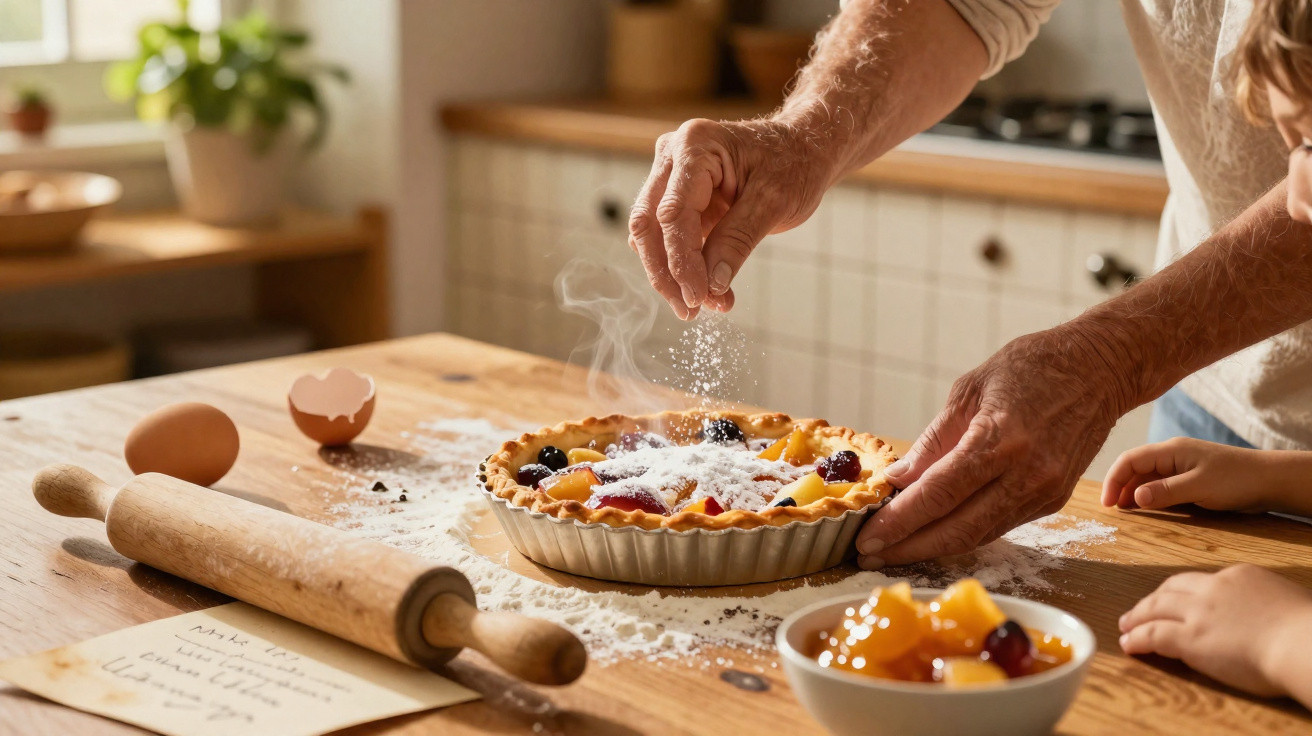
No notification sounds, no television murmuring in the background – just the faint crackle of pastry settling as it cooled. The room smelled richly of butter and baked fruit, with a slight edge of sugar caught at the point of caramelising. Around the table, three generations found themselves leaning closer without realising it.
Grandmother inspected the crust’s colour first; the teenager watched the gleaming filling, while the youngest simply followed the aroma. Nobody reached for a knife. They waited. Someone coughed lightly, someone laughed without knowing why, and the tart rested between them like an old companion that already knew every family tale. The first slice was served slightly unevenly. Pastry shattered into flakes, the filling gave way, and the atmosphere in the room changed.
Because this was more than a dessert.
The tart that always returns to the table
Every family appears to have one recipe that will not vanish. For some, it is a stew; for others, a soup. For many, though, it is an unassuming tart that reappears at birthdays, Sunday lunches and those evenings when someone says, “come over, I made something”. This tart has that understated pull: a crisp, buttery case, a smooth filling and a gloss that never feels overdone. One cut through it makes it clear why it keeps returning.
It is not the sort of dessert that demands to be noticed. There are no towering tiers, no sparkle and no theatrics. There is simply a well-baked pastry case and a filling balanced between sweetness and comfort. On the plate, it seems plain, almost restrained. Then comes the first bite: citrus lingering at the back, vanilla warmth and the gentle bite of a caramelised surface. Before finishing the first slice, you are already considering another.
In one family I came across, the tart predates their dining table. The recipe began on a handwritten card from a great-aunt who lived above a bakery in Lyon. Her instructions included phrases such as “a good handful of sugar” and “bake until it feels right”. Her niece turned those loose notes into a usable recipe, setting baking times, weighing flour and making sense of the imprecision. Decades on, the card is butter-stained, greasy around the edges and nearly missing its corners. Still, it remains in the same tin, brought out for every celebration.
At Christmas, it is served with a spoonful of thick cream. During summer, berries are heaped over the top. When a cousin emigrated, the tart was the final thing they ate together before heading to the airport. When a baby arrived, somebody discreetly took a foil-wrapped slice to the maternity ward – a little squashed, but tasting of home. Photographs change, hairstyles change and phones change. The tart on the table remains.
This recipe endures while others disappear into neglected cookbooks for a reason: it is accommodating. The dough tolerates a kitchen that is slightly too warm. The filling does not object if the vanilla is added with a heavy hand. It suits apples, pears and plums, or a lemon custard when there is no fruit in the bowl. It allows shortcuts on a Tuesday, yet rewards patient care on a Sunday. That adaptability carries it through shifting lifestyles, preferences and timetables. A recipe that gives rather than breaks will always return.
The small steps that make all the difference
The secret behind a lasting tart lies in barely noticed movements rather than expensive ingredients. It begins with how the pastry is handled: cold butter, swift hands and a bowl kept out of the sunshine. Rub the butter into the flour until the mixture resembles coarse sand, then stop before it becomes oily. Add only sufficient water to bring the dough together, then allow it to rest. That pause is where the magic starts. Gluten loosens, flavours settle and the eventual crust quietly prepares itself.
Rolling the pastry brings another subtle challenge. Dust the board sparingly, and use a rolling pin that glides rather than pushes. Rotate the dough by a quarter turn after every few rolls, noticing the almost inaudible sound as it extends. Ease it into the tin, allowing it to settle into the corners rather than pressing it there. A few tidy fork pricks turn that pale, soft round into the promise of a golden case. Everything depends on touch.
Over time, people gather tart disasters like battle tales: pastry cases slipping down the tin, fillings leaking, splitting or turning rubbery, and soggy bottoms everyone tactfully ignores. The honest truth is that even skilled bakers get it wrong when they hurry or miss out the supposedly dull stages. Blind baking with baking beans can feel tiresome. Chilling the pastry once more in the tin may seem unnecessary.
But these are the details that determine whether a tart becomes memorable or merely “fine”. Cover the pastry with baking paper, fill it with beans or rice, and bake until pale gold. Allow it to cool a little before the filling goes in. Pour the filling gradually near the oven, rather than carrying a wobbly tin full of liquid across the kitchen. And yes, give it time to set. That period when everyone prowls around the kitchen like hungry cats is precisely what creates neat slices and a silky middle. Let’s be honest: nobody follows every rule every day. Yet when you do, the result shows on the plate.
There is a particular reassurance in hearing somebody say:
“Every time I bake this tart, I feel like I’m calling my family to the table, even when they’re not all here.”
Versions of those words are heard in kitchens everywhere, across languages and recipes, but their meaning does not change. A tart that has survived for decades contains more than eggs and sugar. It carries rows resolved over dessert, apologies made more easily with a fork in hand, and celebrations that ran late into the night. In practical terms, the recipe is simple. Emotionally, it is anything but.
- For the pastry: 250 g flour, 125 g cold butter, 1 egg yolk, 2–3 tbsp cold water, pinch of salt.
- For the filling: 3 eggs, 150 g sugar, 200 ml cream, zest of 1 lemon, vanilla, seasonal fruit or caramel topping.
- Essential step: Chill the dough twice, blind bake once, then let it cool before cutting. Your future self will thank you.
A tart recipe shared by everyone who makes it
This tart does not have one fixed identity. In one kitchen, it is filled with finely sliced apples, dusted with cinnamon and sugar, then baked until its edges curl and deepen in colour. Elsewhere, it becomes a smooth lemon custard, barely browned on top, with a centre that trembles just short of wobbling. Another baker begins by caramelising sugar in a pan, pouring it into the tin before adding pears, which soak in sweetness beneath the pastry before the whole tart is turned out upside down. The underlying recipe remains; the life around it changes.
What lasts through every adaptation is the ritual: quiet measuring, the scrape of a bowl and the moment spent at the oven door, checking colour and trusting your eyes rather than the timer alone. You learn your oven’s temperament, its hot spots and when the tart needs turning halfway through. Gradually, you rely on instinct again. Perhaps that is the most contemporary gift this old recipe offers: it draws you away from precise figures on a screen and back towards your senses.
Most of us know the moment when somebody asks for the recipe and the room suddenly feels gentler. Do you provide the exact ingredient list, or pass over the stained card with its imprecise directions and let them make their own memories? A recipe passed between generations becomes less like a possession and more like a common language. You reduce the sugar for a diabetic uncle. You replace butter with a plant-based alternative for a vegan friend. The tart withstands those changes because the essential thing is that it arrives warm and ready when people come together.
The next time one of these tarts comes from the oven and reaches the table, take note of what follows. Watch the conversation shift. Notice who leans forward, who takes the first slice and who waits to serve everyone else. Hear the unexpected stories: “Do you remember the time…” or “Grandma used to burn the edges on purpose.” This delicious tart recipe has lasted not because it is flawless, but because every generation can leave its mark on it. That is what keeps it quietly and stubbornly alive.
| Key point | Detail | Benefit for the reader |
|---|---|---|
| Pastry technique | Cold butter, quick mixing, chilling twice, blind baking | Ensures a crisp, golden base that neither slumps nor turns soggy |
| Adaptable filling | A base of eggs, sugar, cream, citrus, and fruit or caramel | Easily adjusts to seasons, tastes and dietary changes |
| Emotional ritual | Handed down, personalised and connected to gatherings and memories | Makes the tart meaningful rather than simply “another dessert” |

















Comments
No comments yet. Be the first to comment!
Leave a Comment