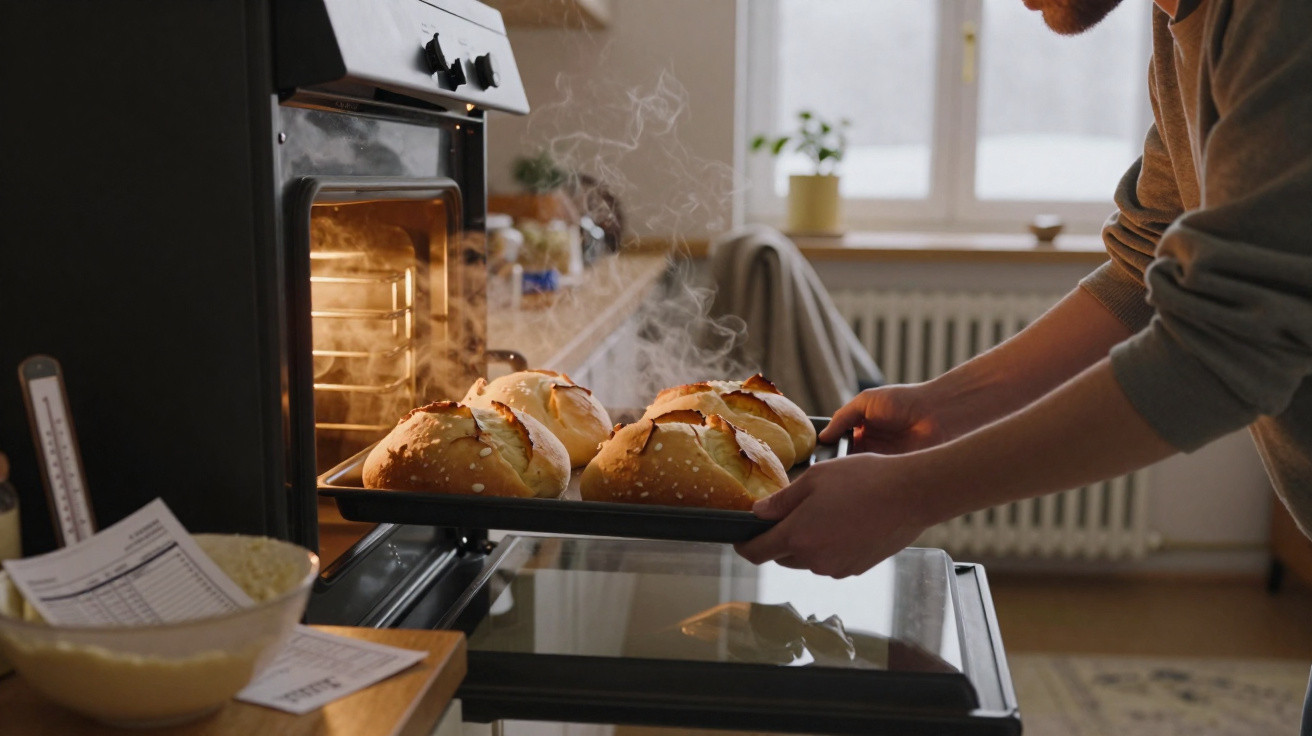
A quiet Sunday routine can, however, take a little of the sting out of the cost: bake a straightforward loaf. The energy used for baking also warms the space around you. It is one small adjustment with two benefits-the understated advantage of a winter kitchen.
At 10 a.m., the oven light came on, match results murmured from the radio, and the dog had its nose buried in a bag of flour. Yeast clouded a bowl of warm water as my fingers worked the dough from habit, while the cold kitchen gradually began to soften. Steam misted the glass, frost dotted the neighbours’ roofs, and I lowered the radiator by a notch without really noticing. The warmth from baking was not fierce; it was calm and welcoming, settling into the tiles and cupboards. We ate buttered slices while they were hot, and the kitchen remained warm well after the tin had been emptied. What began as a Sunday routine became a modest lesson in household economics. The loaf provided more than food.
Why your Sunday loaf doubles as heat
Baking does more than prepare food. It also warms your home’s largest heat sink: the kitchen. An oven releases a little warmth as it cycles, and opening its door allows that heat to flow into the room, where it is absorbed by the floor, worktops and walls. After taking out the bread, turn the oven off and leave the door slightly ajar to make it a mild radiator for around half an hour. This is the heat-battery effect. The energy has been paid for once, yet it serves two purposes.
Alice, in Leeds, began making bread each Sunday last winter. She baked two loaves, sometimes adding a tray of roasted root vegetables beneath the rack. Her smart-meter charts showed one late-morning rise in electricity use, followed by lower gas consumption during the early afternoon. She estimates that she saved £8–£12 a month through the coldest period, while her thermostat could stay one degree lower for two or three hours. They are modest amounts, but they accumulate. We have all seen a small change quietly reshape a day.
The principle is straightforward. Heating an entire home is inefficient when most of your time is spent in only one or two rooms. Sunday baking puts energy into the room where you are actually living. The oven fan circulates air, the cooker’s metal retains warmth, and the kitchen heats up more quickly than it would if every radiator were switched on. Factor in the thermal mass of a casserole dish, baking tray and loaf tin, and you have created a small warm refuge. It is not a sauna, but it can make a meaningful difference.
How to turn a loaf into lower bills
Make your baking a single block of activity. Heat the oven once, then bake two loaves one after another, or make one loaf alongside vegetables or granola. A fan oven running at 180–200°C for 45–60 minutes commonly consumes about 1–2 kWh-roughly the cost of a large coffee. Batch baking cuts the energy lost to repeated preheating. Once finished, switch the oven off, open its door a little and let the warmth escape as you put the kettle on. That is your free “radiator” period.
Watch the smaller sources of waste. Extended preheating costs money, so set an eight-minute timer and put the tin in as soon as the indicator light goes out. Avoid opening the door every five minutes to inspect the loaf. The steam is doing its job; your eyes are not. If you have Economy 7 or an off-peak weekend period, try to schedule the bake within it. Realistically, no one manages that daily. Doing it once a week is enough to notice a change.
Let the loaf help prepare for the days ahead. Freeze half after slicing it, rather than heating the oven midweek for one bread roll. Combine baking with other jobs that need heat, such as sterilising jars, toasting nuts or drying a cast-iron pan. It is a rhythm, not a strict instruction. In a sense, you are borrowing warmth from the coming week.
“Bake once, heat twice. If you can eat the energy you use, your bill and your room both feel lighter,” says a Yorkshire baker who switched to Sunday batch bakes during last winter’s price cap squeeze.
- Use the fan setting to shorten cooking time and distribute heat evenly.
- Put a tray of vegetables on a lower shelf while the loaf bakes.
- Let the bread cool on a rack in the kitchen, keeping the warmth in the room.
- Shut doors to the hall so the heat does not escape upstairs.
A warmer ritual, not a rule
Sunday bread-making is not a miracle solution; it is a practical prompt. It turns a necessary job-feeding yourself-into a small winter heating strategy. Think of it as zoning: warm the room you are using while you are there, then allow the retained warmth to spread over the following hour. There is less need to reach immediately for the thermostat, and more time spent in a welcoming kitchen doing something delicious.
Running costs depend on the oven, energy tariff and property. A standard fan oven may use 1.2–2 kWh to bake a loaf, while lowering the thermostat by one degree or postponing a heating cycle can reduce gas use. The main advantage comes from batching: prepare several items beneath the same heated roof. The oven’s energy then becomes bread, lunches, snacks and a kitchen that no longer numbs your fingers. Call it batch baking-the orderly companion to thrift.
There is a feeling to it as well. Winter can compress a day until it feels tight. A basic loaf gives you an activity with a start, a scent and a slice at the finish. It turns the kitchen from a passageway into somewhere worth being. Take that invitation: ask a neighbour round for tea, show a child how to knead, or message a friend about the spare loaf. It is not a hack, but a habit. And habits can quietly alter both bills and rooms at once.
| Key point | Detail | Benefit for the reader |
|---|---|---|
| Bake once, heat twice | Use oven warmth as a brief, gentle room heater once baking is finished | Converts cooking energy into comfort at no extra cost |
| Batch the heat | Bake loaves and side dishes with one preheat; avoid baking single items | Produces more food from the same energy and reduces wasted warming-up time |
| Time it smart | Schedule Sunday baking for off-peak periods and the coldest hours | Moves usage to cheaper times and reduces heating demand |

















Comments
No comments yet. Be the first to comment!
Leave a Comment