It was a Tuesday evening, one of those that seems to linger like an unfinished thought. The day had been loud and unfocused, packed with pings, alerts and people requesting “just one quick thing.” You opened the fridge, looked into its cold light, and felt that familiar, quiet let-down: assorted vegetables, half a block of cheese and, for some reason, three types of mustard. Nothing looked remotely comforting.
You didn’t want a salad. You didn’t want a takeaway. You wanted food that felt like a hug served on a plate.
Then you spotted a bag of potatoes, a carton of eggs and a nearly overlooked piece of cheddar. That was enough. In your mind, a straightforward, oven-baked recipe began to take shape.
The sort of dish that keeps you grounded when everything else feels slightly unsteady.
A baked recipe for when life feels unreliable
There is a gentle kind of magic in baked potato gratin. It is not showy: no viral trick, no glossy topping. Just finely sliced potatoes, a little onion, milk or cream, cheese and time. It is the sort of recipe that never demands attention yet somehow ends up as the table’s centrepiece.
You layer it, pour over the liquid and wait. As it cooks, the smell gradually fills the house and seems to say, almost audibly, “You’re safe. Stay a while.”
This is not food that transforms your life. It gives it something solid to hold on to.
Imagine a wet Sunday when you have turned down plans you were too tired to honour. Outside, everything is grey and group chats keep buzzing, while you are wearing old joggers and mismatched socks. You cut the potatoes into rounds-not perfect, simply thin enough to cook properly.
In an ordinary oven dish, you assemble it: potatoes, a scattering of onion, a handful of cheese, then salt and pepper. You repeat the process until the dish is full. On the hob, you heat milk with a knob of butter and a crushed garlic clove before slowly pouring it over the layers.
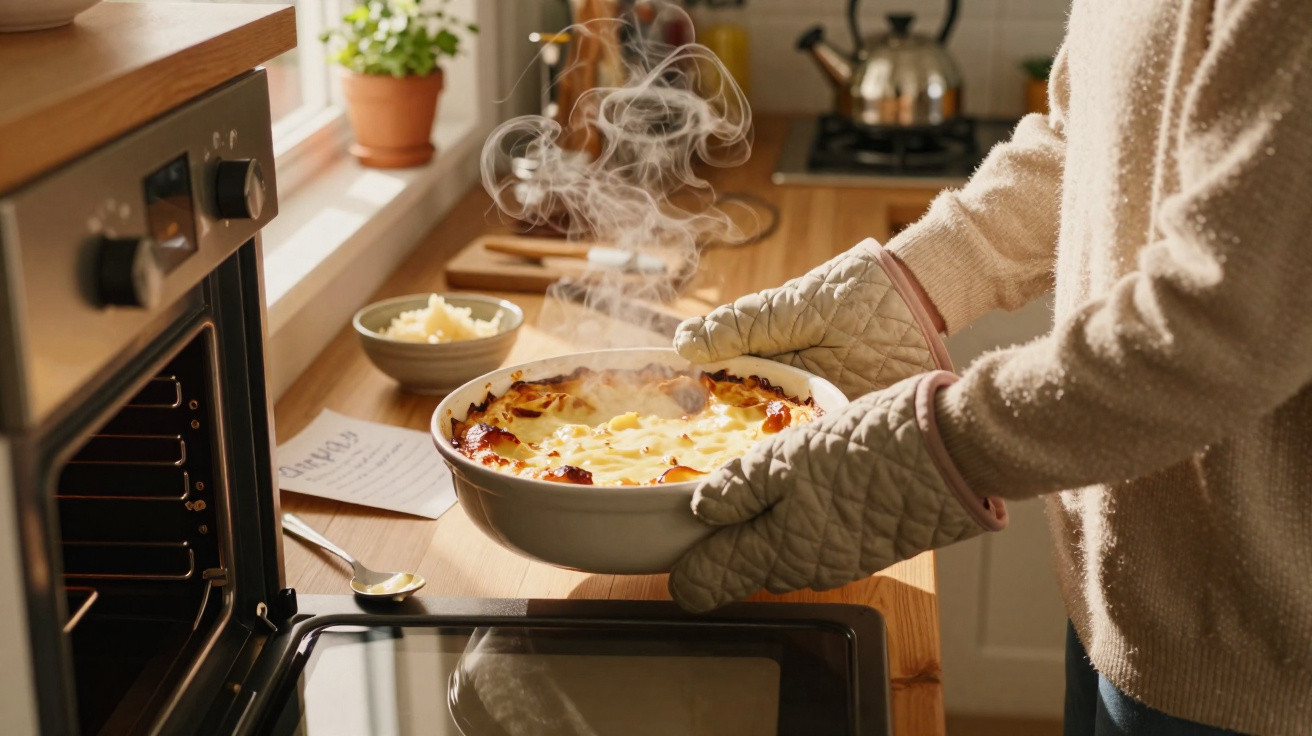
Forty-five minutes later, you take out a bubbling, golden and slightly untidy gratin. It will not photograph beautifully for Instagram. Still, you will probably have a second helping.
Why does this particular baked recipe feel so dependable? Partly, it comes down to its construction. It is made in literal layers, with each one supported by the one beneath and everything brought together by warmth and time. The process itself is a small ritual: peel, slice, arrange, pour and bake. Your hands have enough to do that your mind can finally loosen its grip.
Its reliability matters too. Potatoes, dairy and heat rarely let you down. There is no elusive spice to hunt for and no delicate method that fails if you make one tiny mistake. You can follow the steps half-tired and still end up with something deeply satisfying.
There is real comfort in that. During a week of cancelled plans and relentless news cycles, it is oddly reassuring to know that if you put this in the oven, it will come out well.
How to make a steady baked potato gratin, step by step
Keep it uncomplicated. Take 5–6 medium potatoes, a small onion, about 150 g grated cheese, 475 ml milk or cream, 30 g butter, one garlic clove, salt, pepper and, if available, a pinch of nutmeg. Heat the oven to 190°C. Nothing elaborate-just a reliably warm oven.
Cut the potatoes into thin slices, roughly coin-thick. You can leave the skins on if they are clean; they provide a slightly rustic texture and save preparation time. Slice the onion into fine half-moons.
Use the cut side of the garlic clove to rub the inside of the baking dish, then coat it with butter. It is a small detail that makes a quiet difference.
Next, create the layers. Arrange the first potatoes so that they overlap slightly, like roof tiles. Add a light scattering of onion, salt and pepper, followed by a small handful of cheese. Continue in the same order: potato, onion, seasoning and cheese. Stop close to the top of the dish and finish with cheese.
Warm the milk or cream gently on the hob with the remaining garlic clove, lightly crushed, the rest of the butter and a very small pinch of nutmeg if you want it. It should not boil; warm it only until it feels comforting rather than scalding.
Slowly pour the mixture across the layered potatoes. Tip the dish from side to side so the liquid reaches every corner. That is where the comfort is tucked away.
Place the dish in the oven, uncovered, for 40–50 minutes. The surface should be golden with crisp edges, while a knife should pass through the potatoes easily. Should the top colour too quickly, loosely cover it with foil and continue baking until the potatoes are tender.
One step is often overlooked: leave it on the worktop for 10 minutes before serving. The sauce will thicken, the layers will settle and the portions will hold their shape more neatly. Realistically, nobody manages this every day. But when you do have the patience, it is well worth it.
Sometimes, the most reliable recipes aren’t the ones that impress guests, but the ones that quietly rescue your evening.
- Make use of what is available: replace cheddar with gruyère, leftover ham or even roasted vegetables.
- Make it lighter: use mainly milk with only a splash of cream, plus a little less cheese.
- Prepare ahead: assemble it in the morning, then bake it in the evening when you get home.
- Freeze sensibly: bake, cool, divide into portions and freeze for those emergency “I can’t cook tonight” occasions.
- Make it a meal: a punchy green salad or roasted broccoli turns it into a complete dinner.
Why this baked potato gratin feels different on difficult days
There is a reason some dishes become a form of emotional shelter. This baked potato gratin asks nothing performative of you. You do not need specialist skills, an immaculate kitchen or a table worthy of a mood board. All you need is a knife, some heat and a little patience.
When the timer sounds and you lift that bubbling dish from the oven, something inside starts to relax. You have taken random, slightly dispiriting ingredients and made them into something warm, rich and generous.
And you have done it without trying to make it perfect.
| Key point | Detail | Value for the reader |
|---|---|---|
| Simple base | Potatoes, dairy, cheese, onion, basic seasoning | Easy to cook from a nearly empty fridge |
| Low-stress method | Layer, pour, bake, rest | Reliable results even when you’re tired or distracted |
| Flexible formula | Accepts add-ins and swaps like leftovers, different cheeses, or veggies | One steady recipe that adapts to changing weeks and tastes |
FAQ:
- Question 1: Can I use only milk instead of cream for the gratin? Yes. Use whole milk if you can, add a bit more cheese, and bake slightly longer. The result will be lighter but still comforting.
- Question 2: Do I have to pre-cook the potatoes first? No. Thin slicing is enough. As long as they’re around coin-thin and you bake 40–50 minutes, they’ll cook through.
- Question 3: What cheese works best? Firm, melty cheeses like cheddar, gruyère, comté, or mozzarella blends. A spoon of parmesan on top adds a lovely salty crust.
- Question 4: How do I turn this into a full meal? Add cooked bacon, ham, or leftover chicken between layers, and serve with a simple green salad or steamed vegetables.
- Question 5: Can I reheat it the next day? Yes. Cover with foil and reheat in the oven at 160–170°C until warmed through. The flavours often deepen overnight.

















Comments
No comments yet. Be the first to comment!
Leave a Comment