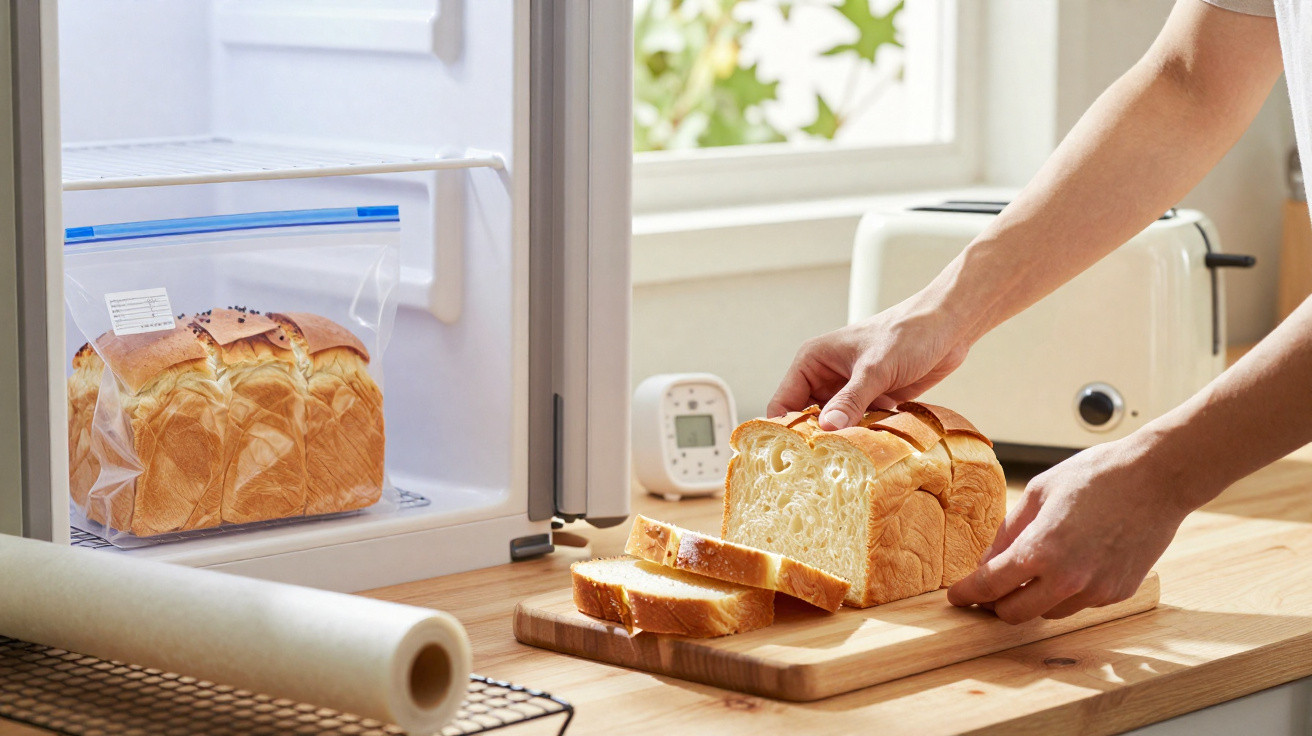
Millions of people put loaves in the freezer, believing they will last indefinitely.
However, several easily missed factors can silently spoil the bread.
In households across Europe and North America, freezing bread has become a popular way to cut food waste. It seems both practical and risk-free, yet food scientists and dietitians warn that freezing and defrosting methods can alter bread’s flavour, texture and even its effect on blood sugar. Anyone keeping sliced loaves and rolls in a freezer drawer should take note.
Why freezing bread isn’t as simple as it looks
Freezing bread is not inherently unsafe. Below freezing point, bread will not develop bacteria or mould. Instead, the issue is the effect that excessive freezer storage or poor defrosting has on its structure and nutritional behaviour.
Bread consists of a fragile arrangement of starch, gluten and minute pockets of moisture. During freezing, this moisture becomes ice crystals. If managed properly, the crystals remain small and the crumb regains its spring when warmed. If not, the internal structure breaks down, resulting in bread that is pale, dry and rubbery.
Freezing does not strip bread of vitamins and minerals, but it can change its texture and raise its glycaemic impact if misused.
Nutrition specialists also highlight a less immediately visible consequence. Baking bread, freezing it and then reheating it can alter its glycaemic index. In other words, the body may take in its starch more rapidly, producing a steeper blood-sugar rise, particularly where reheating is very intense or inconsistent.
The hidden mistake: how you thaw your bread
Leaving frozen bread on the kitchen counter for several hours is the least effective approach. While it gradually comes up to temperature, moisture moves through the crust and crumb, making the exterior damp but drying the middle.
Slow defrosting also reduces the period in which bread remains enjoyable. After only a few hours, a slice can taste stale and develop a cardboard-like texture. At that point, many people discard it, defeating the original purpose of freezing it.
The right way to bring frozen bread back to life
Bakers and dietitians favour the same approach: transfer bread from the freezer directly to heat.
- For sliced loaf bread: put frozen slices directly into the toaster.
- For a baguette: spray it very lightly with water, then warm it in a hot oven for several minutes.
- For rolls or buns: use an oven or air fryer rather than a microwave.
Defrost bread directly in the toaster or oven to restore a crisp crust and soft crumb, and to avoid a limp, gummy texture.
Although a microwave may look like the quickest option, it commonly leaves the crumb firm and chewy within minutes. The bread may emerge feeling soft, only to become hard as it cools. Unless it is an emergency snack, a toaster or oven is considerably gentler on the bread.
How long frozen bread really stays good
Food-safety advice frequently states that bread can remain frozen for several months. But being “safe” is not the same as being enjoyable. As time passes, ice crystals become larger, puncturing the gluten network and forcing out moisture, which leaves the loaf dry and pale.
The longer bread stays in the freezer, the more the water crystals damage its structure, leading to a whitish surface and a rubbery bite.
Experts recommend viewing one month as a sensible quality limit, particularly for lean, crusty loaves such as baguettes. After this point, both texture and flavour decline markedly.
Different breads, different freezing times
| Type of bread | Recommended maximum time in freezer (for good quality) | Notes |
|---|---|---|
| Classic baguette | Up to 1 month | Loses moisture quickly, and its crust soon stops being crisp. |
| Country loaf / sourdough | 4–6 weeks | Greater hydration and a thicker crust help it last slightly longer. |
| Industrial sliced sandwich bread | Up to 2–3 months | It often includes additives that delay staling, albeit with less nutritional interest. |
| Enriched breads (brioche, challah) | 4–6 weeks | The fat helps maintain softness, although the flavour diminishes with time. |
Bread kept frozen far beyond these periods is generally still safe if it has remained completely frozen and has no freezer burn. Nevertheless, the quality once served rarely makes such prolonged storage worthwhile.
The right way to freeze bread in the first place
A loaf placed in the freezer inside its paper bag will not keep well. Air is the main problem: it dries the crumb and promotes freezer burn, the grey-white marks sometimes found on old frozen foods.
For the best outcome, let freshly baked bread cool fully before slicing or dividing it into portions. Then wrap it securely.
- Choose freezer bags or tightly sealed plastic containers, removing as much air as you can.
- Cut baguettes into large sections that will fit in your toaster or oven.
- With homemade bread, slice it in advance so that you defrost only the amount required.
- Mark every bag with the bread type and date.
Small, well-wrapped portions mean you only defrost what you will eat within a few hours, sharply cutting food waste.
Bread left uncovered in the freezer can take on odours from nearby food. The slight onion or fish flavour sometimes detected in frozen bread is almost always the result of inadequate packaging.
Glycaemic index: what frozen bread does to blood sugar
Nutrition researchers have examined how freezing and reheating starchy foods may influence their glycaemic index (GI), a measure of how swiftly food increases blood sugar. Bread already tends to have a comparatively high GI, especially white bread produced with refined flour.
As bread is baked, cooled, frozen and reheated, its starch changes structure repeatedly. Part of that starch becomes “resistant starch”, which is digested more gradually. Conversely, vigorous reheating, particularly at high temperatures, may increase the rate at which other starches are absorbed.
This may be relevant for people with diabetes or prediabetes. After eating previously frozen bread, especially bread that has been heavily toasted, they may experience glucose peaks that are sharper or harder to predict.
Those who monitor blood sugar should treat frozen, reheated bread as a separate food, and test how their body responds.
Wholegrain bread, with its higher fibre and nutrient content, is still preferable to white bread whether it is frozen or fresh. Combining bread with protein and healthy fats, including eggs, cheese, hummus or nut butter, also slows digestion.
Practical scenarios: making the freezer work for you
For households that eat bread every day, the freezer can be an effective means of reducing waste. A straightforward routine is all that is needed.
Suppose you buy two fresh baguettes on a Saturday. Rather than leaving both out on the counter, slice one, allow it to cool and place the slices in a freezer bag. Each morning, remove only the slices needed for breakfast and put them directly into the toaster. Nothing is left on the table to soften.
Or consider someone living alone. An entire loaf may be more than they can use. Freeze one half in separate packets containing two slices each. On a busy evening, take out a packet, toast the bread and have it with soup or salad. There is no half-stale loaf lingering in the bread bin and no wasteful trip to the bin.
Risks and small red flags to watch for
Several signs indicate that frozen bread has moved beyond “not great” and should be avoided.
- Powerful unpleasant smells, particularly sour or freezer-burnt odours.
- Mould visible after defrosting, even where the bread was frozen – discard it immediately.
- Extremely pale, dried slices that remain hard after heating.
- Large ice crystals in the bag, suggesting the bread has partly defrosted before being refrozen.
Repeated defrosting and refreezing in a frost-free freezer can make this deterioration happen faster. Storing bread at the rear of the drawer, where temperatures are most consistent, offers better protection.
A few terms worth unpacking
Two ideas are often mentioned in discussions of frozen bread. Knowing what they mean helps explain the guidance above.
Freezer burn is not a burn in the ordinary meaning of the word. It refers to dehydration and oxidation caused by food’s exposure to air in the freezer. On bread, it appears as faded colour and dry, tough areas.
Gluten network refers to the web of proteins in wheat dough that holds trapped gas and creates bread’s chewiness. Over months in the freezer, ice crystals damage this web, explaining why an old frozen loaf can be rubbery and lack spring.
With a little attention, the bread stored in your freezer can remain a real weapon against waste rather than becoming a frosty collection of forgotten crusts.

















Comments
No comments yet. Be the first to comment!
Leave a Comment