The first time you make sandwich bread at home, it usually unfolds in much the same way. You imagine a lofty, cloud-soft loaf with a golden top, like those displayed in a bakery window. You follow the recipe, knead the dough, leave it to prove, and watch it swell beneath a tea towel with the sort of optimism normally saved for lottery tickets.
Then comes the first slice. The crust is perfectly respectable. The aroma is reassuring. Yet the crumb is slightly dense, perhaps a touch dry. It is not quite the pillowy, flexible bread that holds a filling as beautifully as your favourite shop-bought loaf.
Somewhere between your kitchen and the bakery, a vital detail has been lost.
The quiet step bakers treat like a sacred ritual
Every professional baker I have watched has one small habit in common. Once the dough has been kneaded until smooth and elastic, they stop. They do not immediately put it into a tin, nor do they hurry it towards its rise. Instead, they cover it, step away and allow it to do something that may sound unremarkable on paper but transforms the finished loaf.
They let the dough rest properly. This is not a hurried five-minute break while the worktop is cleared, but an intentional, protected pause before shaping and the final proof. Known as a “bench rest”, it may appear as though nothing is happening. In a bakery production schedule, however, it is non-negotiable.
I first noticed it behind the scenes at a small urban bakery producing the softest sandwich loaves in the neighbourhood. Orders were coming in fast, mixers thundered and timers sounded constantly. But when the dough for the white sandwich bread left the mixer, the head baker did something I did not expect.
He weighed and divided the dough, rounded each piece into a rough ball, and covered them with a lightly oiled plastic sheet. Then he left them for twenty minutes. No handling. No multitasking. He rested against the bench, looked at his phone and chatted about the weather. The entire production schedule made room for that peaceful interval. It was not glamorous, but it was entirely deliberate.
That pause gives the dough time to relax. The gluten structure, which has been worked intensely during kneading, gradually slackens and releases its tension. Without this rest, dough resists shaping, is more likely to tear and will not stretch as smoothly into the close, uniform loaf shape that bakes tall and airy.
As it rests, moisture becomes more evenly distributed, the dough temperature balances out and the yeast gets a gentle start before the final proof. That’s why pro sandwich loaves seem to have that soft, even crumb that feels almost elastic between your fingers. Miss out this stage and, even if every other part of the recipe is right, your loaf can still fall just short of bakery magic.
How to copy the pros: the bench rest you’re probably skipping
Here is what this professional-style rest looks like in a home kitchen. Mix and knead the dough until it is smooth and lightly tacky. The windowpane test should work more or less, and the dough should spring back when pressed. Form it into a rough ball, tuck the seams beneath it, then place it in a covered bowl for its first rise until doubled in size.
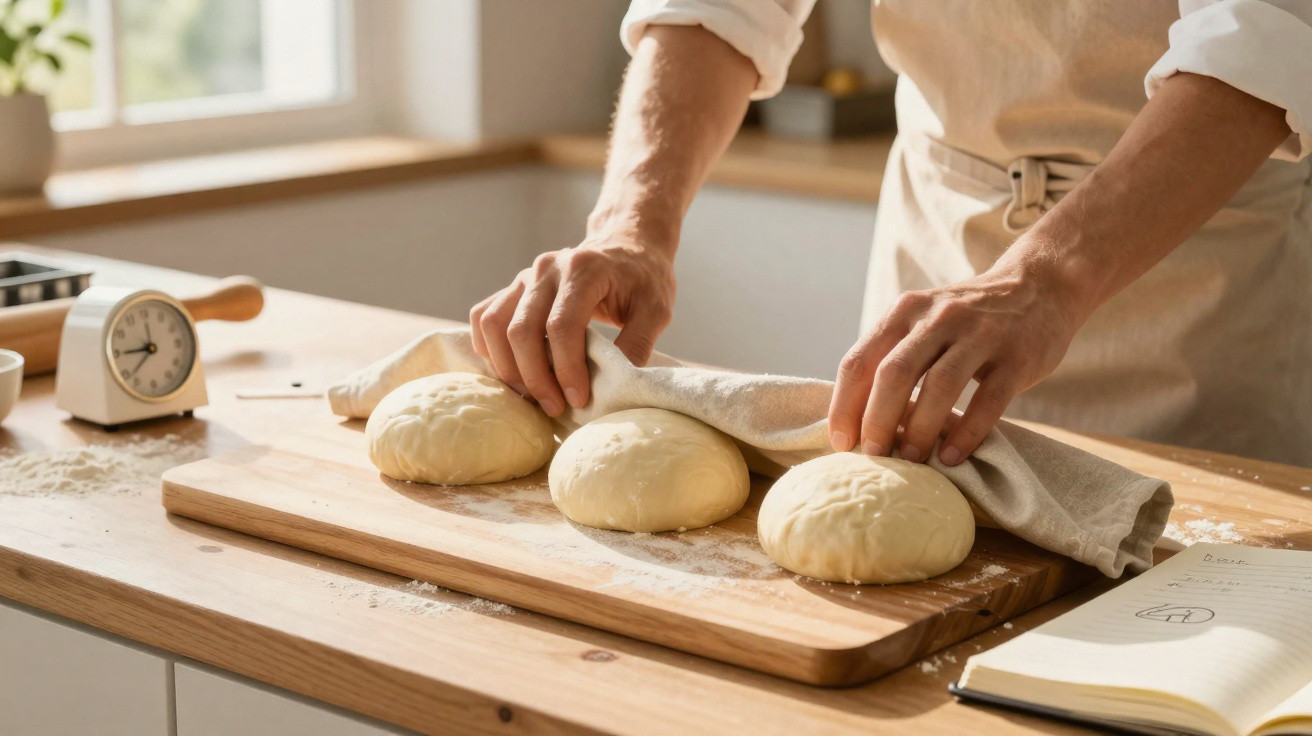
This is where the key stage begins. Carefully turn the dough out onto the worktop, gently press out the air and divide it if you are baking more than one loaf. Pre-shape each portion into a loose ball, cover them with a damp cloth or light plastic, and leave them undisturbed for 15 to 25 minutes. This is the stage professional bakers almost never miss.
Home bakers often say they “don’t have time” for one more waiting period. That is completely understandable. You may be balancing work, children, laundry and a phone timer that already seems to run your day. In truth, hardly anyone manages this every single day.
Still, the frustration comes up repeatedly. The dough rose beautifully in its bowl, only to remain low and squat in the tin. The crumb was a little close, as if it wanted to become fluffy but could not quite manage it. This is often the result of missing the resting window and forcing the dough straight into the tin. The gluten remains tight, shaping becomes a struggle and the bread suffers for it in the oven.
“Bread dough is like a stubborn kid,” one Paris-trained baker told me, laughing. “If you don’t give it a moment to calm down before you ask it to behave, it will fight you the whole way into the pan.”
- Let the dough relax: Leaving it on the worktop for 15–25 minutes after pre-shaping allows the gluten to loosen, so the dough stretches rather than tears.
- Keep it covered: A light cloth or oiled plastic stops the surface from drying out, which can make the crust of an otherwise soft loaf tougher.
- Make use of the time: Grease the tin, clear the worktop or measure fillings while the dough rests. It feels more like organising the process than simply waiting.
- Observe, rather than obsess: After resting, the dough should seem softer and easier to roll or shape. That is the real indication to follow, not the clock.
- Handle it gently: When it is time for final shaping, press and roll with a light touch. The resting period has done the difficult work; you only need to guide the dough.
The small pause that softens more than just bread
Once you begin respecting that brief bench rest, your sandwich bread changes noticeably. The dough starts to cooperate. It rolls into an even rectangle, settles tidily into the tin and rises higher with fewer odd bubbles and dents. The finished loaf feels lighter to hold, cuts more neatly and folds around fillings rather than splitting beneath them.
The baker changes too. That built-in pause can soften the sense of urgency that creeps into home kitchens. Rather than wrestling the dough towards a result, you create a calm, reliable moment in the method: a gentle exhale between the work of kneading and the expectation of baking.
| Key point | Detail | Value for the reader |
|---|---|---|
| Bench rest after pre-shaping | Keep dough covered and leave it for 15–25 minutes before final shaping | Looser gluten, simpler shaping, and a taller, softer loaf |
| Gentle handling post-rest | Press out air lightly and do not overwork the rested dough | Maintains a fine, even crumb rather than creating a dense texture |
| Use of time strategically | Prepare the tin, toppings or cleaning up during the rest | Bread-making feels more seamless and less stressful |

















Comments
No comments yet. Be the first to comment!
Leave a Comment