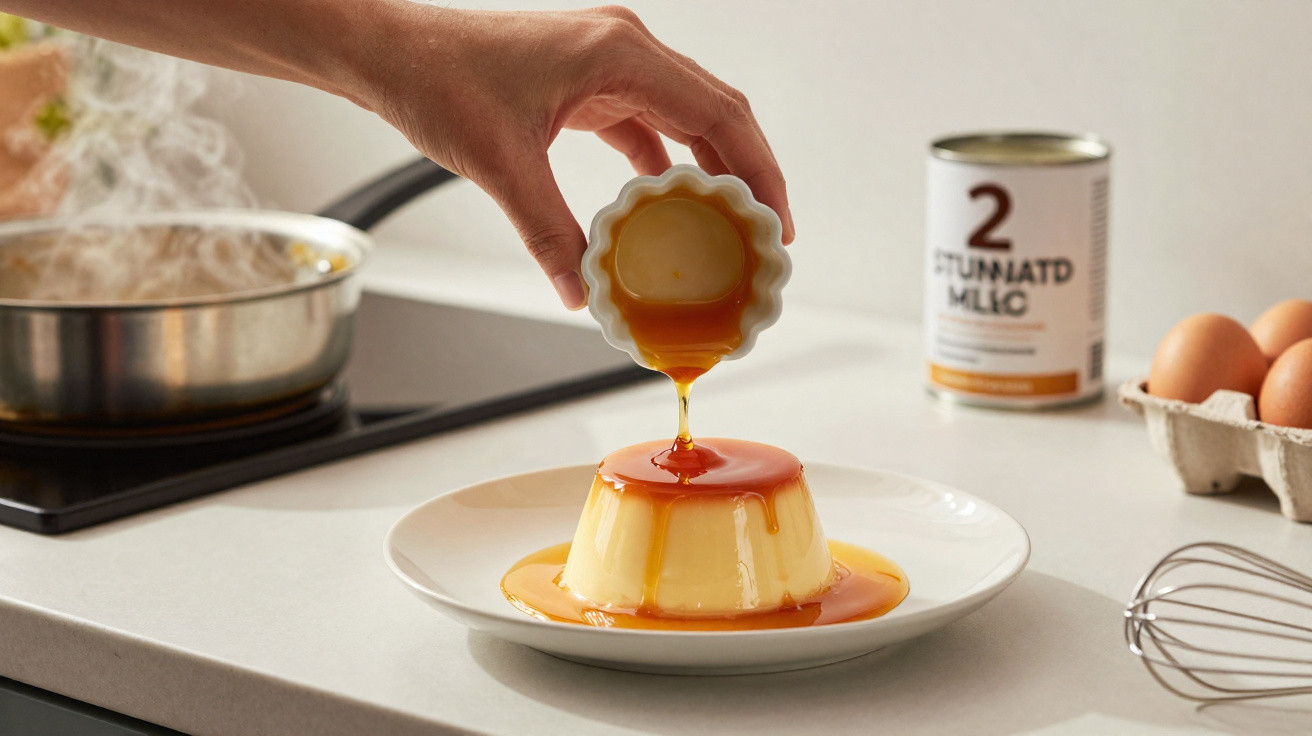
A new viral favourite is appearing everywhere from social media timelines to family WhatsApp chats: a two-ingredient pudding that contains no eggs, relies on supermarket basics and still resembles a traditional flan. Food creators say the method is so reliable that even apprehensive novices are producing a shiny, neatly sliceable dessert on their first attempt.
Why this 2-ingredient pudding is going viral
The idea initially seems almost implausibly simple. It contains neither eggs, milk nor cornflour, using only sweetened condensed milk and full-fat plain yoghurt. Baked slowly in a bain-marie, however, it sets into a smooth, creamy custard finished with a golden caramel layer.
Videos of the recipe have accumulated millions of views on TikTok, Instagram and Brazilian cookery channels. Its popularity is easy to understand: a shorter ingredient list reduces both expense and preparation, while also leaving less opportunity for mistakes.
This pudding trades the usual tangle of eggs and milk for two everyday ingredients, cutting the recipe down to its bare essentials.
For plenty of home cooks, this is a meaningful advantage. Conventional baked puddings may curdle, split, crack or cook inconsistently. Because eggs are highly sensitive to heat, they require careful handling. Here, the yoghurt creates the structure, making the mixture more stable. There is therefore a wider gap between a properly set pudding and an overbaked one, offering reassurance to infrequent bakers.
How it differs from traditional flan-style pudding
Traditional Brazilian pudim is similar to the crème caramel familiar to readers in the UK and US: an egg-based custard baked over caramel, then chilled until set. Eggs provide its rich flavour and gentle wobble, although they also make the process less predictable.
In this two-ingredient pudding, yoghurt becomes the ingredient that sets the mixture. Its proteins and fats firm during baking, while condensed milk brings sweetness and substance. The finished dessert is a little denser and sharper than a standard flan, and many enthusiasts describe it as somewhere between cheesecake and condensed-milk custard.
No eggs, fewer variables: yoghurt supplies the structure, condensed milk supplies the sweetness and creaminess.
The science behind the texture
As the mixture cooks gradually in a bain-marie, three processes take place:
- The yoghurt’s proteins coagulate slowly, building a supporting network.
- Sugars in the condensed milk retain moisture, helping the middle stay creamy.
- Gentle oven heat, together with steam from the water bath, stops the outer edges drying too quickly.
Together, these effects produce the much-loved pudding consistency: sufficiently firm for clean slices, yet tender enough to melt in the mouth.
The base recipe: what you actually need
Part of this dessert’s rapid spread comes from its use of ingredients already found in many kitchen cupboards and fridges.
| Component | Ingredient | Typical amount |
|---|---|---|
| Cream | Sweetened condensed milk | 2 tins (around 790 g total) |
| Structure | Full-fat plain yoghurt | Approx. 320 g |
| Caramel | Sugar + water | 240 ml sugar, 120 ml water |
Food creators recommend avoiding low-fat or “diet” condensed milk, as reduced fat can compromise the set and make the surface appear grainy. The yoghurt is generally brought to room temperature before use, allowing it to combine smoothly with the condensed milk.
Step-by-step: from two ingredients to glossy pudding
The preparation follows the familiar pattern of a classic flan: prepare caramel, combine the cream, bake in a bain-marie and refrigerate.
1. Make a simple caramel
Begin by heating sugar in a heavy-based pan until it becomes golden. Add water with great care to turn it into a pourable syrup. Swirl the hot caramel around a ring mould so that it covers both the base and sides. Once the pudding is turned out, this coating forms its glossy top.
This stage is often the most challenging for viewers. Water added to hot caramel can spit and splutter, so content creators advise using a long-handled spoon and keeping hands clear of the steam.
2. Mix the pudding cream
The pudding mixture is exceptionally straightforward. Pour the condensed milk into a bowl, add the yoghurt and stir until the ingredients are thoroughly blended. A spoon or whisk will do the job; a blender is unnecessary and can add unwanted air bubbles.
The entire custard comes together in one bowl, with no eggs to separate, no cream to heat and no gadgets required.
Pour the mixture carefully over the cooled caramel in the mould. Some cooks chill the mould briefly beforehand, allowing the caramel to thicken a little so that it remains where it should.
3. Bake low and slow in a water bath
Cover the mould with foil, sit it in a larger roasting tin and pour hot water around it. Bake the arrangement in a low oven at around 160°C for approximately an hour.
The water bath, also called a bain-marie, shields the pudding from harsh direct heat. It maintains a more consistent temperature and helps prevent bubbles, cracking and tough edges. When the top feels set under a light touch, take it out and allow it to cool completely before refrigerating it for several hours, usually overnight.
The reveal comes only after this extended chill: run a knife around the mould’s edge, place a serving plate over the top and invert it. The pale pudding then slips free with a soft thud and a slow flow of amber syrup, covered in caramel.
Why people say it’s “impossible to mess up”
The claim that it is “impossible to get wrong” appears repeatedly on social media. It is not strictly true, as mishaps can still occur in any kitchen, but a number of qualities do make the dessert more forgiving.
- Condensed milk thickens the mixture in advance, so it is less likely to separate.
- Yoghurt proteins set across a broad temperature range, providing some leeway if an oven is hotter or cooler than expected.
- There are no eggs to temper and no delicate custard to control on the hob.
- Once the technique is understood, the caramel remains straightforward: sugar and water alone.
Many people baking it for the first time say their pudding was “restaurant-level” at the first attempt, helping to explain its continued momentum on Reels and short-form videos.
Variations without ruining the structure
While the pudding itself relies on the proportion of yoghurt to condensed milk, modest additions can tailor the flavour without disrupting the set.
Simple twists that stay safe
- A few drops of vanilla essence stirred into the cream create a nostalgic bakery-style scent.
- Finely grated lemon or orange zest adds a fresh citrus edge to balance the sweetness.
- Fresh strawberries, kiwi or grapes can be served alongside for colour and acidity.
- People cutting down on sugar sometimes replace part of the condensed milk with a lighter version, while accepting that the pudding will set slightly more softly.
Small touches - vanilla, citrus zest, fresh fruit - let the pudding suit different occasions without complicating the method.
Brazilian creators have also experimented with flavoured yoghurts, including vanilla and Greek-style varieties, to assess their effect on the texture. Full-fat options tend to set well, whereas very thin or low-fat yoghurts can make a looser pudding that is best presented in cups rather than turned out.
Health, budget and practicality angles
Nutritionally, this remains a fairly sweet dessert. Condensed milk contains high levels of sugar and calories. Although yoghurt contributes protein and fat, making it more filling than a gelatine-based dessert, it does not make the pudding a “light” choice. Smaller portions, accompanied by fruit, offer one way for people monitoring their sugar intake to moderate it.
The recipe is especially useful from a cost and food-waste perspective. Two shelf-stable tins plus a pot of yoghurt make a dessert large enough to feed several people. Families often use yoghurt nearing its best-before date, transforming an ingredient that might otherwise be discarded into a dessert for sharing.
This pudding is also convenient for busy households because it can be baked the previous day, stored in the fridge and served directly from it. That makes it a workable option for birthdays, Sunday lunches and office gatherings.
From viral trend to everyday dessert
A large number of viral recipes disappear as rapidly as they emerge. This one may remain popular for a straightforward reason: it works in everyday life. Its ingredients are inexpensive, familiar and easy to find; its method is accessible to beginners; and the final result looks smart enough to offer guests.
Home cooks are already putting their own spin on it, making miniature puddings in muffin tins, adding a pinch of salt to the caramel or serving individual portions in glasses without turning them out. Cookery classes and community groups are suggesting it as an introductory recipe for teenagers and adults who find baking intimidating.
For anyone who has avoided custards and flans because they worry about curdled eggs, this Brazilian trend provides an approachable starting point. Two ingredients, a single bowl and some patience while it chills can be all that is needed to put a tidy slice of caramel-topped pudding on the table at the next family meal.

















Comments
No comments yet. Be the first to comment!
Leave a Comment