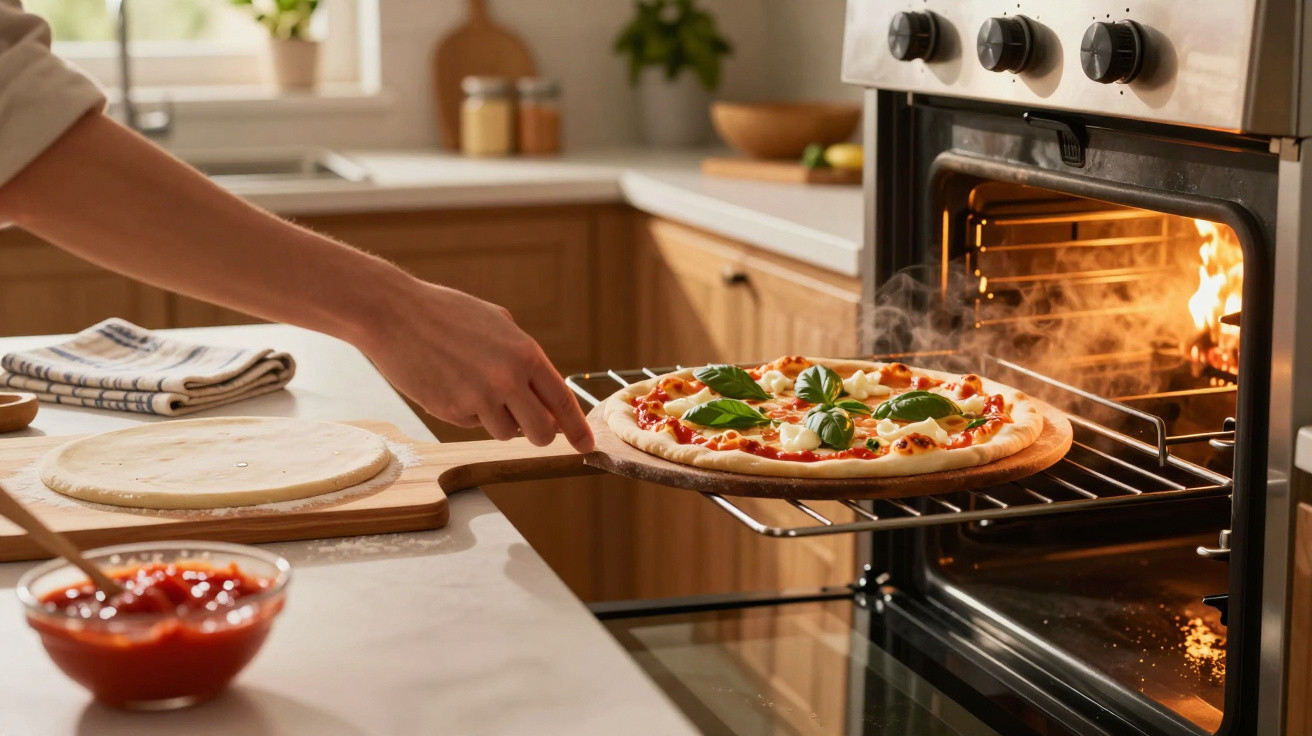
It is 7.40 pm. The dough has risen in its bowl, the mozzarella is waiting on the worktop, and the whole kitchen already smells of tomato and oregano. Then the pizza comes out of the oven: attractive on top, yet soft underneath and almost damp in the middle. We all know that small disappointment, particularly after taking the time to make homemade dough. The good news is that the recipe is not necessarily at fault. Very often, it comes down to the first few seconds of baking, when the dough meets a surface hot enough to sear it. A stone, an upturned baking tray and a few straightforward habits can suddenly give Sunday pizza the feel of a pizzeria. That is the turning point.
Why heat from below makes all the difference to pizza
When a pizza lands on a scorching stone, there can be a faint crackle: subtle, but wonderfully reassuring. The dough is hit with direct heat from underneath, quickly creating the firm, golden base everyone wants without drying out the crust. In a domestic oven, hot air on its own is not always enough. It browns the cheese, certainly, but often struggles to give the base any real character. Contact cooking makes the difference, particularly with a thin dough topped sparingly.
For some home cooks, a sturdy baking tray placed upside down in the oven has happily taken the place of a pizza stone. Preheated for 35 to 45 minutes at 250°C, it stores enough energy to bake a pizza in six to nine minutes, depending on the thickness of the dough. This is not a magic figure, as every oven has its own quirks and a tendency to be less than truthful about its temperature. The improvement is quickly obvious: a crisp, mottled underside that holds up a generous slice instead of letting it flop sadly onto the plate.
A pizza stone acts as a heat store. As soon as cold dough touches it, the stone delivers immediate energy, helping the water in the dough evaporate before the base turns sponge-like. This also accounts for the small brown blisters: those uneven marks associated with good artisan pizza. A crisp pizza is not a dry pizza: its crust should remain soft. The contrast between the two is precisely what makes it so memorable.
Pizza stone, baking tray or steel: the simple approach
The most accessible option is to put a metal baking tray on the lower or middle shelf, with its smooth side facing up if it is flat, or upside down if its raised edges would make sliding the pizza difficult. Set the oven to its highest temperature, ideally between 250 and 275°C, then allow it to heat thoroughly even once the indicator light switches off. A pizza stone often needs 45 minutes, while a heavy baking tray may be ready a little sooner. Assemble the pizza on baking parchment, slide it onto the hot surface and start watching it from the fifth minute.
The most common mistake happens before the pizza even enters the oven: loading the dough with too much sauce, too much cheese or vegetables still full of water. It is understandable: everyone wants a generous pizza that pleases the whole table. Yet just a few spoonfuls of properly reduced tomato sauce and well-drained mozzarella already make a noticeable difference. Let us be honest: nobody really does this every day. On rushed evenings, a very hot tray and lighter topping will still produce a genuinely pleasing result.
To prevent pizza from sticking, tearing or landing crookedly on the stone, it is best to have everything within reach before you begin.
“A good homemade pizza does not require chef-level techniques; it requires heat prepared patiently,” an amateur pizzaiolo often says after a few unsuccessful batches.
Keep these simple pointers in mind:
- lightly flour the peel or baking parchment, without burying the dough in flour;
- drain wet ingredients, especially mozzarella and mushrooms;
- do not open the oven every two minutes;
- finish a pale pizza under the grill for 30 to 60 seconds, while staying close by.
The small pizza ritual that makes you want to do it again
Once the first pizza turns out well, the next ones become almost a family-kitchen ritual: one person rolls out the dough, another picks three basil leaves, and a child asks for slightly too much cheese. The stone or searing-hot tray does more than create a crisp base; it makes you slow down just enough to plan ahead, judge the toppings and watch the baking. With a few attempts, you get to know your oven. That knowledge is worth far more than an expensive accessory bought on impulse.
The perfect pizza probably does not exist, because some people enjoy a very puffed-up crust while others prefer dough that is thin and almost crackly. What matters is that precise moment when you lift a slice and the underside is finally dry, golden and sturdy while the cheese is still stretching. Try a stone, an upturned baking tray or a steel if you have one, then note the baking time and shelf position. Your next dinner could become the simplest, most delicious talking point of the week.
| Key point | Detail | Added value for the reader |
|---|---|---|
| Long preheating | 35 to 45 minutes at the maximum temperature | A surface able to sear the dough as soon as it goes into the oven |
| Controlled toppings | Reduced sauce and thoroughly drained ingredients | A less damp base and more even baking |
| Baking tray or stone | An upturned baking tray is an effective alternative | A crisp result without specialist equipment |

















Comments
No comments yet. Be the first to comment!
Leave a Comment