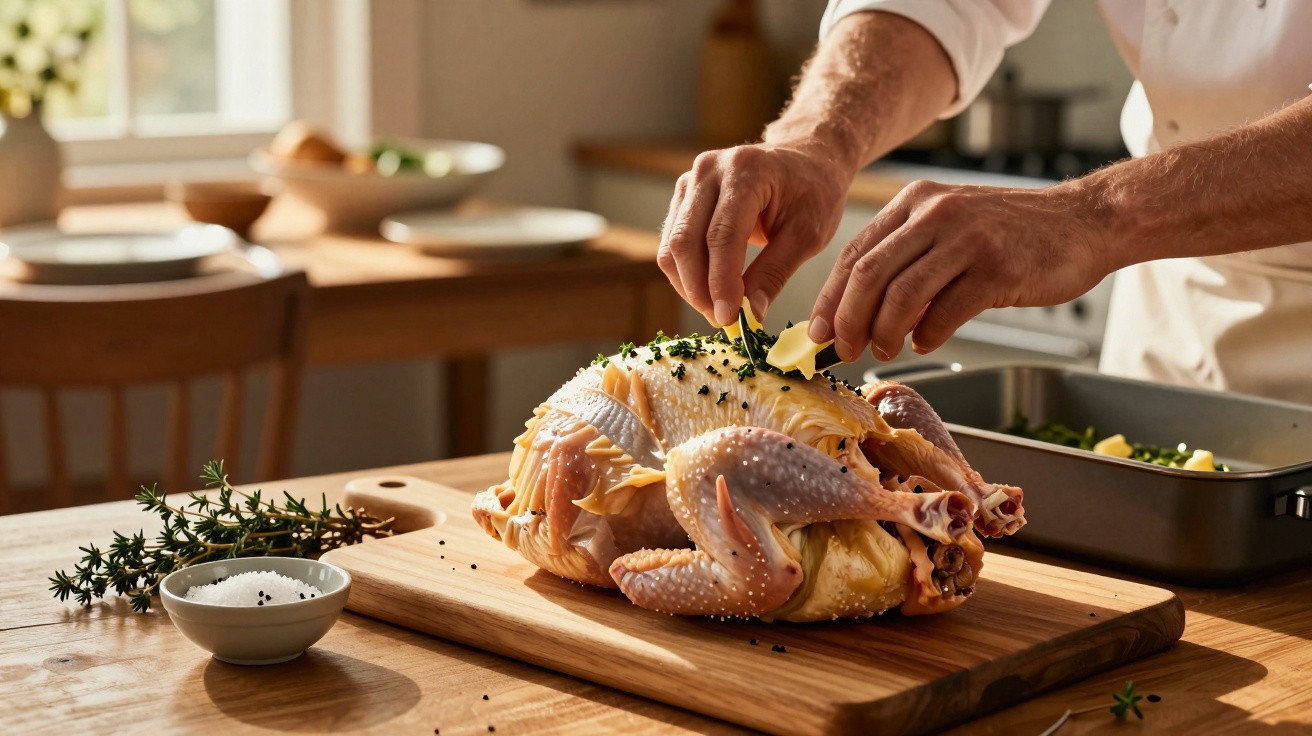
On Sundays, a small hush often falls when the chicken reaches the table. The children eye its golden skin, someone is already asking whether the potatoes have properly softened in the cooking juices, and the person who prepared it almost holds their breath before the first cut. We all know that scene: a roast chicken can turn an everyday meal into a proper family memory. At Guy Savoy, success relies neither on a showy technique nor on an impossible-to-find marinade. It comes from precise, almost unhurried attention to the ingredient and to timing. It is the sort of quiet detail that transforms everything - and it starts long before the oven is switched on.
Roast chicken: a simple dish that leaves no room for shortcuts
A beautiful roast chicken makes the house smell inviting before it is even served, yet its apparent simplicity can mislead. Flabby skin, dry meat or bland juices are enough to disappoint, even when the bird has come from an excellent butcher. The secret often linked with Guy Savoy’s cooking lies in this high standard: treating chicken as a fine ingredient, rather than drowning it in spices or attempting to conceal its flavour. A good chicken, salt, butter, a few aromatics and carefully watched cooking can create something exceptional. Simplicity can require more precision than an elaborate recipe.
In professional kitchens, roasting is often decided by a matter of minutes, and sometimes even by the way the chicken is positioned in the roasting tin. At home, it is easy to leave the bird in its packaging until the last minute, then put it in the oven straight from the fridge because lunch is approaching. The result is that the middle cooks slowly while the skin browns too quickly. Leaving the chicken at room temperature for 45 minutes before cooking already makes a noticeable difference. This is not a chef’s whim: it allows the heat to penetrate the meat more evenly.
The real luxury here is not an inaccessible technique, but taking the time to pat the skin dry with kitchen paper and pay attention to what is happening in the oven. Guy Savoy built his reputation on clean flavours and respect for ingredients, an approach that works perfectly for this great family classic. Thoroughly dried skin can turn crisp because it does not first have to evaporate all its moisture. Let us be honest: hardly anyone does this every day. On a Sunday, though, that tiny effort gives the meal a different feel.
The Guy Savoy-inspired method: butter beneath the skin and let the oven do its work
The technique is straightforward: take the chicken from the fridge, dry it carefully, then use your fingers to slip softened butter beneath the breast skin. Season inside and out with salt and pepper, then place a crushed garlic clove and a sprig of thyme in the cavity. This butter does more than look appealing: it protects the breasts, the most delicate parts, while the legs take their time cooking. Next, set the bird on its side in a roasting tin, surrounded by a few potatoes or shallots. Butter under the skin remains one of the most effective ways to keep the meat succulent.
Heat the oven to 220 °C, roast the chicken for around 20 minutes, then reduce the temperature to roughly 180 °C to finish cooking. For a bird weighing about 1.5 kg, allow approximately 1 hour 10 minutes to 1 hour 20 minutes, basting once or twice with its juices. There is no need to open the oven door every five minutes: heat escapes, and there is no point in creating unnecessary worry. The most common mistake is fearing that the chicken is undercooked. This leads to overcooking it until the breast meat is almost woolly. A thermometer offers more reassurance than instinct alone: aim for 74 °C at the centre of the thigh, without touching the bone.
Resting is often the first thing sacrificed when everyone is hungry. Yet loosely covering the chicken with a sheet of foil and waiting for ten to fifteen minutes allows the juices to redistribute through the meat rather than running out across the carving board.
“A good roast is never rushed: it browns, it rests, then it is shared.”
Keep these three points in sight beside the oven:
- skin that is completely dry before seasoning;
- softened butter tucked beneath the breast skin;
- a resting period before carving.
They are modest steps, but they create the clear, fragrant juices that are so often mopped up with bread.
Sunday roast chicken: the detail that brings everyone back to the table
Roast chicken has a quiet kind of magic: it brings people together without seeming overly grand. Served with a sharp salad, potatoes browned in the roasting tin and a spoonful of mustard on the table, the meal instantly feels like a tradition. Guy Savoy’s inspired approach is a reminder that a familiar dish deserves no less care than a celebratory one. Choosing a free-range chicken, watching the colour of the juices and turning the bird gently all encourage cooking that is more attentive and less automatic. You also learn to trust your eyes, your nose and the gentle crackle of the butter.
Perhaps most interesting is what everyone adds to this foundation: a halved lemon in the cavity, a little summer savoury, carrots caramelising in the juices, or a herb stuffing made with leftover bread. Chicken does not demand a perfect recreation of a great chef’s technique. Instead, it encourages you to find your own rhythm. Some will prefer very crisp skin, while others will chiefly seek meltingly tender meat. That freedom is part of the pleasure, especially once the dish is placed in the middle of the table and the conversation finally resumes.
| Essential point | Detail | Added value for the reader |
|---|---|---|
| Dry skin | Pat the chicken dry before salting it | More golden, crisp skin |
| Butter under the skin | Protect the breast meat while roasting | More succulent meat |
| Resting after cooking | Wait 10 to 15 minutes before carving | Better-distributed, more flavoursome juices |

















Comments
No comments yet. Be the first to comment!
Leave a Comment