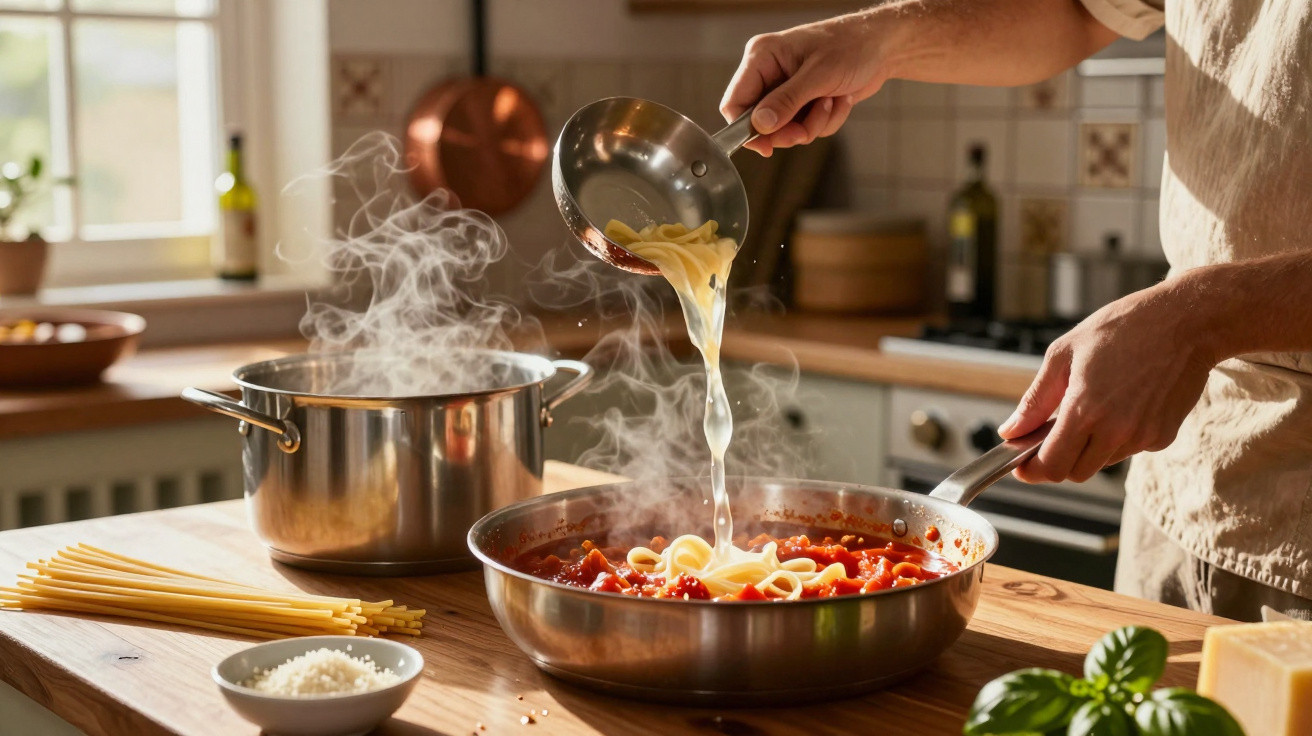
Almost every evening, the same scene unfolds: the pasta is ready, the kitchen smells of tomato, garlic or Parmesan, and the colander is lifted over the sink without a second thought. White steam rises, cloudy water vanishes down the drain, and then comes that slightly frustrating moment when the sauce sits in the bottom of the pan, either too thick or separated from the pasta. In Italy, this automatic gesture often raises an eyebrow. Before draining, many people there save a cup of that whitish, seemingly ordinary water which French cooks have always poured away. It can turn a decent dish into a plate of pasta properly coated in sauce. The secret lies in a liquid that usually goes unnoticed.
The cloudy water Italian cooks never let go to waste
In a small Roman kitchen, the habit is clear even before the spaghetti has cooked: a glass or ladle waits beside the hob. Pasta cooking water is not treated as waste, but as an understated ingredient, full of the starch released by the pasta during boiling. This starch helps fat, cheese and water combine, a process chefs call an emulsion. Visually, the effect is nothing dramatic. On tasting, however, the sauce clings more effectively, looks glossier and no longer slides sadly to the bottom of the plate.
The difference is especially apparent in the simplest dishes. Cacio e pepe, for instance, relies on pecorino, pepper and pasta water: without this liquid, the cheese can clump together and the dish quickly becomes heavy. For one serving of spaghetti, Italian cooks often add two to four tablespoons of starchy water, then toss it vigorously off the heat. It is not some mysterious grandmother’s recipe; it is almost kitchen chemistry. Suddenly, it becomes clear why some pasta dishes taste silkier in a restaurant than they do at home.
Salt also has a part to play. The cooking water is already seasoned, allowing you to enhance a sauce without randomly adding another pinch. Take care, though: very salty water can throw a reduced sauce out of balance, particularly when it contains lardons, anchovies or Parmesan. The aim is not to drown the pasta in its pan, but to use the liquid as you would a light stock. Cooking water is a binding agent, not a miracle sauce. That distinction makes all the difference and prevents the watery plates everyone dreads.
The simple step that transforms a sauce’s texture in under a minute
The most dependable approach is to scoop out the water just before draining the pasta, using a ladle or heatproof cup. Keep around 15 centilitres for two people, although you will probably not use it all. Transfer the pasta while still firm to a large frying pan containing the sauce, then add a small amount of cooking water. Toss briskly for thirty seconds to one minute, allowing the pasta to finish cooking in the mixture. The sauce loosens, coats every piece, then naturally thickens again as the water evaporates.
We all know that moment when we mean well but pour in too much water at once. The sauce then appears ruined, pale and thin, and the urge is to add cream or cheese immediately to rescue it. Take a breath: simply leave the pan over a low heat and keep stirring. The excess will reduce. Let us be honest: hardly anyone does this every day, especially on a Tuesday evening with hungry children or a train to catch. Yet saving a small cup takes almost no effort and rescues many an impromptu dinner.
This water can be used in several dishes, provided it is used on the same day and its salt content is taken into account.
“Pasta should not wait for the sauce, and the sauce should not wait for the pasta: they meet in the pan,” Italian culinary tradition often reminds us.
- To loosen a tomato sauce that has become too thick.
- To bind pesto without drowning it in oil.
- To make a creamy carbonara, without double cream.
- To reheat pasta that has already been mixed with sauce without drying it out.
A small change of habit, and a different way of cooking
Perhaps the most interesting thing about this Italian habit is not the technique itself, but what it says about the way we cook. We have become used to keeping everything separate: pasta on one side, sauce on the other, and water in the sink. Yet a good dish is often made in the final seconds, when everything comes together in the pan and you taste it one last time. Saving pasta cooking water also means learning to see differently what once seemed useless. A leftover can become a cooking technique.
| Key point | Detail | Added value for the reader |
|---|---|---|
| Scoop it out before draining | Save a cup of starch-rich water immediately before tipping the pasta into the colander. It should be hot so that it blends easily into the sauce. | A ten-second habit that avoids having to improvise with cream, too much oil or a shop-bought sauce. |
| Add it gradually | Start with two tablespoons, toss in the pan, then adjust according to the texture you want. The water evaporates quickly while the pasta is hot. | A glossier, more even sauce, without the risk of turning dinner into tomato soup. |
| Watch the salt | Pasta cooking water is salty: taste before adding Parmesan, olives, anchovies or already strongly seasoned cured meat. | A better-balanced dish, with fewer last-minute adjustments and less waste. |

















Comments
No comments yet. Be the first to comment!
Leave a Comment