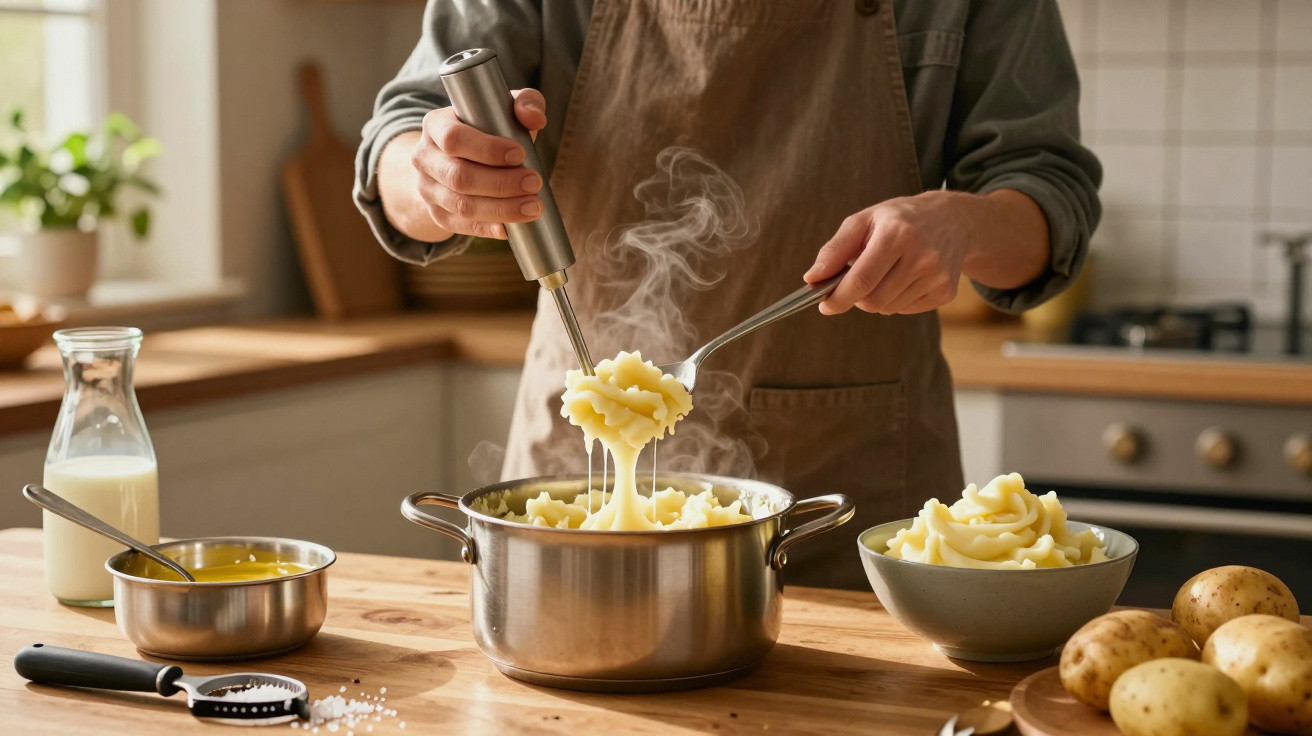
We all know the moment: mashed potato is waiting on the table, still steaming, while someone desperately searches the drawer for the right utensil. The hand blender then appears to be the quickest answer: one button, a few seconds, and you are already picturing a restaurant-smooth finish. Yet it can take only three turns of the blade to turn lovely yielding potatoes into an elastic, sticky, almost alarming mass. The sort of mash that clings to the spoon rather than melting on the tongue. At that point, dinner takes a rather unexpected turn.
A hand blender turns potatoes into glue
At first, the issue seems baffling: the potatoes were properly cooked, the milk was warm, and the butter was waiting patiently on the worktop. Then the hand blender arrives, its blades spin at high speed, and the consistency changes suddenly. The mash becomes glossy, heavy and slightly rubbery, as though every trace of lightness has vanished.
The explanation lies in starch, the natural store found in potato flesh. When the blades chop and whisk the cooked cells too forcefully, they release a large amount of starch into the mixture; when it meets moisture, it creates a thick paste. Professional kitchens sometimes call this “gluey” mash, and while the term is not especially kind, it is accurate.
A hand blender does not simply press potatoes: it tears, shears and spins them at speed. That mechanical action works brilliantly for courgette soup or tomato sauce, but it is far less suitable for a starchy ingredient already packed with starch. Great mash does not need to be utterly smooth to taste delicious. Above all, it should retain that soft, warm, gently cloud-like texture that calls for a knob of butter.
The right techniques for light, generous mashed potato
The safest approach is to use a hand potato masher, a food mill or a potato ricer, without working the potatoes more than necessary. Drain them thoroughly, then mash them while still hot before adding the butter and a little warmed whole milk. Using this method, the pieces break down without being attacked, while the starch remains far less noticeable.
Also choose a floury potato variety, such as Maris Piper, King Edward or Désirée, which are often valued for producing airy mash. Waxy potatoes, ideal for salads or roasting, can create a denser result even with the best possible technique. Let us be honest: nobody really compares ten varieties on a Tuesday evening, but simply choosing potatoes labelled for mashing already makes a considerable difference.
Another common mistake is pouring cold milk straight over the mashed potatoes, usually because you are in a rush or the children are hungry. The cold interrupts the warmth of the mixture and means more stirring is needed afterwards, which tires out the mash as much as the cook. Warm the milk gently, add it little by little, then taste before seasoning with salt.
“Good mash is not beaten: it is handled gently.”
- Cooking potatoes in their skins limits water absorption.
- Draining them well prevents watery, bland mash.
- Adding butter before milk gives a richer texture.
- Stopping the mixing once you like the consistency preserves its softness.
Imperfect mash can become the best dish of the meal
There is no shame in having reached for the hand blender: it sits there, convenient and familiar, promising to save five minutes. Many cooks have experienced mash turning elastic just before guests arrive, followed by that slightly awkward silence when the first spoonful puts up resistance. Next time, a simple potato masher will do a better job, even if it leaves a few tiny lumps.
Those small imperfections almost convey something reassuring: the potato has been cooked, rather than processed into a uniform substance. Homemade mash can be rustic, very buttery or simply lifted with nutmeg, confit garlic, chives or grated mature Comté. Texture matters as much as flavour, especially alongside roast chicken, grilled sausages or pan-fried fish on a rainy evening.
Sometimes the real pleasure comes from that invisible detail: not trying to smooth everything out. Successful mash keeps its warmth, texture and a certain generosity, the kind recognised from the first mouthful. It is a question worth asking around the table: do you prefer perfectly uniform mashed potato, or mash that still has a little character?
| Key point | Detail | Benefit for the reader |
|---|---|---|
| Avoid the hand blender | Its blades release too much starch, making mashed potato sticky. | Preserves a soft, light texture that is pleasant to eat. |
| Choose the right utensil | A potato masher or food mill presses the flesh without tearing it. | Delivers a more consistent homemade result without complicated technique. |
| Add warm liquids | Butter, followed by warm milk, should be incorporated gradually. | Keeps the mash hot, creamy and easy to adjust. |

















Comments
No comments yet. Be the first to comment!
Leave a Comment