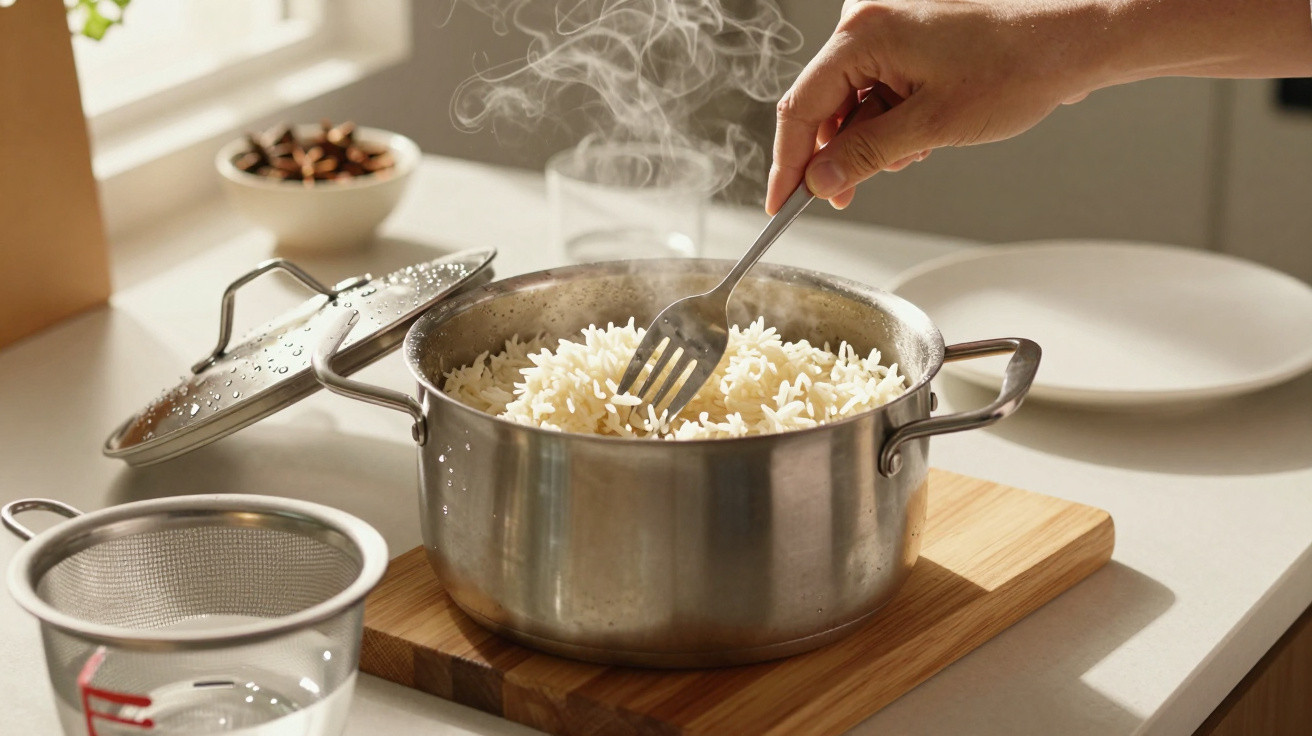
Dinner is nearly ready, the curry is filling the kitchen with its aroma, the plates are waiting on the worktop… yet the rice can sometimes decide to spoil everything. Too sticky, too wet or, at the other extreme, stuck to the base of the pan: we all know that small frustration arriving at the worst possible moment. Basmati rice seems easy, almost ordinary, until you come across long grains in a restaurant that are dry on the outside, fragrant and perfectly separate. The difference does not rely on an inaccessible secret or an expensive saucepan. It comes down to slow, accurate cooking and one detail that is often overlooked when hunger takes over. Good rice cannot be rushed. It simply needs a few minutes of attention at the beginning, followed by the calm of a closed lid. The result genuinely transforms the meal.
Why basmati rice sometimes sticks when it should stay light
Basmati is naturally fragrant and never heavy, but its grains also carry starch on their surface. If the rice goes straight into the water without being rinsed, that starch mixes into the cooking liquid and produces the slightly gluey texture that nobody really wants from a side dish. We then lift the lid, stir it with a spoon or pour in a splash of water… and unintentionally make a situation more complicated than it ever needed to be.
In a home kitchen, the difference is easy to see: for 200 grams of uncooked basmati, rinsing for two to three minutes is often enough to change the outcome. At first, the water turns cloudy, almost milky, before gradually becoming clearer. It may seem like a tiny step, yet it removes a considerable amount of loose starch. An Indian restaurateur once said that her team washed the rice “until the water looks calm”. It is a lovely image, and an effective one.
The absorption method depends on a very practical balance: the rice takes in almost exactly the amount of water it needs. There is no large pan of water to drain, and no grains being knocked about in a colander. Steam completes the process beneath the lid, while gentle heat keeps the grains stable. The water-to-rice ratio is therefore crucial. Too much water makes basmati swell and become fragile; too little leaves it hard in the middle and dry before it has fully cooked.
The absorption method for basmati rice, with no complicated equipment
Put one measure of rinsed basmati rice into a heavy-based saucepan, then pour in one and a half measures of cold water. In other words, use one and a half cups of water for every cup of rice, adding a pinch of salt and, if you like, a teaspoon of neutral oil or ghee. Bring it to the boil uncovered, only until the first proper bubbles appear. Immediately cover the pan, turn the heat down as low as possible, and cook for twelve minutes without touching it.
The hardest stage comes next: turn off the heat and leave the saucepan covered for ten minutes. Yes, even when you are in a hurry. Let us be honest: hardly anyone truly does this every day, especially on a Tuesday evening when the children are already calling everyone to the table. Even so, this resting time allows the steam to distribute itself and lets the grains finish cooking without breaking. Lifting the lid too early releases heat; stirring during cooking releases starch. Either way, the rice loses its light texture.
When the resting time is over, fluff the rice gently with a fork, lifting the grains instead of crushing them. If you soaked your basmati for twenty to thirty minutes before cooking, reduce the water slightly: one measure of rice to 1.25 measures of water will often be enough. Every brand absorbs differently, so your first saucepan also provides a useful guide for the ones that follow.
“Basmati rice does not need constant supervision: it needs to be left alone at the right moment.”
- Rinse the rice until the water is almost clear.
- Use 1.5 volumes of water for 1 volume of unsoaked rice.
- Keep the lid closed during both cooking and resting.
- Always fluff with a fork, never a wooden spoon.
A small ritual that makes all the difference on the plate
Perfect basmati rice is not judged by appearance alone. You recognise it in the soft sound of grains being lifted, in the warm steam carrying a nutty aroma, and in the way it supports a dish without weighing it down. Alongside a creamy dhal, lemon chicken or roasted vegetables, it holds its own: understated but essential. One successful saucepan can even rescue a meal put together a little too quickly.
There is something reassuring about this approach, too. It teaches you to watch without constantly interfering, which is not so common in everyday cooking. You prepare the water, adjust the heat, then agree to wait. At first, it is perfectly normal to want to check beneath the lid. After a few attempts, the process becomes almost automatic, and rice stops being that unpredictable accompaniment you dread at the last minute.
The enjoyment can continue by changing the flavours without upsetting the cooking method: a lightly crushed cardamom pod, a bay leaf, or a few cumin seeds fried for one minute in ghee before the rice is added. The purpose is not to hide the basmati, but to give it an accent. Sharing your own water ratio, favourite saucepan or a tip passed down by someone close can also spark surprisingly passionate discussions around a simple bowl of rice.
| Essential point | Detail | Added value for the reader |
|---|---|---|
| Rinsing | Two to three minutes, until the water becomes clearer | Grains carry less starch and separate more easily |
| Ratio | 1 volume of rice to 1.5 volumes of water | Even cooking without draining or excess moisture |
| Resting | Ten minutes off the heat, with the lid closed | An airy texture and better-preserved fragrance |

















Comments
No comments yet. Be the first to comment!
Leave a Comment