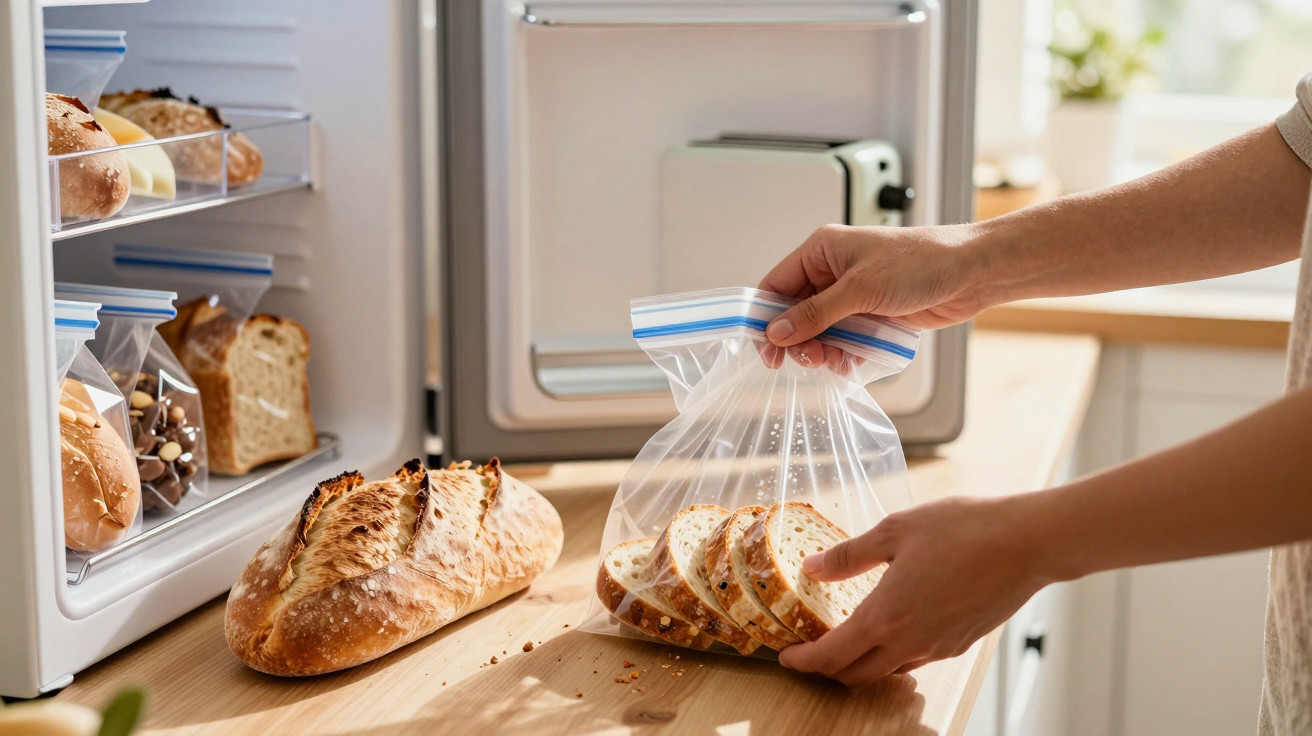
Freezing bread is a way to save it and cut food waste. Yet thawed rolls often turn out tough, rubbery or bone-dry. The freezer is rarely to blame; the problem is almost always freezing at the wrong time, poor packaging or reheating it incorrectly.
Why bread should go into the freezer soon after buying it from the bakery
Bread starts to go stale as soon as it leaves the oven, even while it still feels warm, soft and perfect. A chemical process is already changing its texture: starch retrogradation. After baking, the starch molecules gradually rearrange, release their bound water and make the crumb firmer.
Many people leave bread out all day, then put the remaining loaf in the freezer that evening. By then, however, the bread has already aged considerably on the inside. Freezing prevents further deterioration, but it also locks in that exact in-between state.
If you freeze bread only once it already feels slightly dry, you are preserving a problem rather than protecting fresh quality.
You notice the result when it is thawed: the crumb can be rubbery, crumbly or unevenly dry. The airier the bread, the more pronounced this effect tends to be.
The ideal time: as early as possible
The most important rule of thumb is to freeze bread while it is genuinely fresh. Ideally, do so within a few hours of buying or baking it, once it has cooled completely but is still aromatic and springy.
- Do not wait for the crust to soften – this already indicates that staling has begun.
- Do not leave it on the kitchen counter for half a day to “see how much is still needed”.
- Instead, portion it as soon as it has cooled and put it straight into the freezer.
If you regularly have bread left over, it is worth establishing a fixed routine: cut into the portion you plan to eat immediately, then place the remainder straight into a freezer bag.
White bread, mixed bread and wholegrain bread: not every loaf reacts the same way
The type of bread affects how well it copes with freezing. Light, highly aerated loaves are particularly sensitive.
| Type of bread | What happens when frozen | Recommendation |
|---|---|---|
| White bread, baguette, ciabatta | Very airy crumb; tends to dry out and become rubbery | Freeze very early, preferably in slices or portions |
| Mixed bread, country loaf | More stable crumb, medium moisture content | Freeze whole or in half loaves, well wrapped |
| Wholegrain bread | Denser, higher in fibre, retains moisture for longer | Especially suitable for freezing; pre-slicing works well |
Wholegrain and rye breads often have an advantage when frozen. Their greater fibre content and denser structure retain moisture in the dough more effectively. Once thawed, they usually hold their shape better than airy white bread.
Freeze bread whole or sliced? Advantages and disadvantages
Whether bread is frozen whole or sliced is not simply a matter of preference. Each option has practical implications.
Sliced bread in the freezer
Pre-sliced bread may seem unremarkable, but it is extremely convenient for everyday use:
- You can take out exactly the amount you need.
- Individual slices can go straight into the toaster or frying pan.
- There is far less risk that an entire thawed half-loaf will dry out.
For single-person households or families where everyone eats at different times, sliced bread is usually the better option.
Freezing whole or half loaves
Those who prefer bread in larger pieces can freeze whole or half loaves. The loaf protects its own moisture reasonably well in the middle, so the central crumb stays moister, provided it thaws slowly and evenly.
The drawback is that defrosting takes much longer. At room temperature, a medium-sized loaf may easily need overnight to thaw through completely. Sections that are still only partly thawed often feel rubbery, while the outer crust already appears dry.
If you freeze bread as a whole loaf, you need patience – it is not a quick emergency roll.
How to package bread correctly for the freezer
The contents of a freezer gradually dry out when cold air can reach them unchecked. Bread reacts with pale, bleached-looking patches and a crumbly surface.
To prevent this, pay close attention to the packaging:
- Use airtight bags or containers – basic thin bags allow more air through.
- Press out as much air as possible before sealing the bag.
- Use double packaging for longer freezing: bag first, then a container.
- Label it with the date so the bread does not disappear in the back of the freezer for months.
The less air left in the bag, the less freezer burn will form. This applies not only to bread, but also to vegetables, meat and cakes.
White patches on bread: mould or freezer burn?
Many people are alarmed by whitish patches on frozen bread and immediately assume it is mould. In very many cases, though, it is something else: dried-out areas or fine ice crystals on the surface, in other words, typical signs of freezer burn.
Freezer burn often looks more dramatic than it is – unappetising, but usually not dangerous.
Typical signs of freezer burn on bread include:
- patches that are lighter than the rest of the crumb
- areas that look dry and feel slightly hard
- no musty or sharp smell
- no greenish, blue-grey or furry structures
Genuine mould, on the other hand, can be identified by:
- a clear, unpleasant smell
- a powdery, fluffy or furry surface
- coloured spots, usually green, grey or black
If in doubt, always throw it away. Mould spores can spread throughout the entire loaf, even where only a small area appears visibly affected. Freezer burn is more a loss of quality than a health risk; affected pieces simply taste dry and bland.
Thawing bread correctly: how to make it crisp again
Simply leaving bread on the kitchen counter is rarely enough to restore good flavour. The texture often remains disappointingly soft and the crust can become leathery. Heat brings its structure much closer to its freshly baked state.
Use the oven rather than room temperature alone
This method works well for loaves, rolls and baguettes:
- Allow the bread to thaw fully at room temperature, especially in the centre.
- Preheat the oven to around 150 to 180°C.
- If desired, lightly spray the surface with water or moisten it with wet hands.
- Bake on the middle shelf for 5 to 8 minutes, depending on the size.
The water on the surface evaporates, creating a fresher, crispier crust. Inside, the crumb becomes springier again.
Toaster and frying pan for slices
Pre-sliced bread can go directly from the freezer into the toaster. A slightly longer toasting time is usually enough to make it crisp on the outside and warm in the middle. If you do not have a toaster, use a non-stick frying pan without oil and briefly toast the slices on both sides.
How long can bread be frozen?
Bread does not spoil as quickly in the freezer, but after a few weeks it noticeably loses aroma. These timeframes provide a rough guide:
- light rolls, baguette: ideally use within 4 to 6 weeks
- classic mixed bread: around 2 to 3 months
- very dense wholegrain bread: up to 3 months if well packaged
After that, the bread is not automatically inedible, but it will usually be noticeably drier and less flavoursome. Regularly clearing out the freezer and using labels helps prevent these surprises.
Common mistakes – and how to avoid them
Most problems with thawed bread can be traced back to a few standard mistakes. Three in particular stand out:
- Freezing too late – once the loaf has already become distinctly firmer, some quality has been lost.
- Poor packaging – too much air in the bag causes dry patches and loss of flavour.
- Impatience when thawing – bread that is still partly frozen will become hard outside in the oven while remaining cold inside.
A simple routine – freeze early, package airtight, thaw gently and bake briefly – prevents a large proportion of these mishaps.
Why the effort is worthwhile
In many households, bread is among the foods thrown away most often. The combination of a short shelf life and large packs makes it tempting to put leftovers in the bin. Freezing bread cleverly can reduce this waste significantly without having to accept major compromises in flavour and texture.
There is an additional benefit for home bakers: anyone who bakes several loaves once a week and freezes them in portions as soon as they have cooled saves time and energy, as the oven does not need to be used afresh every day. With the right technique, bread from the freezer can still taste remarkably close to “fresh from the oven”.

















Comments
No comments yet. Be the first to comment!
Leave a Comment