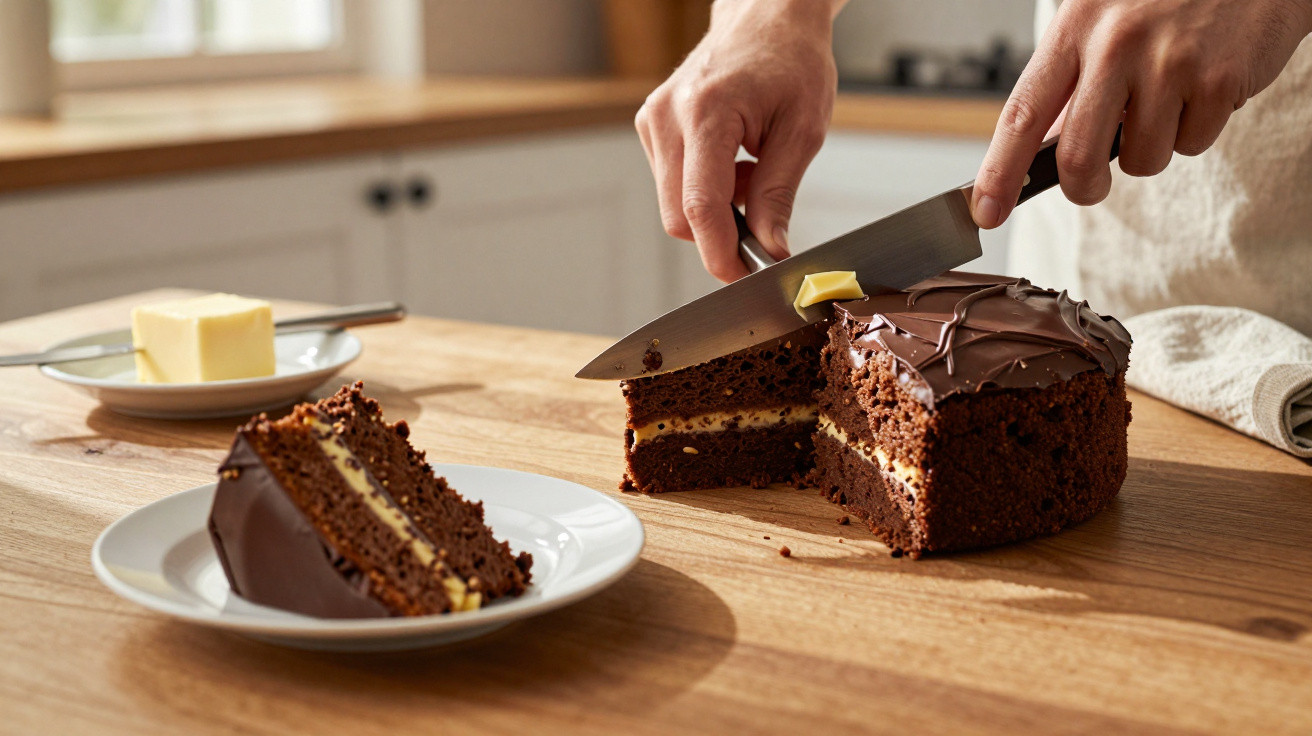
The search for the perfect slice of cake often ends in frustration when the soft sponge crumbles or sticks completely to the blade. Using a simple trick involving butter can completely change this kitchen task, ensuring a clean cut and a flawless presentation.
How can you achieve a perfect slice when cutting sweet bakes?
Producing attractive, intact portions requires more than steady hands when slicing a moist bake. The key to protecting the structure of delicate recipes is to prepare the main utensil with a highly effective protective layer before this kitchen method.
Applying a lubricating ingredient forms a smooth barrier that moves easily through both dense and airy textures. This prevents damage to the sponge, making it possible to enjoy all the main structural benefits with great visual precision and exceptional practical ease.
- Waterproof barrier: The butter separates the metal from direct contact with the cake.
- Perfect glide: The blade moves smoothly without pulling away pieces of sponge.
- Complete preservation: It prevents tearing and retains the original appearance of every serving.
Why does cake sponge often break or stick to the knife?
This happens because home-baked cakes hold considerable moisture and have a well-developed fluffy texture inside. When metal touches the sponge directly, its natural stickiness can seriously damage the structure, leaving broken-up slices.
Filled cakes can make the problem worse, as thick creams may pull the cake while the knife moves downwards. Without suitable protection on the metal edge, the food sticks and drags the filling, spoiling the final appearance of any moist cake.
What is the chemistry behind using butter?
The reason this effective recommendation works lies in the ingredient’s lipid composition, which makes it an excellent insulator. By buttering the cutting tool, you create an oily film that actively prevents direct contact and the resulting unwanted sticking.
The waterproofing effect of butter
Active protection for the blade
The butter layer prevents direct contact with moist sponge.
This avoids unwanted tears and delivers perfect slices.
This process keeps the physical qualities of the bake intact from the first sliced portion to the last. Understanding this principle highlights the value of attention to detail, producing better results through the following simple techniques and effective solutions.
- Quick cleaning of the knife after use
- Keeping creamy filling in its proper place
- Whole slices, even from very soft sponges
What are the main benefits of this simple technique?
Adopting this practice brings immediate advantages that extend far beyond making it easier to serve your guests. Its main benefit is the integrity of the slices, which stay perfectly aligned and reveal every internal layer in a uniform, highly professional way.
As well as saving time otherwise spent cleaning the metal after every cut, the method greatly reduces the waste of valuable crumbs on the serving plate. You will be able to slice exceptionally soft cakes while avoiding the main visual distortions that can affect a beautiful homemade presentation.
- A much cleaner, more professional-looking presentation
- A drastic reduction in wasted sweet crumbs
- Precise cuts without crushing the internal structure
How does this method transform the presentation of your desserts?
The first visual impression of a neatly sliced dessert raises the standard of any celebration or special afternoon tea. Serving clean, geometric portions shows care in the baking process and enhances the appearance through a kitchen trick centred on culinary perfection.
This habit turns serving into a moment of elegance and satisfaction for everyone at the table. Try this valuable technique at your next family gathering and see how perfect slices ensure the complete success of your favourite recipe.

















Comments
No comments yet. Be the first to comment!
Leave a Comment