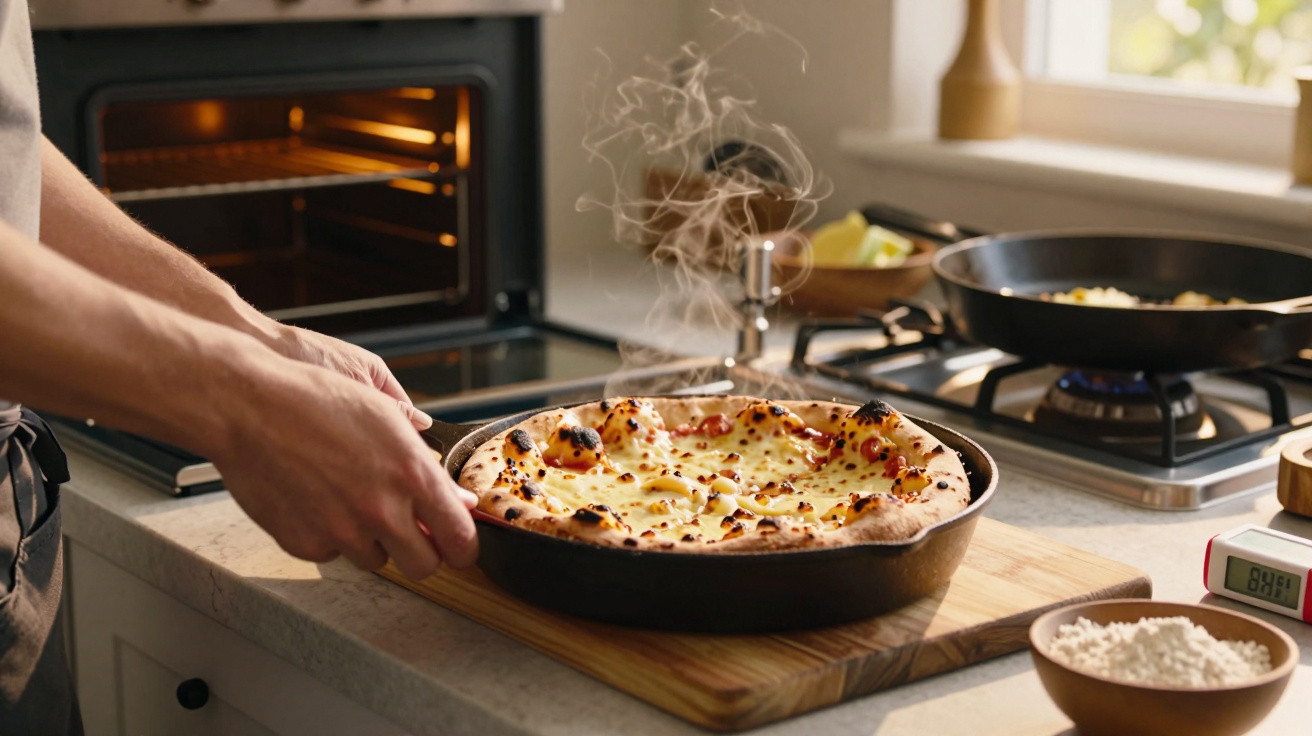
It is 8 pm on a Saturday. Your pizza delivery app is quoting 45 minutes, and really, who has the patience for that now? You look across at your usual oven and remember the stunning wood-fired pizzas all over Instagram: the ones with beautifully blistered, charred crusts that are crisp underneath yet light and airy above. Suddenly, your kitchen’s electric rings and unreliable temperature dial feel rather inadequate.
Most of us know that feeling: your homemade pizza turns out more like cardboard than the crisp result you had in mind. The cheese slips away, the base remains pale and chewy, and you order a takeaway after all. Yet there is something that many people do not realise about an ordinary oven.
The Temperature Myth That’s Spoiling Your Crust
Your oven may claim to reach 260°C, but your pizza base would disagree. As soon as you open the door to put the pizza in, most domestic ovens shed a huge amount of heat. Within seconds, the actual cooking surface - whether a baking tray or pizza stone - can fall to about 200°C or below.
By comparison, a wood-fired oven operates at roughly 425–480°C, while its baking surface holds onto that fierce heat and begins cooking the crust immediately. Professional pizza makers understand that surface heat transfer matters just as much as air temperature. When dough meets an intensely hot surface, its moisture forms steam bubbles, producing those sought-after airy pockets.
Heat retention is the detail that changed everything for me. Cast iron and steel retain heat better than almost anything else in the kitchen. They work as thermal batteries, storing energy before delivering it straight into the dough. It is not complicated culinary wizardry; it is simply physics working to your advantage.
The Cast Iron Pizza Method That Makes the Difference
Heat your cast iron skillet or pizza steel at your oven’s highest setting for a full 45 minutes. It may seem excessive, but this stage is essential. The metal must become fiercely hot throughout, rather than merely warming at the surface. Consider it the moment you charge your homemade pizza weapon.
The most common error is rushing the preheat. When you are hungry, 20 minutes can feel endless, but the additional time separates a soggy let-down from a restaurant-standard pizza. Nobody genuinely wants to wait 45 minutes, of course, but you will be grateful when that first bite has the ideal crunch.
“The secret isn’t having professional equipment – it’s using what you have more strategically. A $20 cast iron skillet can outperform a $200 pizza stone if you understand heat physics.”
- Set the oven to maximum temperature for at least 45 minutes
- Use a cast iron skillet, pizza steel or even an upturned baking tray
- Stretch the dough on baking parchment to make transferring it easier
- Move fast: every second matters once you open the oven
Why This Pizza Technique Changes Everything
This approach makes an everyday kitchen capable of competing with sophisticated wood-fired setups, at least when it comes to the crust. It recreates the rapid heat transfer that makes professional pizzas so irresistible. The underside turns crisp straight away, while the broiler effect of your oven creates attractive charred patches on top.
| Key point | Detail | Value for the reader |
|---|---|---|
| Longer preheating | 45 minutes at the maximum temperature | Builds heat retention comparable to professional ovens |
| Cast iron surface | Functions as a thermal battery that stores intense heat | Crisps the dough immediately |
| Fast transfer method | Slide the pizza in on baking parchment | Reduces heat loss while loading |

















Comments
No comments yet. Be the first to comment!
Leave a Comment