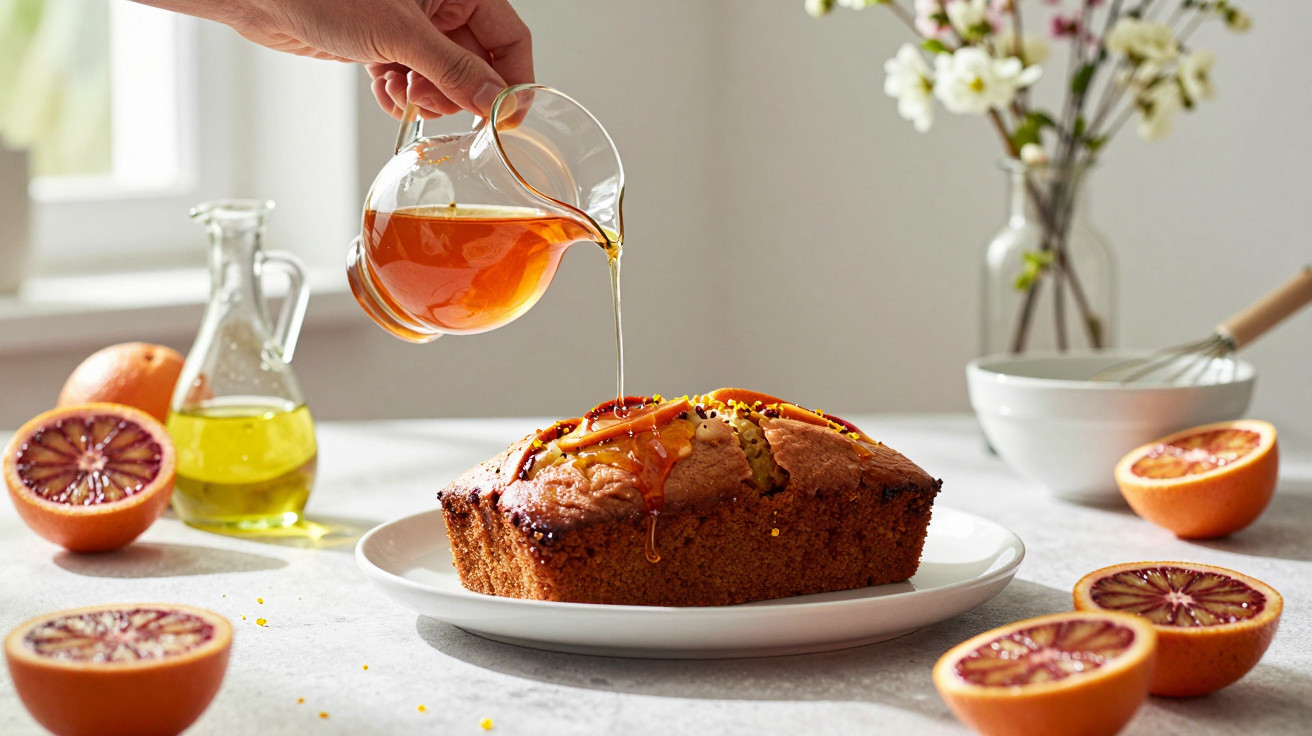
At first glance, it looks like an attractive yet unassuming fruit cake. But as soon as the first slice reaches the plate, the same thing happens every time: the cake disappears within minutes, and nobody believes the baker when they reveal what is actually in it. The real star is not butter, but a trio of ingredients that tastes of spring while remaining remarkably practical for everyday baking.
A blood orange cake with wow factor
Blood oranges come into their own in late winter and early spring. Their deep red, almost dramatic colour and gently bitter, fruity flavour make them ideal for desserts that offer more than simple sweetness. They take centre stage in this cake, with two perfectly matched supporting ingredients alongside them.
“A moist crumb, glossy citrus slices and a delicate fragrance – and the secret lies not in rare ingredients, but in the combination.”
The blood orange slices are folded into the batter and also arranged over the finished cake, where they are cooked in syrup until translucent and shiny. Each slice therefore offers citrus twice over: soft and succulent within the cake, then fruity and lightly caramelised on top.
Why this cake does not miss the butter
The striking feature of this recipe is that the batter contains no butter at all. Olive oil takes over as the fat instead, creating several effects that a traditional sponge cake does not usually have.
- Extra moisture: Olive oil keeps the crumb moist for longer.
- A soft texture: The cake remains pleasingly tender even after two or three days.
- Delicate flavour: A mild oil adds a subtle fruity note.
Combined with ground almonds, it creates a batter that almost resembles confectionery: substantial without being heavy, gently sweet while retaining a clear citrus character. The almonds soften the acidity of the blood orange and lend a light nutty flavour without taking over.
The key ingredients at a glance
Anyone who bakes fairly regularly will probably already have most of these ingredients at home. The combination may seem simple, but it gives the cake a very dependable structure:
- self-raising flour, or plain flour plus baking powder
- ground almonds
- icing sugar for a fine, smooth sweetness
- olive oil, preferably mild
- eggs, lightly beaten
- freshly squeezed blood orange juice
- finely grated zest of a blood orange
- a small amount of bicarbonate of soda
- water, sugar and extra blood oranges for the syrup
At its heart, this cake comes down to three components:
| Ingredient | Role in the cake |
|---|---|
| Blood orange | Freshness, acidity, fragrance and visual appeal |
| Olive oil | Moisture, a tender crumb and a subtle fruity note |
| Almond | Richness, mild sweetness and a delicate texture |
It is best to alter this three-part combination cautiously. Less sugar? That works. More zest for a stronger citrus kick? That works too. Yet the essential balance of acidity, fat and almond structure is what keeps the cake stable.
Creating the glossy citrus topping
The surface is perhaps the cake’s most eye-catching feature: translucent blood orange slices coated in a light syrup. They add visual appeal, but also bring another layer of flavour.
Making the citrus syrup step by step
Put water, freshly squeezed blood orange juice and sugar into a saucepan. Heat the mixture gradually until it reaches a gentle boil. Add the thinly sliced blood oranges and let them simmer quietly until they look almost transparent.
This softens the slices, allowing them to absorb sweetness while releasing their own flavour into the syrup. By the end, you have two elements at once: candied citrus rounds and a fragrant liquid to pour over the cake later.
The blood orange cake batter: stir gently, do not beat it
The batter is not technically difficult, although it does need a light touch. First, place the dry ingredients – flour, almonds, icing sugar and bicarbonate of soda – in a bowl and mix them thoroughly. This distributes the raising agent evenly and leaves little chance of lumps.
Next, add the eggs, olive oil, blood orange juice and zest. This is not the moment to overdo the mixing. Running a mixer for minutes removes exactly what makes this cake special: its light, soft crumb.
“Mix briefly but thoroughly rather than stirring endlessly – that keeps the batter light and the crumb moist.”
Transfer the batter to a prepared springform tin, bake it at a moderate temperature, and leave it in the oven until a knife or skewer comes out clean. The cake then needs time to rest: allow it to cool in the tin first, then release it from the sides.
Common mistakes – and how to avoid them
Three details determine whether this cake is a success or merely turns out “quite nice”.
Mixing too much
Overworking the batter develops too much gluten in the flour. The result is a tough cake that loses its desired softness. Mix only until no dry patches remain.
Using the wrong amount of bicarbonate of soda
Bicarbonate of soda reacts with the acidity of the blood orange and helps the cake rise. Half a teaspoon is entirely sufficient. Any more gives a soapy aftertaste and masks the fruit’s freshness.
Choosing olive oil that is too strong
An intense, grassy olive oil will dominate the flavour. The cake then tastes more of oil than orange. A mild, fruity oil is the better choice, as it supports the citrus notes without overwhelming them.
What the finished slice tastes like
Once cut, the cake appears almost creamy. Its crumb is moist, smooth and slightly silky. Blood orange and the syrup’s faint caramel note arrive first on the nose, followed by a gentle depth from the olive oil and almonds.
It is soft to bite into without crumbling. The citrus slices on top provide a little resistance before releasing juice and sweetness. Syrup slowly soaks into the surface, helping the cake stay barely dry even on the second or third day.
Variations for every season
If blood oranges are not available, the underlying idea still works. This balance of acidity and fruit suits several citrus fruits:
- ordinary oranges for a more classic flavour
- lemons for greater acidity and freshness
- grapefruit for a gentle bitterness
- a mixture of orange and lemon for more depth
The amount of almond can also be adjusted. More almond makes the cake denser, moving it closer to an almond cake. Less almond produces a lighter result that is more like a traditional sponge cake.
Practical tips for everyday serving and storing
Stored in an airtight container in the fridge, the cake will keep well for several days. Before serving, let it stand briefly at room temperature so that its flavour can develop. Another useful trick is to glaze it once more with a spoonful of syrup just before presenting it – this refreshes both its shine and flavour.
If you enjoy preparing ahead, the candied citrus slices can also be made in advance. Kept in a well-sealed jar in the fridge, they last for several days and make yoghurt, porridge or simple portions of vanilla ice cream far more interesting.
This cake is also appealing for anyone who wants or needs to avoid butter. Olive oil keeps the texture satisfying, without making it feel as though anything has been sacrificed. Together with the high proportion of fruit juice and almonds, it produces a bake that sits somewhere between a classic sponge cake and modern pâtisserie – requiring surprisingly little effort while making a big impression at the coffee table.

















Comments
No comments yet. Be the first to comment!
Leave a Comment