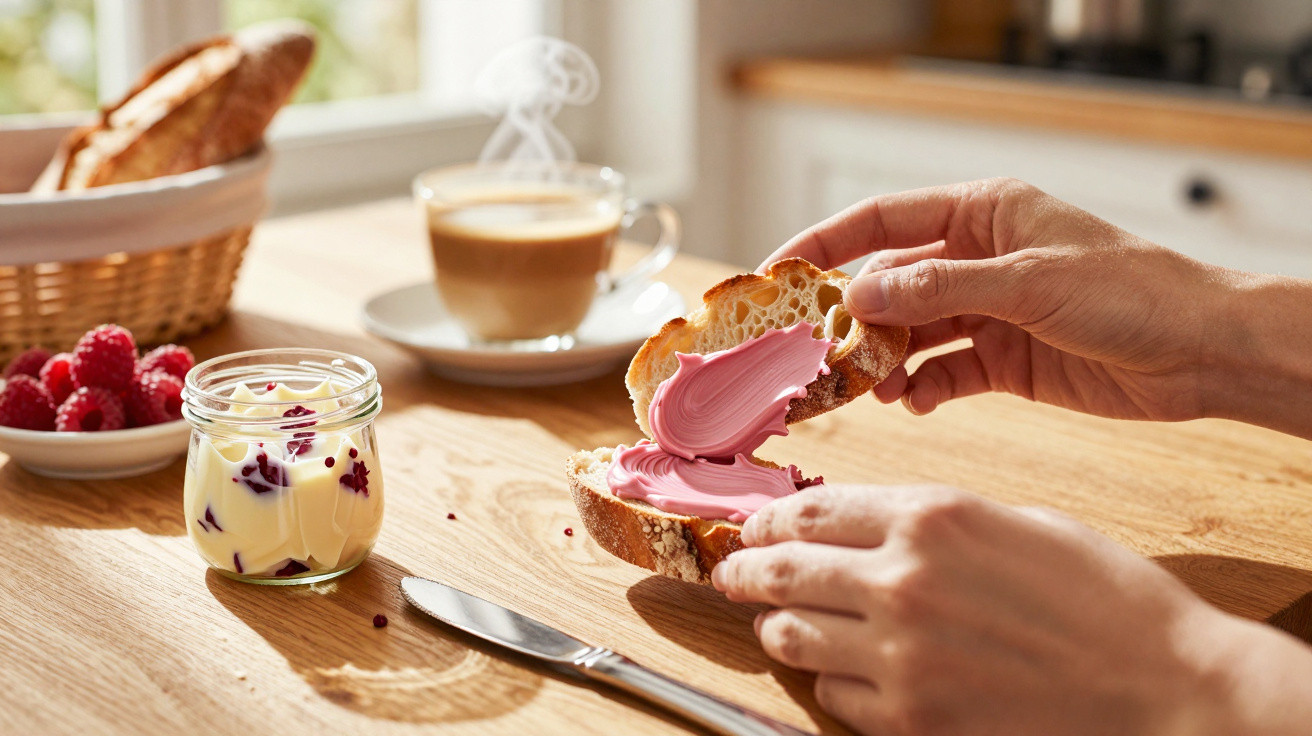
French breakfast habits may be evolving, yet one staple continues to dominate the table: bread topped with something sweet and creamy.
Throughout France, bread with butter and jam remains a breakfast ritual, despite changing nutritional guidance and an expanding choice of spreads. French fresh-food retailer Grand Frais has introduced a product designed to deliver that familiar flavour with one pass of a knife.
Why butter and jam remain French breakfast favourites
In many French homes, the “continental” breakfast is still essential. Fresh bread, proper butter and a thick spread of jam continue to win out over fashionable choices such as nut butters and protein shakes.
An Eudoxa poll reported in the French press found that butter and jam firmly “monopolise the toast” for most people in France. Even among 18–24-year-olds, who are often thought to favour chocolate spreads and breakfast cereals, more than half are said to choose the traditional tartine each morning.
The appeal comes down to comfort, nostalgia and flavour. The aroma of a toasted baguette, glossy melting butter and brightly coloured jam all evoke family kitchens and unhurried school-day mornings.
For many French people, a proper breakfast still looks like a slice of bread generously covered with butter and jam.
The hidden effort of a simple tartine
Despite its romantic reputation, preparing traditional bread, butter and jam can be unexpectedly fiddly when time is short.
To begin with, you need to take out two separate products, one from the fridge and another from the cupboard: butter and jam. Then there is the issue of utensils: one knife for the butter, another for the jam, or several pieces of cutlery if somebody is determined to avoid “not mixing the pots”.
For whoever is making breakfast for the whole household, this can turn into a toast-production line, leaving a pile of sticky knives in the sink before 7 a.m. Add sleepy children or uncoordinated hands, and the mess quickly grows.
- Jam running through the gaps in soft bread and onto pyjamas.
- Toast slipping from someone’s grip and, inevitably, landing jam-side down.
- A hurried wipe or mop of the floor before the school run has started.
Anyone making toast for several people will recognise the slight wrist ache caused by repeatedly spreading cold butter straight from the fridge. It is a minor inconvenience, but one more contribution to an already hectic morning.
Grand Frais raspberry butter: a 2-in-1 alternative
Grand Frais, the French retailer known for fresh fruit, vegetables and dairy products, is backing a straightforward concept: putting dairy and fruit together in one spread. Its answer is a sweet “beurre framboise”, or raspberry butter.
The product makes an immediate visual statement. Rather than the usual pale yellow, the block is vivid pink. Available in the chilled section and through the mon-marché.fr delivery website, it is presented as a quicker choice for people who enjoy the taste of butter and jam but could do without the preparation.
This raspberry butter aims to recreate the illusion of bread, butter and jam, but in a single, quick swipe.
The idea has attracted positive reactions on social media. Instagram users have said that bread spread with it “looks exactly like bread with butter and jam”, describing it as ideal for breakfast and awarding it perfect marks for convenience and flavour.
How raspberry butter works
The principle is simple. Rather than adding butter first and jam afterwards, you use one spread containing both creamy dairy richness and a fruity taste.
| Traditional tartine | Raspberry butter tartine |
|---|---|
| Bread + plain butter + separate jam pot | Bread + flavoured raspberry butter |
| Two jars, two utensils, more washing up | One pack, one knife, fewer dishes |
| Risk of jam spills and sticky fingers | More uniform texture, easier to control |
For parents, the chief benefit is convenience. A single product comes from the fridge, one knife does the job, and every slice can be prepared within seconds. There is no argument over who holds the jam jar or who has got butter into it.
Can it replace homemade jam and quality butter?
Traditionalists may argue that no ready-made spread matches homemade raspberry jam, slowly prepared in a copper pan and served with AOP butter. They have a valid point: making food yourself with high-quality ingredients generally gives greater depth of flavour, better texture and more control over sugar content.
Raspberry butter belongs in another category. It is intended as a playful, practical product rather than an artisan treat for a weekend brunch. For many shoppers, the real question is not “which is better?” but “what can I realistically manage on a weekday morning?”
Raspberry butter targets those who are rushed, tired, or simply not in the mood for a full breakfast ritual at 7 a.m.
Its bright colour and sweet berry flavour could also make breakfast more tempting for children, particularly those who are unwilling to eat much early in the day.
What to look for on the label
There are several details worth checking when considering a spread of this kind:
- Fat content: Like standard butter, it is likely to contain a high level of fat, providing both flavour and satiety.
- Sugar level: Added fruit or flavouring commonly brings sugar with it. Anyone monitoring sugar consumption should compare it with their usual jam.
- Fruit percentage: Look at the quantity of actual raspberry used, rather than aromas or concentrates.
- Possible allergens: Normal dairy allergen information applies, while some flavoured spreads may also contain traces of nuts or other allergens.
A spread like this can fit into a balanced diet without much difficulty, provided serving sizes stay sensible and it is not relied upon as the sole nutritional component of breakfast.
Raspberry butter beyond breakfast
Although it is sold as a breakfast product, raspberry butter can also be used in other meals and snacks.
A few simple options are:
- Gently melting it over hot pancakes or crêpes for an easy dessert.
- Spreading a light layer inside a brioche or croissant for extra sweetness.
- Placing a small knob on plain yoghurt, allowing it to soften, then stirring it through.
- Serving it on lightly toasted brioche as a straightforward after-school snack for children.
Adults could use a very small quantity in baking too, such as to add flavour to a sponge cake or biscuit dough, although traditional recipes will still usually require unsalted butter for accuracy.
Finding a balance between routine, pleasure and nutrition
Raspberry butter and similar products sit between convenience and comfort food. Nutrition specialists generally advise eating a breakfast that includes protein, fibre and complex carbohydrates. White bread with only a sweet spread does not provide every one of these elements.
That does not make this type of breakfast forbidden. It works best alongside other foods: fruit, yoghurt or a handful of nuts can help make the meal more balanced. Raspberry butter then becomes one component of a fuller morning plate.
Families hoping for calmer mornings could keep classic bread, butter and jam for weekends, while choosing faster alternatives such as raspberry butter on school days. This preserves the ritual while reducing weekday stress.
What raspberry butter reveals about changing breakfast habits
The popularity of a niche product such as raspberry butter suggests a wider change. Consumers still want nostalgic, indulgent flavours, but they also prefer fewer stages and less washing up.
Over the next few years, comparable 2-in-1 spreads could reach other markets, pairing dairy with fruit or combining savoury flavours for speedy toast and sandwiches. For retailers, this offers a way to update a deeply traditional category without abandoning the tastes people already value.
For the moment, Grand Frais customers in France can choose the longer route - quality butter with a jar of jam - or the shortcut: a vivid pink block intended to provide both flavours in one easy step.

















Comments
No comments yet. Be the first to comment!
Leave a Comment