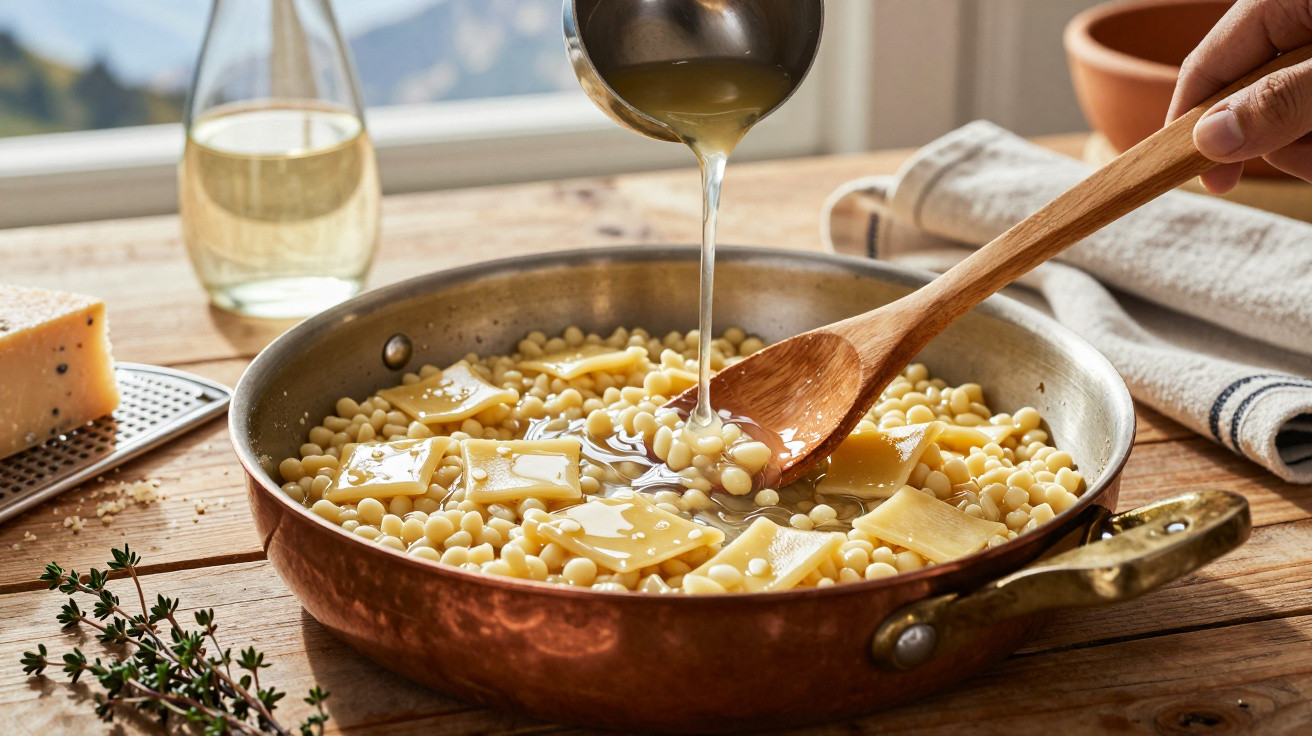
In the icy mountains of Savoie, one understated detail in the pan separates bland crozets from a truly memorable dish.
While many people treat crozets like any other pasta and simply drop them into boiling water, Savoyards take a different approach: they cook these tiny squares like a risotto, using a rich, fragrant stock that is gradually absorbed. The result completely transforms the texture, aroma and even the dish’s sense of comfort.
The small mountain pasta many people get wrong in the kitchen
Crozets are a traditional pasta from Savoie in the French Alps. Rather than taking the form of spaghetti or penne, they are small, flat squares, often made with buckwheat. Their foundations are humble and almost rustic: flour, water and eggs. Yet that apparent simplicity can catch out anyone who cooks them without care.
In many homes, the method is straightforward: bring salted water to the boil, add the crozets, drain them, then stir through cream and cheese. It resembles cooking ordinary pasta, but the outcome is often disappointing. The texture can turn rather heavy and sticky, while the flavour remains muted even with plenty of cheese.
When crozets are cooked in a pan full of plain water, much of their flavour disappears with the water poured down the drain.
There is a simple reason for this. During boiling, water enters the pasta while minerals and aromatic compounds are carried away. The crozet swells, but its flavour becomes diluted. With buckwheat crozets, which are more porous, this loss is particularly noticeable.
The Savoyard secret: cooking crozets like risotto
In Savoie, tradition takes a different direction. Rather than boiling crozets in water, many cooks make what is known as a “crozotto”: it follows the same principle as risotto, replacing rice with these small pasta squares. The pan is fed with hot, highly aromatic stock, which the crozets absorb completely.
This technique relies on absorption cooking. No water is wasted at the end, because it all becomes part of the pasta. The liquid is not plain: it combines local white wine with vegetable or chicken stock, seasoned with salt, fat and herbs.
In practical terms, the usual ratio is roughly 1 part crozets to 2.5 to 3 parts liquid. Cook them over a low to medium heat for 15 to 20 minutes, stirring throughout. The starch released by the crozets creates a natural creaminess, giving the dish its sheen and cohesion much like a good Italian risotto.
Crozets “drink” the stock: the flavour does not vanish down the sink; it becomes concentrated in every little square.
The Savoyard method for creamy crozotto, step by step
The preparation closely resembles a classic risotto, although a few key actions make all the difference. Begin in a wide pan or a good sauté pan, allowing enough room to stir comfortably.
1. Nacrer the crozets: where everything starts
The first step, often missed, is known as “nacrage”. Put the uncooked crozets into the pan with butter, bone marrow or duck fat, over a medium-high heat of around 140°C.
- Stir continuously so that every square is coated in fat;
- Let them fry gently for a few minutes, without allowing them to brown too much;
- Create a fine coating of fat around the pasta, helping to stop it from sticking.
This stage builds flavour from the outset and prepares the pasta surface to take in the stock without breaking apart.
2. Savoie white wine and hot stock
Once the crozets have been nacréed, add the wine. Typical regional wines such as Apremont or Abymes work particularly well. Their role is not limited to acidity: the alcohol also helps loosen the flavours caught on the base of the pan.
As soon as nearly all the wine has evaporated, add the first ladleful of piping-hot stock. From then on, the routine will be familiar to anyone who has made risotto:
- add the hot stock gradually, one ladleful at a time;
- stir regularly, allowing the starch to disperse and create creaminess;
- wait until the liquid has almost disappeared before adding the next ladleful;
- start checking the crozets from 15 minutes onwards.
3. Finishing with Alpine cheeses
Once the heat is off, it is time for the most anticipated stage. Classic Savoie cheeses such as Beaufort, Comté or Reblochon turn the creamy base into a substantial dish full of character. Some cooks also stir in a small knob of butter for extra gloss.
The moment when the crozotto is enriched with cheese determines whether the final dish will feel merely heavy or silky and enveloping.
Possible flavours, mountain atmosphere and common mistakes
Using this method, crozotto can take on almost any character. In the Alps, versions with mushrooms, leeks or asparagus are common. It suits cold weather, misted-up windows and a glass of white wine alongside it.
Ingredients that often appear on the worktop include:
- Savoie crozets, made with either wheat or buckwheat;
- finely chopped onion or shallot;
- winter vegetables, such as leeks, carrots and squash, or fresh mushrooms;
- dry white wine, preferably from the region itself;
- well-seasoned homemade chicken or vegetable stock;
- mountain cheese, grated or diced, to finish.
At the same time, certain habits undermine the final result:
| Common mistake | Consequence in the dish |
|---|---|
| Cooking in a large volume of water, then draining | Diluted flavour, fewer minerals and a lifeless texture |
| Rinsing crozets after cooking | Loss of the starchy coating that contributes to creaminess |
| Adding all the stock at once | Cooked pasta, but without the same risotto-like texture |
| Skipping the nacrage in fat | Sticking squares and less depth of flavour |
Why this crozotto technique works so well
From a culinary perspective, crozotto is built on straightforward science. When hot stock meets the pasta, its starch begins to gelatinise. Some of it escapes from the crozet and combines with the fat and liquid. Constant stirring spreads this released starch through the pan, thickening the preparation and producing its characteristic creamy feel.
By using stock rather than water, every pore in the pasta fills with more than liquid: it takes on wine, herbs, vegetables and chicken flavours. This offsets the pasta’s natural neutrality and removes the need to overdo the cream. The cheese provides the final link, melting into the starch and completing the texture.
The appeal lies in the combination of small decisions: the type of stock, careful heat control, the choice of cheese and patience while stirring.
Ideas, pairings and considerations for serving crozotto
For anyone planning menus, crozotto works well as a main course on cold evenings with a simple green salad, or as an accompaniment to braised meats and sautéed sausages. Versions made with mushrooms cooked in butter can make a highly satisfying almost-vegetarian dish, especially when paired with a carefully made vegetable stock.
One point deserves attention: the combination of pasta, rich cheese and sometimes cured meats can make the dish heavy if portions are too large. To balance it, increase the quantity of vegetables in the recipe, reduce the cheese slightly and choose a lighter, less salty stock.
Anyone who has never found crozets in the shops can apply the crozotto principle to other small pasta shapes, remembering that the cooking time will change. Small shapes such as risoni or orzo can be tried, checking for an al dente texture. The result will not be identical to the Savoie original, but it is useful for practising absorption cooking and understanding how stock changes the whole dish.
In flavour terms, pairing crozets with mountain cheeses creates a cumulative feeling of comfort: richness, warmth, creamy texture and a subtly animal note from raw milk. Those interested in regional cooking can try different stocks, wines and cheeses, noting down the results. Before long, the old pan of boiling water will seem like a thing of the past, and crozets can take their rightful place: a concentrated, warming mountain dish full of character.

















Comments
No comments yet. Be the first to comment!
Leave a Comment