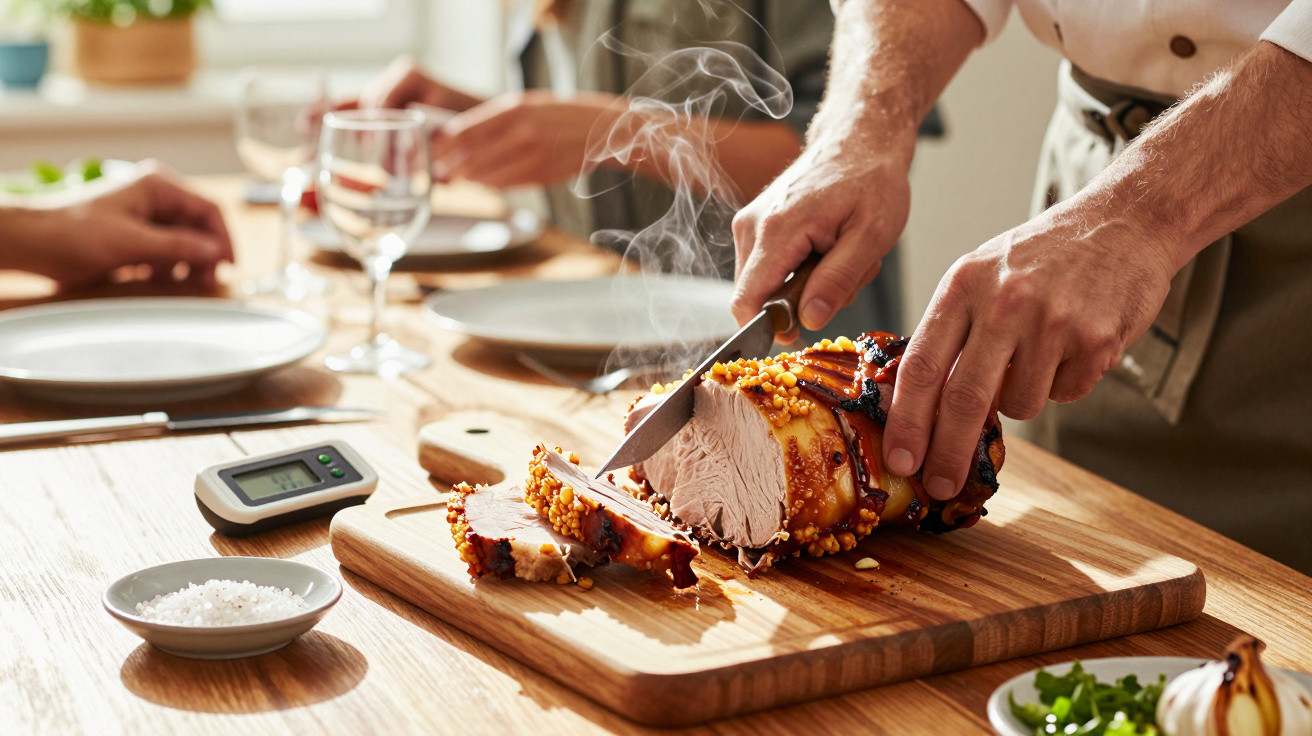
It is 11.30 am, the table is nearly laid and the pork joint is waiting on the worktop. This sort of meal often brings the same nagging question: will it be tender, or will you need a heavy-duty carving knife to tackle it? We all know the moment of watching the oven, torn between undercooked pink meat and pork that turns out too dry. Yet a moist pork joint requires neither a chef’s secret nor expensive equipment. Sometimes, all that is needed is to slow down. Low-temperature cooking transforms the texture, the juices, the aroma drifting through the kitchen and even the feel of a Sunday meal. There is something reassuring about the result: meat that slices without resistance, with a golden exterior and a yielding centre. What if the real luxury were simply never getting your roast wrong again?
Pork does not like to be rushed: what really happens in the oven
A pork joint cooked too quickly can look flawless when it comes out of the oven, only to disappoint when it is carved. Its juices run out across the board, the slices tighten, and you are left with meat that is acceptable but rather joyless. At a low temperature, heat works its way steadily to the middle: the muscle fibres contract less harshly, helping the meat retain its moisture and tenderness.
For Claire, who makes a family lunch for eight every year, the difference was almost instant. Her 1.2 kg joint, cooked at 130 °C for around two hours, retained almost a glassful of juices in the dish. Previously, she cooked it at 200 °C “to get it done faster” and often served firmer meat, drowned in sauce. Her guests spotted the change before they even knew her trick.
Low-temperature cooking does not mean pale or bland meat. The approach is straightforward: first sear the joint over a high heat in a very hot frying pan, creating the golden crust that smells of a family meal. The oven then takes over at a gentle pace. Patience becomes a genuine ingredient. The result is a pleasing contrast between a caramelised outside and a soft interior, without drying out the most delicate parts.
The straightforward method for a moist pork joint every time
Ideally, choose a joint from the neck end or loin, with a visible thin layer of fat: it enriches the cooking and protects the flesh. Take the meat out of the fridge 30 to 45 minutes before cooking, season it generously with salt and pepper, then rub it with a little thyme, crushed garlic or wholegrain mustard. Brown it for two minutes on each side in a casserole dish with a drizzle of oil.
Then transfer the joint to an oven dish, pour in a little water, stock or white wine, and cook it at between 120 and 140 °C. For a 1 kg piece, allow roughly 1 hour 30 minutes to 2 hours 15 minutes, though weight does not tell the whole story: the joint’s shape, the oven type and its starting temperature also matter. Let us be honest: nobody calculates all that to the exact degree every day. A meat thermometer does, however, remove a great deal of stress.
Aim for a core temperature of 63 to 68 °C if you prefer juicy meat, then leave the pork joint to rest under a sheet of foil for 10 to 15 minutes. This resting stage, often rushed because the potatoes are cooling and everyone is hungry, allows the juices to redistribute through the meat.
“A good roast is not the one that comes out of the oven fastest; it is the one you can carve without watching its juices escape.”
- Oven temperature: 120 to 140 °C for gentle, even cooking.
- Initial browning: use a very hot frying pan and little fat; a few minutes are enough.
- Core temperature: 63 °C for pink, tender meat, or up to 68 °C for a more thoroughly cooked result.
- Resting time: at least 10 minutes, loosely covered with foil.
- Cooking juices: deglaze the dish with a little hot water, cider or stock, then scrape up the browned residue.
The small details that take an ordinary pork joint to another level
The most common mistake is basting the meat every five minutes while repeatedly opening the oven. It is well meant, but each opening lowers the temperature and extends the cooking time. Instead, add a little liquid at the start, cover very lightly if the top is browning too much, then let the oven do its work. A joint does not need watching like a pan of milk.
Another habit to drop is carving immediately after taking it from the oven because the plates are waiting. The fibres are still taut and the hot juices are looking for a way out; a few minutes of patience make a remarkable difference. Use that time to reheat the green beans, mash the potatoes with a little butter or finish a crisp salad. The kitchen becomes calmer, and so does serving.
Keep the side dishes simple, because slowly roasted pork already has plenty to offer. Roasted carrots with honey, sweet potato mash, lightly fried apples or lentils with meat juices are more than enough. The next day, cold slices tucked into a sandwich with a few gherkins prove that this method is not only for Sunday lunch: it also provides one of those very tangible small pleasures on a Monday lunchtime.
A cooking approach that changes the way you host
Cooking a pork joint at a low temperature is not about chasing perfection at all costs. Above all, it is a more generous method for both the ingredient and yourself: less anxiety in front of the oven, less dry meat to hide under sauce, and more time to talk with loved ones sitting in the next room. The scent of thyme, garlic and golden pork already does part of the work.
There is still room for instinct, of course. Some will add dry cider, others a spoonful of honey, a touch of smoked paprika or a few unpeeled garlic cloves around the dish. The joint then becomes a personal recipe: one children ask for years later, or that friends associate with a large shared table. Trying gentler cooking can sometimes mean rediscovering a dish you thought you had known forever.
| Key point | Detail | Benefit for the reader |
|---|---|---|
| Gentle cooking | Oven set between 120 and 140 °C | More tender, less dry meat |
| Initial searing | Brown the pork joint before putting it in the oven | Flavourful cooking juices and a tasty crust |
| Essential resting | Wait 10 to 15 minutes before carving | Juices retained in every slice |

















Comments
No comments yet. Be the first to comment!
Leave a Comment