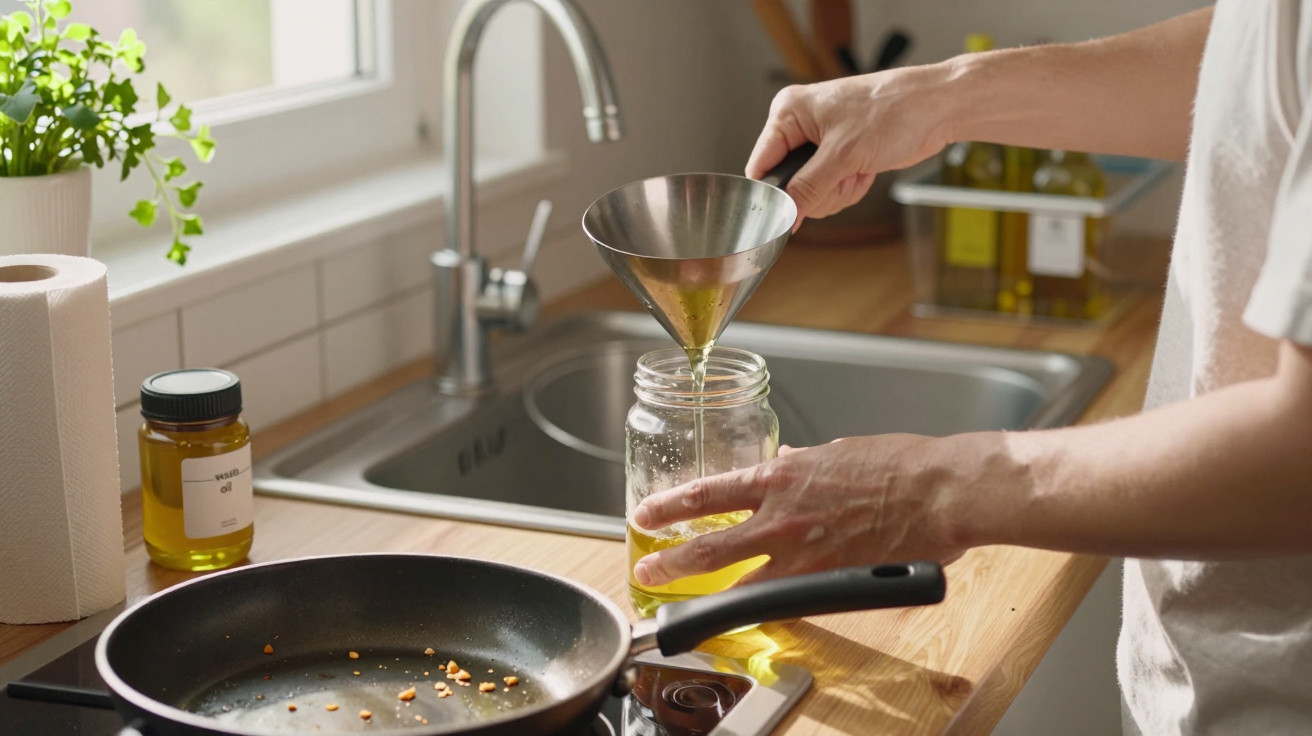
Dinner is over, the plates are waiting in the sink, and the frying pan still carries the comforting smell of homemade chips. We all know that moment: looking at the cooling oil and wondering what to do with it, while the easiest option seems to be letting it run down the plughole. After all, it is liquid, disappears quickly and goes unnoticed. Yet just a few seconds can create a problem that remains hidden in the pipes for weeks. Improperly discarded frying oil does not evaporate: it travels, solidifies, sticks and can eventually reappear where you least expect it. It is an everyday action with very real consequences.
Why the sink is never the right place for frying oil
In the kitchen, still-warm oil can appear almost harmless. It slides around the pan, shines on the water’s surface and makes it seem as though a little washing-up liquid will solve everything. However, when it reaches colder pipes, it thickens and clings to their walls like greasy wax. Food remnants, hair and soap deposits then stick to it. Gradually, the pipe narrows without any obvious warning. Then, one evening, water backs up into the sink and it becomes clear-too late-that the issue did not happen overnight. It built up with every small amount carelessly poured away.
Drainage professionals know this issue well, often referring to it as a “fatberg”. In some cities, wastewater systems must even deal with huge blockages made up of fats, wipes and rubbish wrongly flushed down toilets or tipped into sinks. At home, one saucepan will not block the whole neighbourhood, of course. But repeating the same action after every cooking session changes matters. A plumber may charge several hundred pounds to clear a hard-to-reach pipe, not to mention the stress of having an unusable kitchen. Frying oil seems unobtrusive-until the day it very much is not.
The problem extends beyond the pipes in a flat or house. Once it enters the network, fats make the job of wastewater treatment works more difficult, as these facilities are not designed to process large quantities of this type of residue. They can also disrupt pumping equipment and trap waste that should have taken another route. Let us be honest: nobody is particularly keen to deal with this every day, especially after cooking for several people. Even so, adopting one straightforward habit prevents needless pollution and an all-too-domestic unpleasant surprise. The sink is for draining dirty water, not for making cooking oils disappear.
The simple way to dispose of frying oil
The first rule is almost self-evident, but it is worth repeating: allow the oil to cool completely. Pouring scorching oil into a plastic bottle can warp it, cause a leak or burn someone in the process. Once it is cold, use a funnel to decant it into a clean, sturdy container with a lid: an empty oil bottle, a thick plastic water bottle or a suitable old container. Seal it tightly, then keep it out of reach of children and pets. This small supply can be stored for a few days in a cupboard or garage until it can be taken to the right place.
For a very small amount, such as the oil left in a frying pan after browning a few fritters, another option works well: soak it up with kitchen roll, then put the paper in the general waste. You can also allow the fat to set before scraping it away with an old spatula. A common mistake is to pour in hot water and washing-up liquid immediately after the oil, assuming this will dissolve it. It does disperse briefly, but then reforms further along the pipes. Dilution does not turn oil into water. It merely moves the problem elsewhere.
For larger volumes, the best approach is to take the sealed container to a household waste recycling centre or a collection point accepted by your local council. Some councils provide dedicated bins, while others direct residents to the nearest recycling centre; a quick look at the local authority website removes any uncertainty.
“Cooled frying oil should be treated as waste to be collected, never as a liquid to be drained away.”
- always allow the oil to cool before handling it;
- use a sealed bottle, never a flimsy bag;
- take large quantities to a suitable collection service;
- do not add water, household cleaners or coffee grounds to “clean” the sink.
A small habit with a significant impact
Used oil is linked to something very ordinary: the tiny actions carried out without thinking, between washing a few plates and the end of an evening. Keeping a dedicated bottle near the cleaning products already removes much of the inconvenience. The container fills slowly, without any particular smell when properly sealed, then goes to the recycling centre on an already planned trip. It is not dramatic, but it works. In some collection systems, recovered oils can even be put to use, including in energy production or biofuels, depending on the facilities available.
This habit is also easy to pass on to those around you. A child helping to clear away soon understands that a hot pan requires care, and that a sink cannot swallow everything without consequences. A neighbour may not know that collection points exist, as may many people who have recently moved home. Mentioning it in a kitchen conversation can sometimes change a long-standing routine. Frying oil is far from the most glamorous household waste, but it says something about how we approach small everyday responsibilities. Often, it is these accumulated actions that make the difference.
| Key point | Detail | Benefit for the reader |
|---|---|---|
| Never pour it into the sink | Oil cools, solidifies and traps other waste in the pipes. | Reduces the risk of blockages, odours and costly call-outs. |
| Use a sealed container | A sturdy bottle stores cold oil without leaking. | A simple solution for any kitchen. |
| Use local collection services | Take it to a household waste recycling centre or dedicated point, according to local council rules. | The waste enters a cleaner route and may sometimes be recovered for use. |

















Comments
No comments yet. Be the first to comment!
Leave a Comment