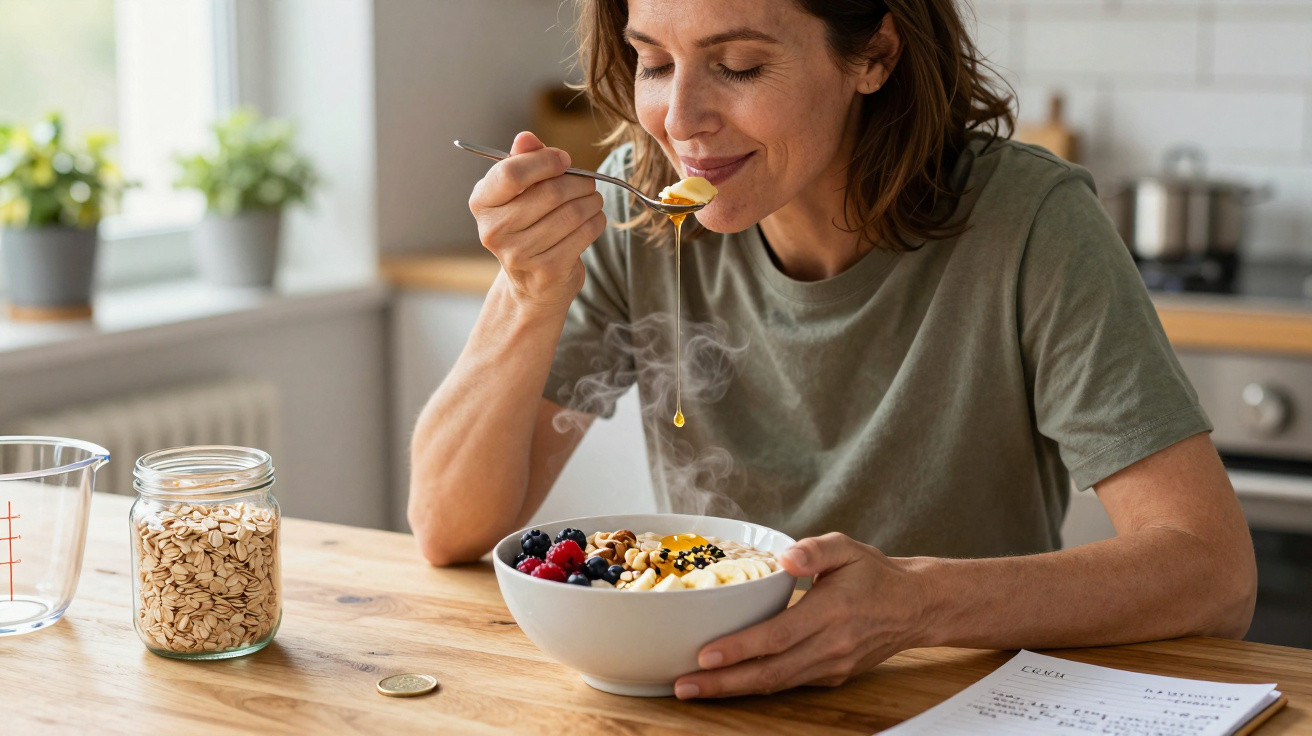
At 10.45 am, hunger often returns without warning. In a waiting room, at work or after dropping the grandchildren at school, many people know that mid-morning dip that sends them towards the vending machine or the packet of biscuits left in their bag. After 50, it can feel even more irritating: breakfast has been eaten, sometimes even a “proper” one, yet the stomach is already asking for more. A slice of toast eaten standing up, sweetened coffee or fruit juice may be enjoyable, but it does not last long. The breakfast that can make a difference is neither elaborate nor expensive: a bowl of oats made with a few cupboard staples. It can cost less than one euro. And it really does keep you full.
The bowl of oats: a modest breakfast that prevents the mid-morning slump
In many kitchens, a packet of porridge oats sits forgotten at the back of a cupboard, somewhere between the pasta and rice. Yet dietitians often recommend this everyday food because it can provide lasting fullness, particularly when it replaces highly sweetened cereals or white bread eaten on its own. A 40 to 50 gram portion, combined with milk or plain yoghurt, makes an easy base that can be served hot or cold, depending on preference. At last, the stomach is getting something other than fast-acting sugar. The aim is not to create a perfect breakfast; it is to reach lunchtime without watching the clock.
Marie, 57, recently explained that she used to buy a coffee and a pastry every morning before starting work. By 11 am, she would often add a chocolate bar, “just to keep going”. She swapped that routine for 45 grams of porridge oats, half a plain yoghurt and a chopped apple: at own-brand prices, this bowl often costs between €0.60 and €0.95. The change is not down to a miracle recipe. She simply says she no longer feels that urgent pull towards the snack machine.
Part of the explanation lies in oats’ soluble fibre, including the well-known beta-glucan, as well as pairing them with a source of protein. Fibre slows digestion and helps energy rise less sharply than it would with sliced white bread, biscuits or juice. Yoghurt, milk or fromage frais provide a more substantial texture without making preparation more complicated. The body often responds well to simple routines, provided they are filling enough to last through the morning. After 50, this consistency may also make it easier to recognise genuine hunger signals.
How to make this breakfast for less than €1 without getting bored
The most affordable version fits into one bowl: 40 to 50 grams of porridge oats, 125 grams of plain yoghurt or a little milk, followed by seasonal fruit. An apple, half a banana or a few diced pieces of pear are more than enough, especially with a pinch of cinnamon. On rushed mornings, the oats can be soaked in yoghurt in the fridge overnight; when you wake up, all that remains is to stir them together. Those who prefer a hot breakfast can simply pour warm milk over the oats and wait for two minutes. It is rustic, certainly. But fullness is also built on this simplicity.
A common mistake is turning this plain bowl into a dessert: a generous drizzle of honey, crunchy granola, chocolate chips or an unmeasured spoonful of peanut butter. All of these can be enjoyable, but the cost soon rises, along with the sugar or calorie content. Let us be honest: nobody really does this every day with kitchen scales and a nutrition chart. The point is not to monitor every spoonful, but to retain a sensible foundation. If hunger still appears before lunchtime, slightly increasing the yoghurt portion or adding a few nuts may help, depending on budget and individual needs.
Dietitians often point out that a good breakfast is not one that ticks every box on Instagram, but one you genuinely want to make again on Tuesday, Thursday and on days when everything is moving too quickly.
“An affordable, filling option often comes down to three principles: fibre, protein and a flavour you genuinely enjoy.”
To keep a bowl of oats below one euro while varying the taste, here are a few straightforward options:
- grated apple and cinnamon;
- half a mashed banana, for natural sweetness;
- plain yoghurt with a spoonful of no-added-sugar compote;
- a small quantity of raisins for more active mornings.
After 50, choose a steadier morning rather than restriction
As the years go by, breakfast can become a genuine anchor, far removed from instructions to eat less and less or cut out every pleasure. A bowl of oats will not transform habits overnight, and it will not necessarily suit everyone: some people digest wholemeal bread, eggs or a savoury breakfast more comfortably. However, its benefit lies elsewhere: it is an accessible option for anyone hoping to avoid hunger pangs without spending four euros every morning. The best choice is still the one that fits real life, including your budget, timetable and preferences.
| Key point | Detail | Benefit for the reader |
|---|---|---|
| Filling base | 40 to 50 g of porridge oats with a plain dairy product | Fibre and protein to stay full for longer |
| Controlled budget | Simple seasonal products, often available as own-brand options | A breakfast generally costing less than €1 |
| Easy variations | Apple, banana, cinnamon or no-added-sugar compote | Avoid boredom without increasing the cost |

















Comments
No comments yet. Be the first to comment!
Leave a Comment