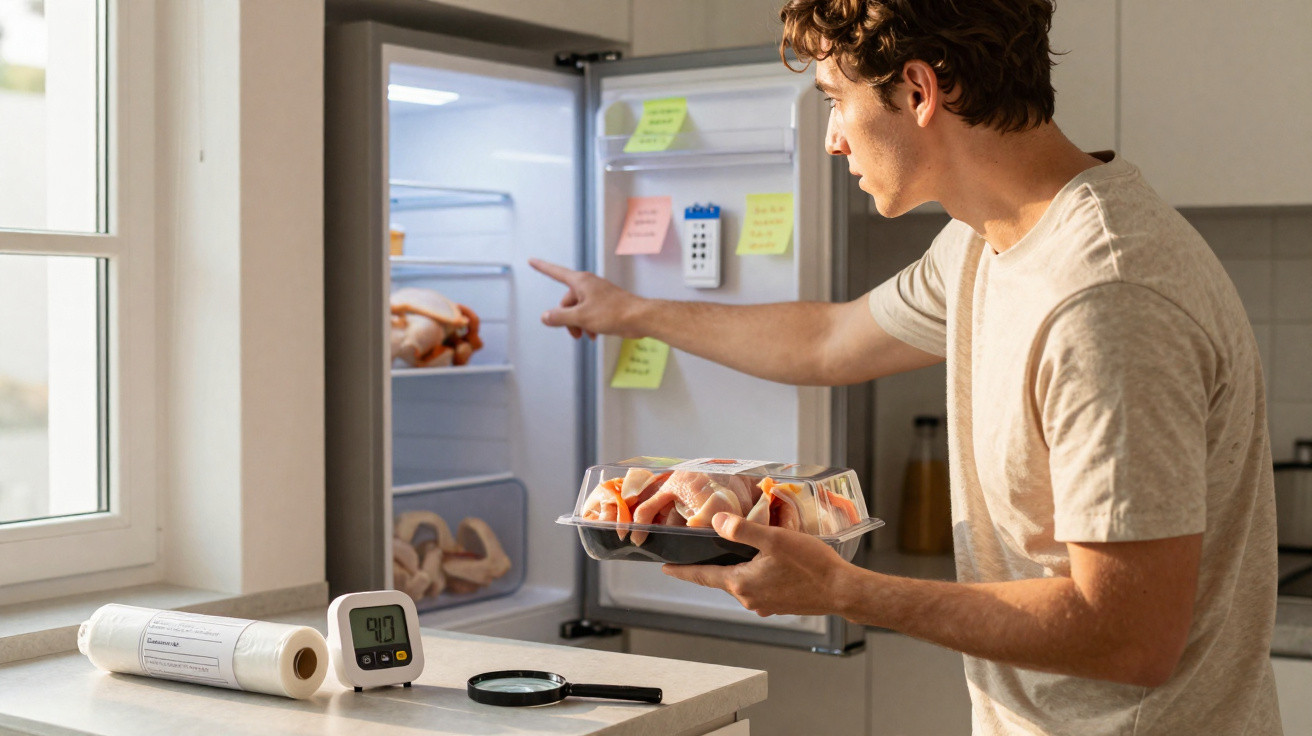
A glance into the fridge, the red supermarket stickers, then the alarm: the mince expires tomorrow, and so does the salmon. Is it best to put everything straight into the freezer – or not? A virologist explains what really applies when food goes into the freezer shortly before its expiry date.
What a virologist says about last-minute freezing
Virologist Océane Sorel, known among specialists for her work on viruses and hygiene issues, can ease some consumer uncertainty – though not every concern.
“Technically, much is possible when freezing food shortly before expiry, but it is not entirely without risk.”
She stresses that products stored at the correct chilled temperature can generally be frozen the day before, or even on, their stated use-by date. This particularly applies to packaged chilled goods that have remained continuously cold.
Even so, she advises against turning this emergency measure into a regular habit. Freezing may act like a pause button for bacteria, but it does not kill them. Microbes effectively “wait” in the freezer. Once the food is defrosted later, their activity resumes – precisely where we least want it: on our plates.
How bacteria really behave in the freezer
A common belief is that deep-freezing makes everything germ-free. That is not the case. Cold merely slows bacteria and many viruses down, leaving them inactive rather than destroying them completely.
- At around -18 degrees, the growth of most germs stops.
- However, large numbers of bacteria already present survive.
- Once food is defrosted, they become active again and can continue multiplying.
If a product has already spent several days close to the end of its shelf life, many germs may have multiplied during that period. Freezing it only at the very end effectively “preserves” that problematic starting point. After defrosting, the situation is exactly the same – simply delayed.
“Freezing stops the clock for germs, but it does not turn it back.”
Use-by date or best-before date: the crucial difference on the packet
Much of the confusion surrounding freezing comes from the different date labels. Nearly all packaged foods carry either a use-by date or a best-before date.
“Use by…” – safety is the priority here
A use-by date is found on highly perishable foods, including:
- fresh meat and mince
- fresh fish and seafood
- chilled ready meals
- many fresh dairy products, such as certain desserts or unpasteurised milk cheeses
After this date, harmful germs may be present in dangerous quantities. Experts are clear: if the date has passed, the product belongs in the bin – not in your stomach, and not in the freezer either.
A properly chilled product can generally be frozen up to and including its use-by date. However, it is better to decide earlier: will I really eat this within the next one or two days? If not, freeze it straight after shopping rather than leaving it until the last minute.
“Best before…” – this is mainly about quality
Pasta packets, rice, tinned food and chocolate usually display a best-before date. It means the manufacturer guarantees flavour, texture and colour until that day. These products are often still edible well beyond the date when stored somewhere dry, cool and dark.
Freezing matters little for many of these foods because they remain stable at room temperature. Leftover bread, pastries or cheese can usually still be frozen after the best-before date, provided the product looks, smells and tastes normal.
“The greatest danger is with products carrying a use-by date – tolerance ends much sooner here.”
When last-minute freezing is still acceptable – and when it is not
Three factors matter: the date, storage conditions and the state of the food. Anyone considering freezing shortly before expiry should follow a few guidelines.
Good conditions for safe freezing
The likelihood that food can later be eaten without stomach trouble is higher when:
- it is a product with a use-by date that has not yet passed;
- the cold chain from the supermarket to your fridge has remained unbroken;
- the packaging, colour and smell appear entirely normal;
- the freezer runs consistently at around -18 degrees.
Making the decision early is ideal. If you know while shopping that the salmon will not be served until next week, freeze it immediately. That reduces the time during which germs can multiply.
Warning signs that mean you should not freeze it
There are clear no-go signs where the bin is safer than the freezer:
- the product is already past its use-by date;
- the packaging is swollen or damaged;
- it smells sour, rotten or “somehow odd”;
- its surface is slimy or discoloured.
Freezing despite these warnings to save money merely postpones the problem. After defrosting, both the smell and bacterial load return, potentially causing stomach and bowel illness or serious infections in the worst cases.
How to defrost safely and avoid the biggest risk
How food is handled while defrosting is at least as important as when it was frozen, because this is when germs become active again.
- Defrosting food in the fridge is the safest option.
- The microwave’s defrost setting is a suitable alternative.
- On the worktop at room temperature, germs multiply most quickly.
Once defrosted, food should be prepared promptly and heated through thoroughly. Leaving it lingering at lukewarm temperatures is bad news for our stomachs but excellent news for bacteria.
“Once a product has been defrosted, it should not go back into the freezer – the bacterial load rises with every cycle.”
Common myths about freezing – and the facts
Stubborn myths about freezing persist in many kitchens. Here are three of the most frequent assumptions, checked quickly:
- “Freezing kills all germs.” This is untrue. Most bacteria survive cold temperatures without difficulty and become active again during defrosting.
- “If it does not smell, it is safe.” This is also wrong. Some pathogens barely alter a food’s smell or appearance, yet can still cause severe symptoms.
- “Refreezing does no harm.” On the contrary: every defrosting cycle gives germs fresh opportunities to multiply, significantly increasing the risk.
Practical tips to prevent food waste and stomach upset
A few habits can help anyone waste less food while still staying on the safe side. It helps to plan realistically before shopping: how many fresh products can I genuinely get through in the next two or three days?
At home, a quick check is worthwhile:
- Freeze meat and fish straight away if they will not be eaten within two days.
- Let leftover goulash, soup or stew cool, then freeze it in portions.
- Slice bread that is likely to go stale, freeze it, and toast slices as needed.
Labelling freezer bags with the date makes it easier to keep track. That way, you can choose the most appropriate packet rather than reaching for the oldest one, before “freezer fossils” start piling up.
Why we often misjudge date labels
Many people throw food away too early because they are unsure, while others disregard warning signs and take unnecessary risks. Date labels can seem highly technical, but they ultimately provide a safety net with some flexibility either side of the stated date.
For products with a best-before date, it is worth using your own senses: if the food looks normal, smells neutral or appetising, and a small taste seems unremarkable, there is rarely a reason not to eat it – and freezing is usually unnecessary. Fresh, highly perishable products require greater caution, and their date should be taken more seriously instead of relying on the freezer as a last resort.
Anyone who understands these differences and treats freezing as a planning tool rather than an emergency brake can save money, reduce food waste and protect their digestive system – without panicking about every date on a packet.

















Comments
No comments yet. Be the first to comment!
Leave a Comment