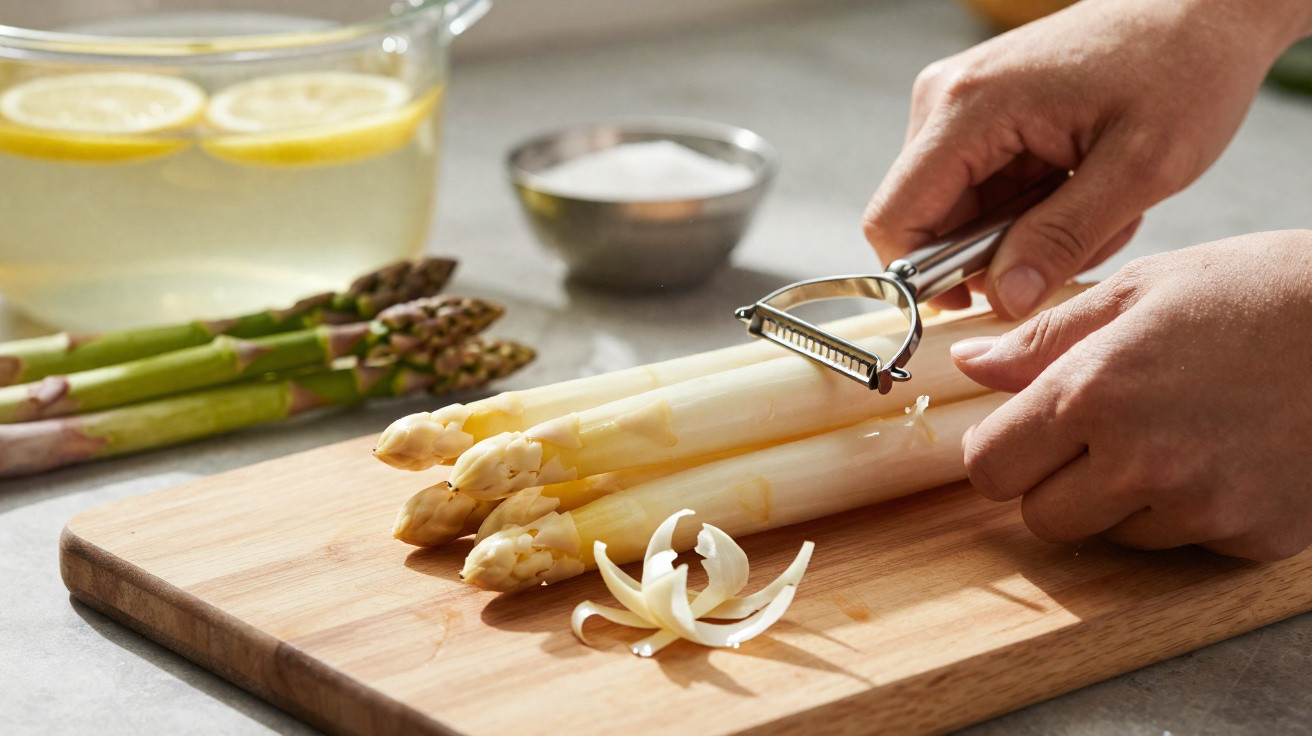
The quality is good, the spears look excellent and the price is steep – yet the asparagus ends up tough and unusually bitter. In many kitchens, the problem lies neither with the retailer nor the recipe, but with one tiny detail during peeling. Peeling asparagus in the wrong direction can spoil both its texture and flavour without you noticing.
Why white asparagus can taste bitter at all
White asparagus is known for being mild, nutty and tender. Even so, people regularly find that individual spears are unexpectedly bitter or tough. Some of this can be attributed to external factors, including a very late harvest, stress on the plant or lengthy storage. Far more often, however, the cause arises during cleaning and preparation.
The spears are covered by a tough, fibrous skin. This layer contains bitter notes and fibres that do not soften during cooking. If too much remains on the asparagus, it will taste harsh and feel “woody” when chewed. Conversely, pressing the skin into the tender inner layer pushes the bitterness towards the centre of the spear.
“What matters is not merely that asparagus is peeled, but also the direction in which the peeler is drawn along the spear.”
The most common mistake when peeling white asparagus
Many people do it instinctively: hold the asparagus, start at the cut end at the bottom, then pull the vegetable peeler upwards towards the tip. It seems logical – but for white asparagus, this is precisely the wrong direction.
Peeling from bottom to top tends to force the tough fibres of the skin into the delicate flesh instead of removing them. Bits of peel can then cling to the spear even when they appear almost invisible. During cooking, this layer releases bitter compounds that spread through the inside.
There is also a second issue: this movement can easily damage the delicate tip. One small jerk of the peeler is enough to nick or snap the most tender part of the spear. In the pan, the damaged tip cooks through more quickly while the lower end remains fibrous.
- The result in the pan: overcooked tips and hard ends.
- On the palate: unpleasant fibres and a pronounced bitter note.
- In your mind: frustration – even though the expensive asparagus was actually excellent.
The correct movement: how to peel asparagus for a milder flavour
The answer sounds almost ridiculously simple: reverse the movement. In practice, it makes an enormous difference.
Step-by-step guide for white asparagus
- Lay the asparagus flat on a board rather than holding it in the air. This makes it less likely to break.
- Hold the asparagus at the lower end, or base, with one hand.
- Position the vegetable peeler just below the tip.
- Peel in long strokes from the tip towards the base – in other words, down towards the cut end.
- Only very lightly scrape the tip, if at all, as it is exceptionally tender.
- Work your way all around until the whole spear has been peeled.
This direction removes the peel in clean strips. The fibres are pulled away instead of being pressed into the spear. The result is smooth, evenly peeled asparagus that develops noticeably less bitterness when cooked and feels much more tender on the fork.
“A useful kitchen rule: with white asparagus, always move the peeler from the tip to the base – never the other way round.”
How much should be removed? Dealing with the woody end
The lower end of white asparagus is almost always tougher. This is where particularly large amounts of woody material and fibres build up. Many professional chefs recommend cutting off around two to three centimetres from the base. This is especially worthwhile with thick spears, as this section rarely becomes tender.
How can you check? Simply bend each spear gently. The point at which it snaps usually marks the beginning of the more tender section. If you do not want to cut away too much, these approximate guidelines can also help:
| Spear thickness | Recommended amount to remove from the end |
|---|---|
| thin | approx. 1–2 cm |
| medium | approx. 2–3 cm |
| thick | approx. 3–4 cm |
More important than the exact number of centimetres is how the end feels in your hand: if it is very firm and woody, remove a little more generously.
Further ways to reduce bitterness while cooking
Correctly peeling asparagus already addresses the biggest factor. A few simple additions to the cooking water can still make the flavour more rounded.
Tips for the cooking water
- Salt generously: Salt brings out the sweetness of the asparagus and balances bitter compounds.
- Add a little sugar: A small pinch is enough. It softens bitter notes without turning the vegetable into a dessert.
- Put butter in the cooking liquid: Fat carries flavour and creates a softer mouthfeel.
- Lemon slices: A few thin slices in the cooking water add freshness and take the edge off the bitterness.
Depending on their thickness, cook the spears only until a knife tip slides in easily while they still hold their shape. Cooking them for too long makes the tips mushy, while the lower end may still not seem quite right.
Do not throw away the peel: get more from your asparagus
The long strips of peel left over from peeling asparagus properly are not waste. They can be turned into an aromatic stock for soups, risotto or sauces.
Put the peel and trimmed ends into a saucepan, cover them with water, then bring to the boil with salt, a little sugar and, if you wish, a piece of butter or a squeeze of lemon. Leave to infuse over a low heat for 20 to 30 minutes, then strain through a fine sieve.
“Asparagus stock tastes milder than raw peel and brings its characteristic flavour to other dishes without seeming bitter.”
White versus green asparagus: differences when peeling
Green asparagus grows above ground and develops more chlorophyll, giving it a stronger character and allowing it to retain more bite. It often needs only a light peel over the bottom third, and many thin spears require no peeling at all.
White asparagus is different: almost its entire length should be peeled because the skin is thicker and more bitter. However, the rule about direction always remains the same – even with green asparagus, whenever a peeler is needed: work from the tip to the base.
What bitter asparagus experiences can teach you
Anyone who has been served a truly bitter portion of asparagus is often quick to blame the purchase. Looking at the peeling direction shows just how much is in your own hands. Especially in spring, when many people cook asparagus for the first time that year, the old bottom-to-top reflex can quickly return.
A deliberate test is worthwhile: peel one half of the spears incorrectly and the other half correctly, cook both in the same way, then taste them. In most kitchens, the difference is so clear that no one returns to the old technique afterwards.
Once you have internalised the correct peeling direction, you avoid frustration, get more flavour from every spear and make the most of this expensive seasonal purchase. Suddenly, spring tastes exactly as it should – tender, lightly nutty and without that distracting bitter aftertaste.

















Comments
No comments yet. Be the first to comment!
Leave a Comment