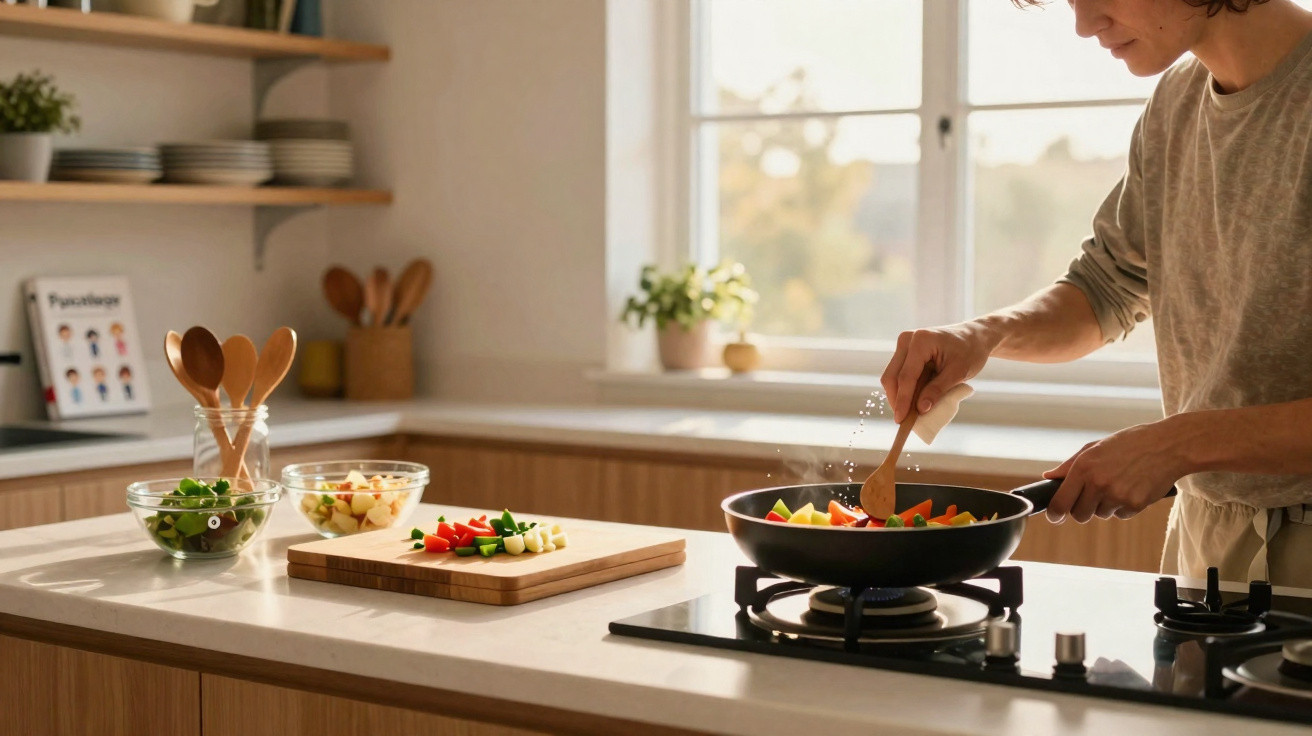
This small kitchen ritual reveals far more about your character than many people realise.
Anyone who does not wait until the meal is ready, but washes up, wipes down and sorts things as they cook, is often doing more than simply indulging a love of tidiness. Psychologists recognise a clear pattern in this behaviour: the habit of clearing up while preparing food is linked to particular personality traits, from stronger self-control to smart everyday stress management.
What psychologists see in a tidy kitchen
Research in personality and occupational psychology suggests that the way people organise everyday tasks can reveal a great deal about them. The kitchen provides an ideal setting for this: heat, time pressure, several jobs at once, as well as smells and noise. Those who stay on top of it here usually demonstrate abilities that extend well beyond the hob.
“People who continually clean as they cook often combine strong executive functions: planning, switching tasks and regulating themselves – all at once.”
Researchers associate this habit with stronger so-called executive function. This includes three central abilities:
- Working memory: keeping track of what needs doing next, from the timer to the order of each step.
- Flexible thinking: changing the plan quickly when something starts to burn or an ingredient is missing.
- Self-control: resisting the urge to check your phone and instead taking the pan off the heat and washing the frying pan.
People who clean at the same time can handle several tasks without feeling completely overwhelmed. They generally juggle practical actions and decisions confidently – a pattern that often also appears in university, work and family organisation.
Less mess, less stress
Psychological studies repeatedly show that visual clutter – items left lying around, splashes and piles – raises levels of the stress hormone cortisol. This effect is especially noticeable in people who are sensitive or already under pressure.
By washing items as they go, clearing the worktop and throwing packaging away immediately, people who tidy while cooking actively reduce this source of stress. Their surroundings remain manageable, giving their minds more space to settle. Many say this helps them focus more effectively on flavours, cooking times and enjoyment.
“Tidy kitchens signal to the brain: everything is under control here – you can focus on what matters.”
There is also an element of spatial ability involved: people who cook and tidy simultaneously think in terms of sequences and zones. Spices are kept where they are needed, knives go back in the same place, and waste reaches the bin in one movement. People with this kind of structure often organise their desks, suitcases or digital folders just as thoughtfully.
Conscientiousness served up
Personality research identifies the “Big Five”, five fundamental dimensions of personality. One of these is conscientiousness, which includes reliability, care and a tendency to finish what has been started.
Someone who washes the boards between chopping onions and tasting the sauce will typically score highly on this scale. Such people are more likely to:
- meet deadlines;
- plan appointments in advance;
- see projects through consistently rather than leaving them unfinished.
This pattern is not confined to the kitchen. The same people often keep household schedules, stay on top of bills, set calendar reminders and deal with medical appointments or tax paperwork early.
Impulse control: not putting everything off until later
After a demanding day, it can be tempting to eat first and leave the kitchen mess “for later”. Choosing not to do that demonstrates self-control: immediate comfort gives way to a more pleasant outcome in the longer term.
“Tidying up immediately while cooking often shows the ability to postpone short-term convenience in favour of a later benefit.”
Psychologists regard this as a form of willpower that can emerge in many areas of life. People with good impulse control more often make beneficial choices about money, food or sleep. They are less driven by passing moods and are better able to set priorities.
Emotional stability at the hob
The emotional aspect is interesting too: people who clean as they cook are often sorting more than plates – they may also be regulating their emotions. Repeated actions such as washing, drying and putting things away bring structure to a tiring day and create a sense of control.
People who cook this way often remain calmer when something goes wrong: the sauce turns lumpy, the oven plays up or guests arrive earlier than expected. They are more likely to keep perspective instead of becoming flustered.
Foresight in the kitchen, foresight in life
Those who spend a few seconds cleaning as they cook are usually thinking beyond the present moment. The reasoning is straightforward: a small effort now prevents a much larger job later. This approach often reappears in very different areas:
- saving small amounts regularly rather than waiting for the “right time”;
- planning long-term goals in stages;
- breaking larger projects into smaller, manageable steps.
This creates a consistent thread: brief, deliberate everyday actions that build into noticeable achievements over months and years.
What if you do not tidy while cooking?
If you are thinking, “My kitchen looks like a battlefield after I cook”, do not panic. A sink full of washing-up does not automatically mean your life is chaotic. There are plenty of reasons why people prefer to leave tidying until the end, including tiredness, other priorities or a creative cooking style.
Some people genuinely work better amid “organised disorder” and thrive when lots of impressions arrive at once. Others prefer to separate tasks clearly: cook first, clean afterwards, so they are not constantly interrupted.
“One style is not ‘right’ and the other ‘wrong’. What matters is what you can learn about yourself from your own pattern.”
However, anyone who finds the mess afterwards regularly irritating or overwhelming can take inspiration from the strategies of people who tidy in the middle of cooking – without turning into a cleaning robot.
Practical tips for less stressful cooking and cleaning
Many habitual parallel cleaners follow established routines without consciously noticing. Anyone wishing to try it can use these steps as a guide:
- Light mise en place: prepare ingredients roughly before starting and dispose of packaging straight away.
- Use idle time: while water is boiling or something is in the oven, quickly rinse knives and wipe surfaces.
- Use one waste bowl: put peelings, leftovers and trimmings into a bowl instead of scattering them across the worktop.
- Use fewer utensils: reuse chopping boards and bowls where possible.
- Short cleaning intervals: deliberately set aside 30–60 seconds for tidying several times during cooking.
After trying this a few times, many people have a real light-bulb moment: the washing-up at the end is much smaller, and their mind feels clearer.
What research does not measure – but still matters
Studies on kitchens and personality reveal clear tendencies, but they do not create a perfect psychological profile. Spontaneity, creativity and enjoyment are difficult to capture in tables. Cooking also has emotional significance: family recipes, childhood memories and preparing food for other people all play a part.
Some people enjoy the almost meditative scrubbing after a meal, while others want to put their feet up immediately and would rather tidy the following morning. Others divide the work: one person cooks while the other restores order in the kitchen. All of this says as much about relationships, role expectations and everyday pressures as it does about conscientiousness and impulse control.
What remains intriguing is this: the next meal reveals not only what is on your plate, but also how you handle stress, time pressure and order. Looking closely can teach you a great deal about yourself, without any questionnaire from a psychology practice.

















Comments
No comments yet. Be the first to comment!
Leave a Comment