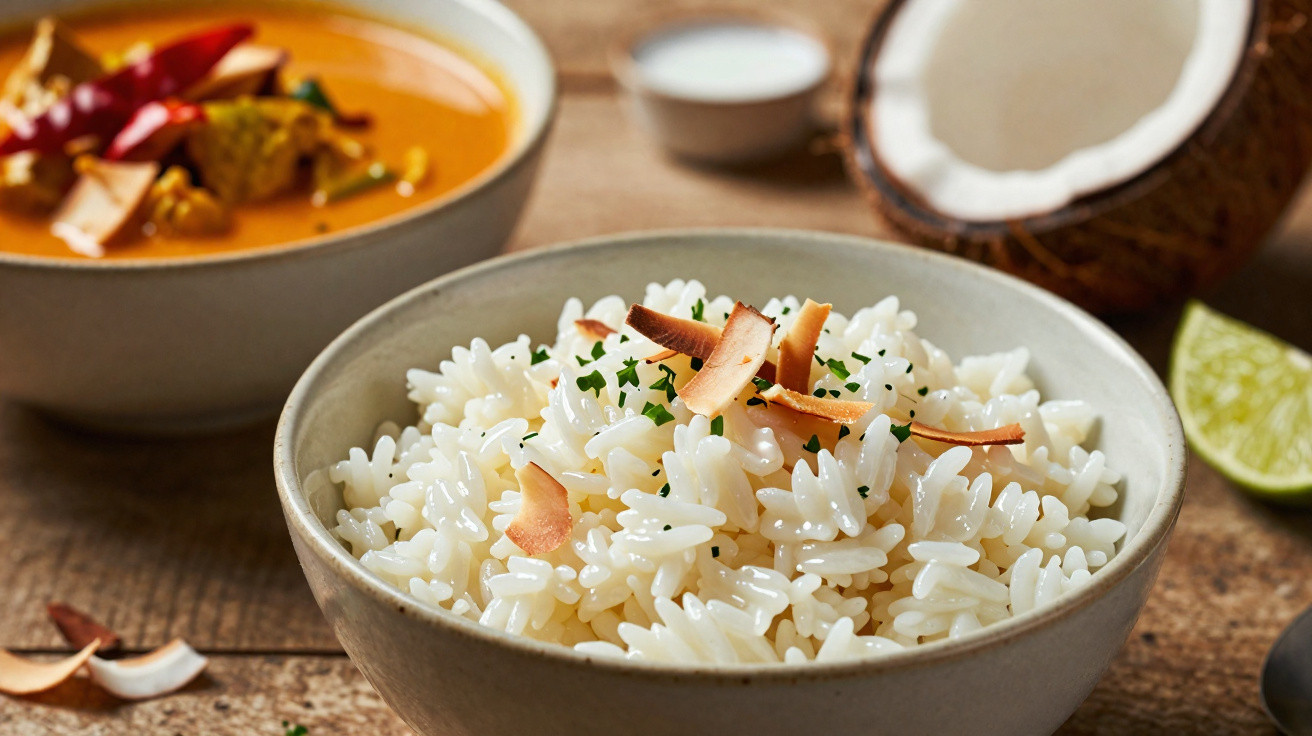
The first time I tried truly good coconut rice, my friend’s cramped kitchen carried the scent of a seaside break mixed with a Friday-night takeaway. A budget saucepan sizzled on the hob, condensation clouded the windows, and a 2000s R&B playlist competed with the rattle of the simmering lid. A pan of fiercely red curry sat ready on the table, packed with chillies potent enough to make my eyes sting before I had even taken a seat.
Then came the rice: shiny, gently sticky and subtly perfumed. After one forkful alongside that scorching sauce, the whole dish felt calmer. The heat was still there; it had simply… found its place.
That is the understated magic of creamy coconut rice.
Creamy coconut rice: comfort that makes spicy food sing
Creamy coconut rice offers something no ordinary side can quite match: it softens the impact without taking attention away from the main event. The grains remain airy, yet cling together enough to scoop up every trace of fiery sauce. It brings mild sweetness, a delicate coconut aroma and a smooth, velvety texture.
Take a mouthful of your hottest curry or chilli-heavy stir-fry and your eyes may widen slightly. Then dip your spoon back into that snowy rice coated in coconut. All at once, the fierce burn becomes a gentle warmth. The flavours can finally speak rather than yell.
I once saw a friend put out jerk chicken powerful enough to stun a small elephant. The marinade was impeccable-smoky, packed with allspice, Scotch bonnet and garlic-yet people were almost nervous about reaching for another piece. Then she arrived with an enormous bowl of coconut rice, its rising steam like a merciful signal.
Everyone started eating again: a bite of blazing chicken followed by a spoonful of soft rice. You could practically watch the tension leave people’s shoulders around the table. The rice did not weaken the spice; it extended it, gave it meaning and transformed it from punishment into pleasure. That was when I understood why some cooks always serve their most fiery dishes with a pot of creamy coconut rice.
There is a little food science behind this effect. Coconut milk contains fat, which coats capsaicin, the compound responsible for the burn of chilli peppers. That fat rounds off the sharpest edges, allowing your taste buds to stop panicking and notice the rest of the dish: citrus, ginger, smokiness and slowly cooked onions.
Rice, meanwhile, is largely starch, acting as a gentle sponge for bold flavours. Together, the rice and coconut work like a volume dial. They do not silence spicy food; they prevent it from shouting directly in your face. That’s why one good spoonful of coconut rice can suddenly turn “too spicy” into “wow, this is addictive.”
How to make creamy coconut rice at home
Begin with a straightforward ratio: 240 ml long-grain rice, 240 ml coconut milk, 240 ml water and a small pinch of salt. Wash the rice under cold running water until the water is nearly clear, as too much surface starch prevents the grains from staying fluffy.
Put everything in a small saucepan, stir once gently and bring it to a light boil. Reduce the heat to low, cover securely and cook without removing the lid for about 12–15 minutes. Once the time is up, switch off the heat and leave the pan covered and untouched for a further 10 minutes. This is when the rice completes its steaming in its own coconut-scented cloud.
When coconut rice turns out watery or strangely dry, people often assume they have failed. Usually, it is simply down to the liquid ratio or too much stirring, not poor cooking. Avoid checking it every couple of minutes. Each lift of the lid releases steam, disrupting the steady, gentle cooking that keeps the rice creamy rather than gummy.
If your first attempt is not spot-on, be kind to yourself. We have all made an apparently simple online recipe that ends up being discreetly scraped into the bin. Honestly, no one gets this right every single day. The ideal texture is a little sticky rather than mushy, with grains that still offer a gentle bite.
Sometimes the difference between “just rice” and deeply satisfying coconut rice is one extra minute of patience and a can of coconut milk that hasn’t been gathering dust for three years.
Choose full-fat coconut milk
Light varieties can split and produce a less rich texture. Full-fat coconut milk delivers the velvety mouthfeel that takes the edge off spice without overcooling it.Rinse, then leave it to rest
Thoroughly rinse the rice, cook it and allow it to stand covered after the heat is turned off. During this easy resting stage, it absorbs the remaining coconut flavour.Serve it with bold rather than delicate flavours
Coconut rice thrives beside Thai green curry, Nigerian stews, Jamaican jerk and Korean gochujang chicken. Mild dishes can disappear beside it, while spicy food gains the balance it needs.
Why coconut rice and spice stay with you
Creamy coconut rice appears alongside spicy dishes throughout cuisines and continents for a reason. It tells a simple story of balance: fire set beside softness. Rice brings reassurance, while spice provides excitement. Eat rice alone and you may be bored by the third mouthful; eat only the spicy element and you will be searching for a glass of milk. Together, they make a dinner worth remembering.
Your own version might be an easy weeknight serving of coconut rice topped with leftover chilli, or a weekend experiment with the vivid red Thai curry paste waiting in your cupboard. It may become the dish you take to every potluck: the quiet supporting act that rescues overly hot wings or an enthusiastic stew.
Its appeal lies in how forgiving it is. A slightly dented saucepan, supermarket rice and an ordinary tin of coconut milk are enough-this is not restaurant theatre but home cooking. And home is exactly where this creamy, fragrant rice that eases spice works at its finest.
| Key point | Detail | Value for the reader |
|---|---|---|
| Base method | Equal quantities of rice, coconut milk and water, gently cooked and then rested | Reliable, repeatable rice that becomes creamy rather than sticky or dry |
| Perfect pairing | The fat in coconut milk reduces chilli heat without concealing flavour | Spicy dishes feel enjoyable instead of overwhelming |
| Small tweaks | Rinsing the rice, leaving the lid closed and resting it after cooking | Simple improvements that make everyday dinners feel restaurant-level |

















Comments
No comments yet. Be the first to comment!
Leave a Comment