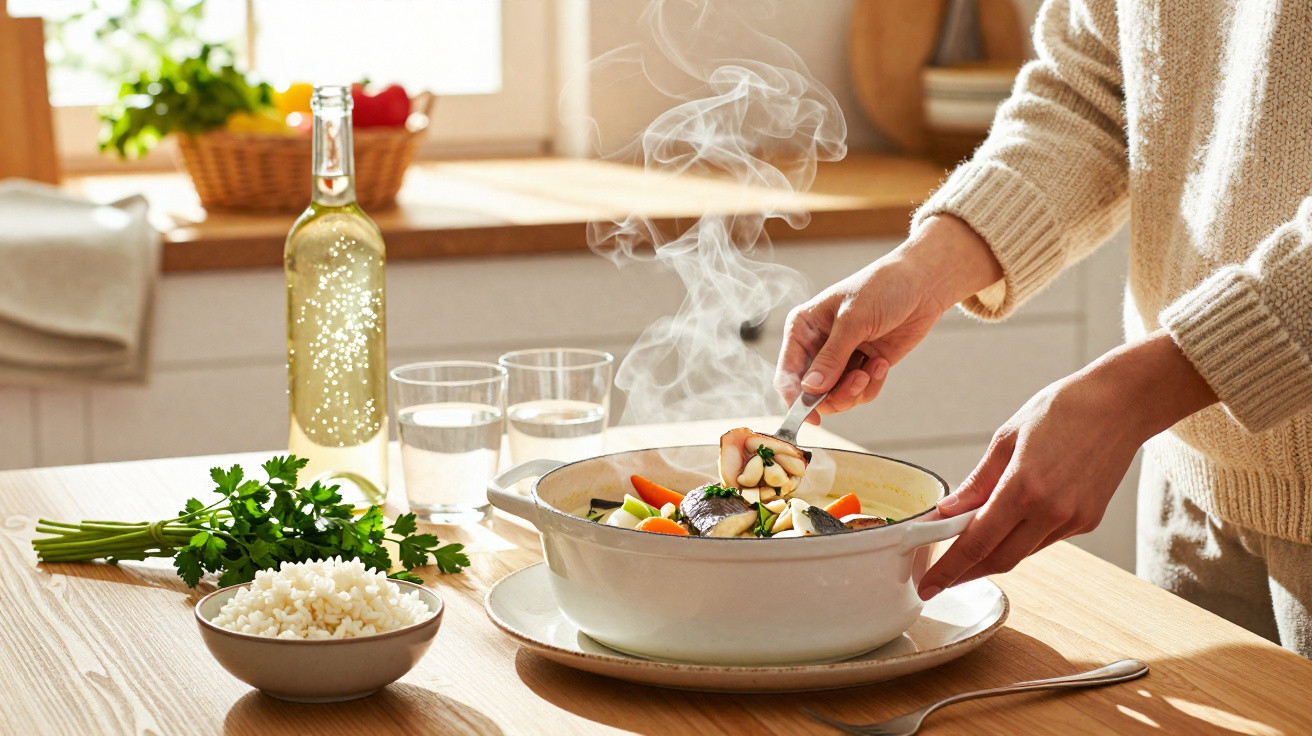
As the cold tightens its grip outdoors, a pan bubbles gently in the kitchen, filling the house with the scent of dinner nearly ready.
In many French homes, that means a steaming fish blanquette, made earlier in the day and simply waiting to be brought to the table. It is an uncomplicated dish with plenty of small tricks: one that turns a hectic evening into a calmer one and still earns praise from the whole family.
A winter classic that offers something different
When winter food comes to mind, many people immediately think of meat stews, hearty soups or fondue. Fish blanquette changes that pattern without sacrificing any comfort. It is creamy, warming and fragrant, yet lighter at the same time, combining lean protein with a delicate white sauce.
In France, it has become one of the defining dishes for cold days. The popular version uses white fish, mushrooms, wine and cream. It is not difficult to make, and it fits neatly into the routine of anyone who likes to prepare dinner in advance, then simply reheat and serve it.
“It is a dish that benefits from resting: its flavour improves after a few hours in the fridge, making it ideal to prepare ahead.”
The fish and the timing are the key
At the centre of the recipe is firm-fleshed white fish. Two choices appear regularly in French kitchens: cabillaud, or fresh cod, and lieu noir, a similar lean, delicate fish widely eaten in northern Europe.
For UK cooks, the principle is the same: choose a mild-flavoured fish with a firm texture that will not fall apart easily in the pan. Useful alternatives include:
- Thick hake fillets
- Cod loin, with the skin and bones removed
- Pollock fillets or thick-cut portions
- Larger pieces of plaice or sole
Cooking time is brief. The fish cooks directly in the sauce over a low heat, only until it is opaque and tender. If left too long, it begins to break up and loses its succulence. Preparing it in advance therefore means cooking it to precisely the right point, cooling it quickly and keeping it well covered in the fridge until dinner, when it only needs reheating.
What fish blanquette is made of
The recipe has a straightforward foundation: onion softened in butter, mushrooms, white wine, cream, herbs and flour-dusted fish, which gently thickens the sauce as it cooks.
“The result is a velvety sauce, fragrant with herbs and wine, wrapping the pieces of fish like a winter coat.”
Classic ingredients for 4 people
| Ingredient | Role in the dish |
|---|---|
| 600 g white fish (fresh cod, coley or equivalent) | Main protein with a mild flavour |
| 400 g button mushrooms (tinned may be used) | Soft texture that reinforces the dish’s slow-cooked character |
| 150 ml dry white wine | Acidity and aroma to balance the richness of the cream |
| 150 ml crème fraîche or fresh cream | Creaminess and a rounded flavour |
| 1 onion | Sweet aromatic base |
| Butter, flour, salt, pepper, bouquet garni | Texture, seasoning and herbal aromas |
Steps that make a difference
The method is essentially a logical sequence of flavour-building stages:
- Soften the onion in butter until translucent and lightly golden, taking care not to burn it.
- Add the thoroughly drained mushrooms and allow them to take on the flavours in the pan.
- Deglaze with the white wine and let it bubble briefly so the alcohol evaporates.
- Stir in the cream, herbs in the bouquet garni, salt and pepper.
- Coat the fish lightly in flour, shake off any excess and arrange the pieces in the pan.
- Cover and cook gently over a low heat for around 20 minutes, until the fish is tender.
The bouquet garni mentioned in the original French recipe is usually a bundle of herbs containing bay leaf, thyme and parsley. You can easily make one with a small bunch of fresh herbs or use a herb bag, so it can be removed effortlessly afterwards.
Why making fish blanquette ahead works so well
On cold days, the appeal of arriving home to a complete meal that is already prepared is obvious. Fish blanquette is particularly suitable for this for three main reasons.
- It is a one-pan meal: add rice, potatoes or pasta and dinner is sorted.
- The sauce develops more flavour as it rests, because the fish and mushrooms absorb more of the seasoning.
- It reheats quickly: use a low heat with the pan covered, stirring carefully so the fish does not break up.
“For anyone with busy evenings, cooking in the late afternoon or even the day before, then simply reheating after work, can be a real relief.”
One practical tip: if you plan to warm it through the following day, cook the fish just short of its ideal point the first time. It will finish cooking during reheating without drying out.
Accompaniments for fish blanquette
The traditional French recipe suggests plain rice or short pasta, both of which hold the creamy sauce well. However, other combinations can bring variety to dinner:
- Steamed potatoes, cut into large pieces
- Mashed potato or celeriac mash, which enhances its winter-dish character
- Brown rice, for anyone looking for a meal higher in fibre
- Vegetables sautéed in butter, such as carrots and peas, to add colour to the plate
For a lighter table, a leafy salad well dressed with mild vinegar and Dijon mustard provides a pleasing contrast to the creaminess of the blanquette.
Nutrition, risks and choosing the right fish
One of the attractions of this kind of dish is its balance between comfort and nutrition. White fish such as fresh cod and coley provides good amounts of protein, is low in saturated fat and generally has a moderate calorie content, matching the idea of eating well in winter without feeling overly full.
To achieve a similar profile, ask your fishmonger for pale-fleshed fish with little visible fat and a firm texture. Haddock, hake, pollock and sole all fit this category. Very oily fish, such as salmon, can make the dish richer and change the characteristic flavour of the blanquette.
A few precautions make a difference to food safety:
- Buy fish with a mild smell, never a strong ammonia-like odour.
- Check that the flesh is springy and does not retain deep marks when pressed.
- Avoid thawing and refreezing it; ideally, use it all at once.
- Keep the finished dish in the fridge for no longer than two days.
Anyone with young children, pregnant people at home or people with weakened immune systems should take extra care over freshness, as dishes containing cream and fish require constant refrigeration and thorough reheating before serving.
Everyday adaptations and serving ideas
One practical way to fit this recipe into a routine is to make a larger batch of the sauce, without the fish, on a Sunday. Divide it into portions and freeze it. During the week, simply defrost the sauce, add the fish at the time and cook it quickly.
For those who do not drink alcohol, replace the white wine with homemade vegetable stock or water with a splash of lemon juice. The aroma will be slightly less complex, but the gentle acidity needed to balance the cream remains.
“The dish accommodates a few subtle variations, such as replacing part of the cream with milk, using only fresh mushrooms or adding capers at the end for a lightly salty note.”
For larger families, another useful approach is to serve the blanquette in a dish at the centre of the table, alongside rice and rustic bread. Everyone can help themselves as they wish, reducing the washing-up and making things easier on a weeknight when people arrive home at different times.
Ultimately, the French approach to getting ahead with a winter dinner is simple: a good meal does not have to be complicated; it just needs to be ready at the right moment. In that role, fish blanquette does its job well, making the evening calmer, warmer and more flavourful without turning the kitchen into a daily battlefield.

















Comments
No comments yet. Be the first to comment!
Leave a Comment