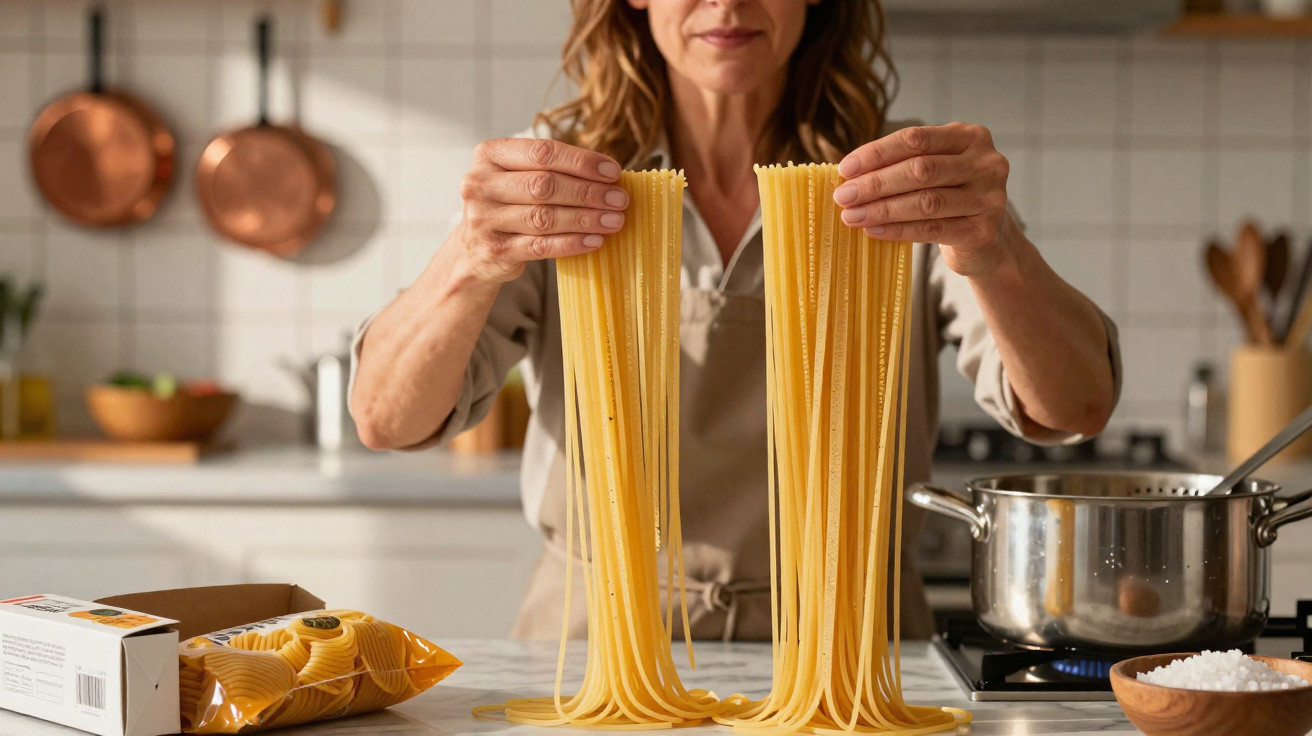
On the hob, everything may look much the same: water bubbling away, inviting aromas, sauce simmering.
Yet one subtle detail reveals the quality of your pasta.
An Italian familiar with family cooking says that simply looking at the finished dish is enough to tell whether you bought good pasta or fell into the trap of bland industrial pasta. The answer lies not only in the brand, shape or cooking time, but in what happens to the pasta once it comes out of the water.
The detail that exposes poor-quality pasta
The easiest test requires no professional skill: look at the plate and move the pasta around.
When the pasta is served, pay attention to the relationship between the pasta and the sauce. With good pasta, the sauce “hugs” every strand or bow tie. With poor pasta, it slides off and is left sitting at the bottom of the plate.
This is the key sign identified by Italians: if the pasta does not hold the sauce after cooking, its quality is lacking.
Artisanal pasta has a slightly rough surface. This texture acts like delicate Velcro, holding on to sauce, olive oil and even small pieces of tomato, garlic or cheese.
Cheap industrial pasta, by contrast, is often extremely smooth and shiny. The effect is both visible and practical: the sauce does not cling, runs off quickly, and the pasta becomes uninteresting, however carefully it has been prepared.
The difference is even clearer when you eat it
The contrast is apparent from the first forkful:
- good pasta: firm, springy, pleasantly chewy, with a wheat flavour and sauce distributed evenly
- poor pasta: soft, sticky, flavourless, with the sauce “separated” from the pasta
If pasta sticks together, forms clumps and continues to release too much starch even on the plate, that is another sign of harsh industrial processing and limited-quality ingredients.
What the Italian checks before the pasta is even cooked
For people who take pasta seriously, the test begins in the supermarket. The same Italian who highlighted the way sauce behaves on the plate also points to three crucial factors when buying it: ingredients, colour and protein.
A short ingredient list, not a long one
In Italian tradition, classic dried pasta contains only two ingredients:
- durum wheat semolina
- water
Anything beyond that should raise a warning sign. Colourings, flavourings or “improvers” suggest an attempt to achieve a quick appearance rather than quality of texture and flavour.
The shorter the ingredient list, the more likely you are to be buying honest pasta, with a firm structure and clean flavour.
Colour and shine reveal the drying process
Colour also tells you a great deal. Pasta specialists commonly identify three visual clues:
| Appearance | What it indicates |
|---|---|
| Pale, matte yellow | Slow drying at a low temperature, better texture and more stable cooking |
| Very bright, shiny yellow | Fast, high-temperature drying, typical of intensive industrial processes |
| Very smooth surface | Less sauce adhesion and a less interesting experience on the plate |
The drying method directly affects the starch and gluten. Slow drying protects the pasta's structure. High temperatures, on the other hand, can make its interior more fragile, leading to pasta that softens quickly even when the “al dente” stage is respected.
Protein: the number almost nobody checks
One little-noticed figure on the label makes a difference: protein content. For good dried pasta, Italians usually look for at least 12 g of protein per 100 g. This points to stronger wheat, with gluten that can hold its shape more effectively during cooking and retain sauce in a balanced way.
From pan to plate: practical signs to test at home
Even without scrutinising every label, you can put together a home “checklist” for spotting poor-quality pasta. While it cooks, look out for:
- water that quickly turns very cloudy and milky, releasing too much starch
- pasta that breaks easily when stirred
- pasta that goes past its ideal point within minutes, changing from firm to soggy
- strands that stick together unusually quickly once drained
When plating up, return to the Italian's criterion: how does the sauce behave? If it separates from the pasta and forms a pool at the bottom, the problem is rarely just the sauce recipe.
The plate does not lie: good pasta holds its texture and sauce; poor pasta gives itself away through its appearance and mouthfeel.
Why this difference affects health, budget and enjoyment
Pasta quality affects more than taste. Its production method can also influence digestion, satiety and even waste.
Pasta made with better-quality wheat, slow drying and high protein content tends to produce more moderate blood glucose spikes because its starch structure is less damaged. This helps with the feeling of fullness and prevents that quick return of hunger soon after a meal.
Highly processed pasta that has been dried aggressively, meanwhile, generally releases starch more quickly during digestion. For people who eat pasta often, this difference can build up over time.
Everyday scenarios: when pasta gives the game away
Picture two simple dinners: pasta al sugo, with the same sauce and the same grated cheese.
- In pan A, there is artisanal pasta with a pale colour and porous surface: the sauce coats the strands, the cheese sticks, and the dish remains attractive until the end.
- In pan B, there is a cheap, shiny industrial packet: the sauce runs off, the cheese gathers in little islands, and the pasta turns soggy after a few minutes on the table.
The risks of overlooking these signs may seem minor, but they recur: spending more on elaborate sauces to make up for a weak base, eating too much in search of satisfaction that never arrives, and wasting leftovers because reheated pasta becomes almost inedible.
Choosing a good packet, even if it costs a little more, usually results in more meals that are properly enjoyed, better texture even the next day, and greater freedom to use simple sauces, because the pasta itself has presence on the plate.
How to make better use of the pasta you already have
Even if the only packet available is not one of the finest, a few tricks can lessen the issue:
- always cook it “al dente”, or slightly less than the time stated on the packet
- finish the pasta directly in the sauce pan for one or two minutes to improve adhesion
- add a little cooking water to the sauce to create an emulsion and improve its texture
- avoid leaving cooked pasta sitting in the colander without sauce for too long
These methods will not turn basic industrial pasta into an artisanal product, but they can reduce the feeling of a watery dish with separated sauce.
Ultimately, the Italian's advice works as a quick guide: inspect the finished plate. If the sauce hugs the pasta, it stands up to the bite and does not stick excessively, you have probably made a good choice. If everything runs off and falls apart within minutes, it may be time to reconsider the packet that always ends up in your supermarket trolley.

















Comments
No comments yet. Be the first to comment!
Leave a Comment