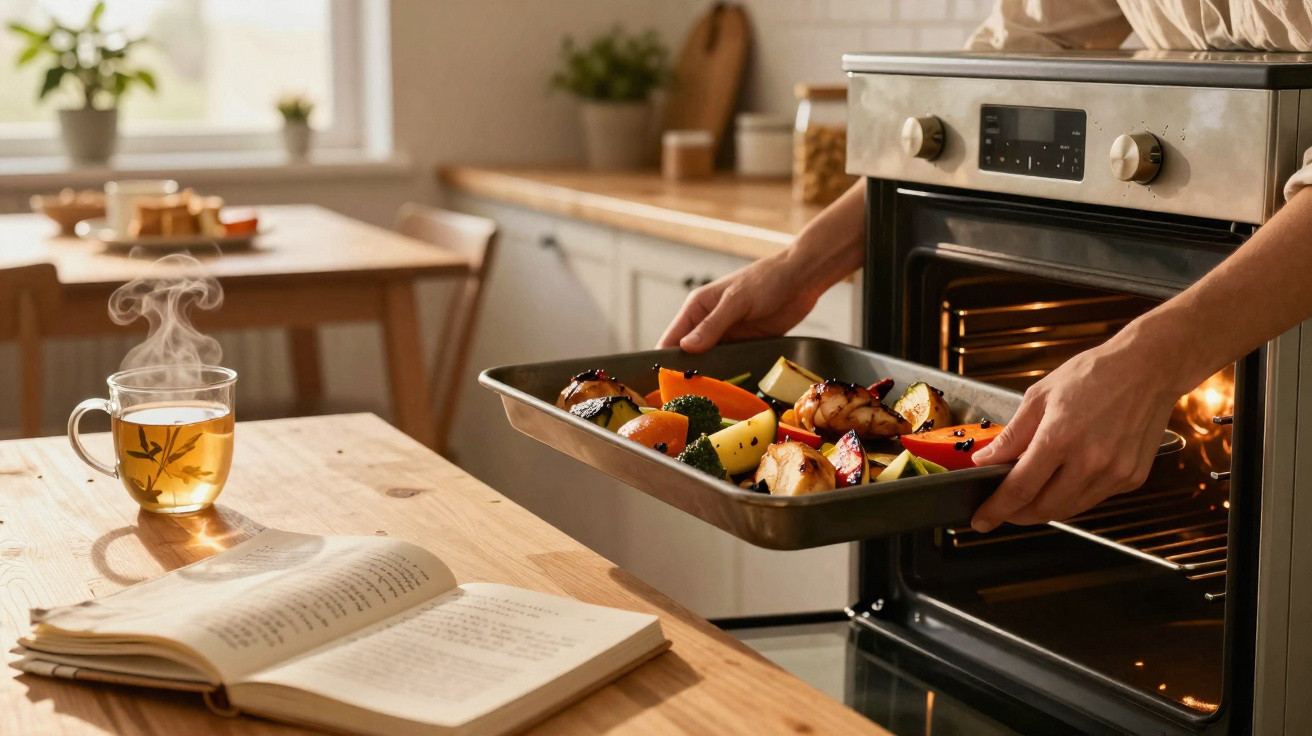
The oven murmurs in the background, its low, even noise almost resembling breath. Beyond the kitchen, the day is still weighing on you: emails left unanswered, strained messages in the family group chat, an irritation you cannot quite put into words. You place a dish in the heat, shut the door, and the evening immediately seems to ease into a slower rhythm.
A gentle savoury aroma begins to fill the kitchen before drifting down the hall and into the sitting room. Your phone lies on the table with its screen dark, not demanding your attention for once. The oven timer is the only countdown worth following.
On certain evenings, a warm oven meal is not simply supper; it feels like pressing reset.
It can feel as though your nervous system is finally able to breathe out.
The unexpected calm of a dish baking quietly
There is something reassuringly old-fashioned about putting one large, generous dish in the oven and allowing it to take over. There are no three pans to manage and no dashing between a saucepan of boiling water and a loud frying pan. You assemble everything, add the seasoning, cover it and step away.
Soon, the house begins to smell comforting. There is mellow garlic, roasting vegetables and cheese starting to bubble around the edges. Even children tend to notice: they drift into the kitchen, breathe in the scent and lower their voices slightly.
A warm oven meal never makes a fuss. It simply sits in the heat, gradually turning a jumble of raw ingredients into something golden and ready to eat.
Imagine a Tuesday at 6:45 pm. You are mentally exhausted, everyone is hungry and the group chat will not stop pinging. You take a baking dish and add halved cherry tomatoes, pieces of courgette, a few garlic cloves, olive oil and a block of feta. Season with salt and pepper, then put it in the oven.
After 20 minutes, stir everything together, mix through cooked pasta and scatter over whichever herbs you find at the back of the fridge. All at once, you have a silky roasted pasta bake that tastes as though you had organised it in advance.
No one sees how frazzled you were 30 minutes earlier. All they notice are full plates and shoulders relaxing around the table.
There is a straightforward reason this style of cooking can alter the tone of an evening. As food cooks at a slow, steady pace, your body has an opportunity to catch up with your mind. The aromas arrive in waves, signalling to your nervous system: “Nothing urgent is happening here.”
The effort is also concentrated at the beginning. Once the dish is in the oven, your hands are available again. You are not tied to the hob, guarding pancakes from catching or stirring sauce as if it were a full-time role.
Your job is already done. The oven completes the cooking, and that small move from “I must” to “I wait” is often where the calm begins.
The simple ritual: one dish, one oven, no rush
Here is a warm oven meal that gently lowers the day’s volume: a roasted vegetable and chicken traybake with herby potatoes. It needs one large tray and nothing elaborate.
Arrange potato wedges, chunks of carrot, red onion and pepper on the tray. Add chicken thighs or cubes of tofu, then drizzle generously with olive oil and season with salt, pepper and dried thyme. Add smoked paprika too, if you enjoy its cosy roasted flavour. Toss it all with your hands and do not worry about getting messy.
Place the tray in the oven until the edges turn crisp and the kitchen smells as if you know exactly what you are doing. And, as it happens, you do.
Many people assume peaceful evening meals require faultless organisation: a weekly menu plan, a colour-coded fridge and a master recipe spreadsheet. Realistically, hardly anyone manages that every day.
An oven meal has a quiet strength because it is forgiving. Use the slightly limp vegetables at the bottom of the drawer, Sunday’s leftover chicken or the final lonely lemon. The finished dish can still taste deliberately made.
If a few bits catch a little or cook less evenly than planned, call it “rustic”. Nobody needs to know you were answering a message or emptying the dishwasher while one side browned more than the other.
We have all had that moment when trying to “save time” by cooking three separate things on the hob leaves us feeling as though we are DJ-ing a kitchen meltdown. You hurry, become overheated, eat too quickly and never quite let the tension leave your body.
An oven meal breaks that cycle completely.
“On days when my anxiety spikes, I throw everything into a baking dish and walk away,” says Léa, 34, who works in digital marketing. “The moment I shut the oven door, I feel this weird sense of ‘okay, the hardest part is over’. My brain finally stops buzzing.”
- Pick one large dish that you enjoy seeing on the table. It helps make the process feel ritualistic.
- Do the preparation in one go: chop, toss, season, put everything in the dish and then into the oven.
- Spend the baking time on soothing tasks, such as having a shower, playing gentle music or laying the table.
- Bring the dish straight to the centre of the table to serve: less ceremony, more togetherness.
- Make it a weekly habit and notice how different your Tuesdays begin to feel.
When a warm oven meal becomes a quiet anchor
A warm oven meal cannot magically repair a difficult day, but it can give the evening some structure. There is a beginning, when you throw the ingredients together; a middle, when you wait and can properly breathe; and an ending, with scraped-clean plates and the last of the sauce wiped up with bread.
That kind of rhythm is unusually scarce in modern life, when everything seems to merge. Work runs into dinner, dinner leads into scrolling and scrolling turns into late-night overthinking. A modest oven tray creates a clear break in the middle of it all.
You have made something real and tangible. It smells inviting, it brings people together and, even if only for 30 minutes, the remaining noise recedes.
| Key point | Detail | Value for the reader |
|---|---|---|
| Put the effort first | Prepare everything once, then let the oven do the cooking | Creates time and mental breathing room after a long day |
| Cook with what is available | Roast assorted vegetables, leftovers and uncomplicated proteins | Cuts waste and removes the pressure to “cook perfectly” |
| Make it a ritual | Use the same dish and gesture once or twice each week | Builds a calm, reliable anchor in the week |

















Comments
No comments yet. Be the first to comment!
Leave a Comment