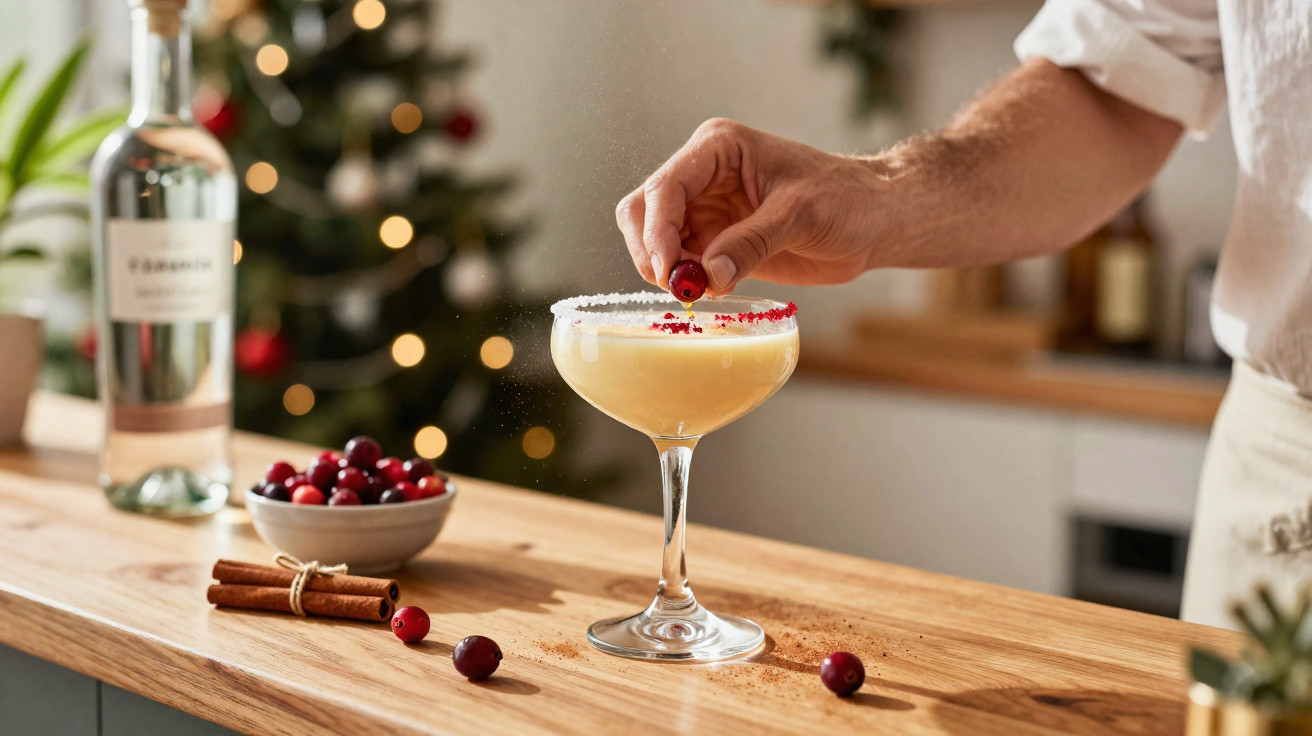
When winter evenings begin to feel especially long, a single glass can transform the atmosphere at a December get-together.
This festive season, bartenders and hosts are looking for something livelier than ordinary fizz and more soothing than yet another mulled drink. A growing trend for holiday cocktails combines nostalgic eggnog, vibrant cranberry and a touch of sparkle, reimagining the classic reindeer tale as a glowing centrepiece you can drink.
How a glowing reindeer became a holiday cocktail star
Rudolph has long represented the outsider who unexpectedly shows everyone else the way. That idea has found its way into drinks culture, where the “festive Rudolph” is emerging as a contemporary Christmas tradition. Rather than simply offering a glass of prosecco, some hosts present a cocktail that resembles a story in a glass: creamy, ruby-red and scattered with edible gold.
This Rudolph-inspired cocktail taps into three powerful hooks: nostalgia, colour on the table, and the theatre of serving something made by hand.
From fireside eggnog to modern mixology
Eggnog has roots in British posset traditions and was later popularised in North America. It is traditionally served in substantial mugs by the fire. Made with milk, eggs, sugar, spices and, sometimes, spirits, it evokes winter comfort rather than polished mixology. Bartenders, however, increasingly see eggnog as a flexible starting point instead of a finished drink.
When its texture is made lighter, it is served chilled and paired with more piercing flavours, this formerly weighty festive treat becomes fresher and brighter. Spiced eggnog is now a base to build on, rather than simply a dessert-like indulgence for the end of the meal.
Why cranberry gives Rudolph its “red nose” moment
Cranberry supplies two qualities that eggnog seldom brings: acidity and striking, camera-friendly colour. Its inherent sharpness cuts through the dairy, making the cocktail seem lighter than its appearance suggests. The intense red shade immediately recalls Rudolph’s illuminated nose, an effect that stands out particularly well on social feeds filled with beige buffets and low-lit sitting rooms.
In plenty of households, cranberry is used only as a sauce alongside roast turkey. Bringing cranberry juice or syrup into a Christmas cocktail moves it from a side dish to the centre of attention, giving the table a more distinct visual character.
Core ingredients for a festive Rudolph in a glass
The trend-led version of this cocktail usually relies on a concise but carefully chosen ingredient list. Most builds centre on homemade eggnog, a neutral spirit, cranberry components and a restrained dose of spice.
| Component | Role in the cocktail |
|---|---|
| Whole milk | Gives the eggnog base body and a soft texture |
| Eggs and sugar | Create structure, foam and mild sweetness |
| Vodka | Provides warmth without dominating the flavour |
| Cranberry syrup and juice | Add colour, sharpness and fruity lift |
| Cinnamon | Strengthens the festive profile with gentle spice |
| Edible gold glitter | Creates visual sparkle and a “special occasion” feel |
The shift from carton eggnog to a tuned, cocktail-ready version mirrors a wider move toward at-home mixology: more craft, less compromise.
Why homemade eggnog beats the carton for this drink
Ready-made eggnog is often rather heavy and excessively sweet. For a Rudolph-style serve, bartenders refine the base so it remains lighter, closer to a silky custard than a dense pudding. Gently whisking the eggs with sugar before slowly adding warmed milk produces a smooth, velvety consistency that coats the glass while remaining easy to drink.
That consistency is important. A silky eggnog base distributes spices evenly and allows cranberry to swirl through it without splitting. The carefully managed richness gives the cocktail a luxurious quality without leaving guests overwhelmed after a large meal.
Vodka, cranberry and the balance of warmth and brightness
Neutral vodka generally acts as the supporting spirit. It brings a modest kick that prevents the drink from drifting into milkshake territory. Since vodka stays unobtrusive, the cranberry and spices can take centre stage without competing against oak or botanical flavours.
Cranberry syrup contributes concentrated sweetness and colour, while unsweetened cranberry juice delivers the crisp, drying edge that keeps every sip fresh. Combined, they move the creamy base beyond the “one glass is enough” territory and into “just one more” territory.
Cinnamon, shimmer and the theatre of serving
Used sparingly, cinnamon connects the cocktail with seasonal signals: baking, candles and frosted windows. Edible gold glitter provides the finishing flourish. Stirred through immediately before serving, it reflects candlelight and camera flashes, making every glass resemble a miniature snow globe.
Visual drama sells the Rudolph cocktail almost as much as flavour; guests remember the way it looked moving through the room.
Step-by-step: how home hosts are mixing the Rudolph
Building the base with a simple method
Across home-bar communities and festive recipe forums, a straightforward technique for a four-glass batch has become popular:
- Beat the eggs and sugar together until pale and slightly thickened.
- Warm the whole milk gently without allowing it to boil, until steaming but not scalded.
- Slowly stream the milk into the egg mixture, whisking continuously to prevent curdling.
- Mix in the ground cinnamon, then leave the base to cool until only slightly warm.
- Add the vodka, cranberry syrup and cranberry juice, blending until it becomes a deep ruby cream colour.
- Refrigerate for at least 30 minutes so the flavours can meld.
- Just before serving, shake or stir with ice, then strain into chilled stemmed glasses.
Garnishes that turn a glass into Rudolph
The presentation helps define the ritual surrounding this cocktail. Hosts commonly use several small details that make the Rudolph theme immediately clear:
- One fresh cranberry balanced on a cocktail pick at the rim, suggesting the “nose”.
- A light scattering of gold glitter across the top, added at the final moment.
- A thin strip of orange zest twisted over the glass to add fragrance and a burst of colour.
- Optional cinnamon-stick stirrers, offering both aroma and a photogenic prop.
Together, these touches make serving feel like a short performance rather than a basic pour, reflecting a wider trend: guests want experiences as much as recipes.
Variations, food pairings and sober-friendly twists
Low-alcohol and alcohol-free options
Not everybody wants a strong drink beside the Christmas tree. Many home bartenders now make a second version with the same visual impact but without spirits. Replacing vodka with almond milk or additional dairy reduces the alcohol content while retaining the creamy character.
For guests who avoid alcohol entirely, the same mixture can be warmed gently and served hot, closer to a spiced cranberry nog than a cocktail. When it is served warm, the important point is to use less acid so that the dairy remains stable.
Turning up the spice dial
Those who enjoy spice often adapt the Rudolph recipe to their own preferences. Popular additions include:
- A pinch of ground ginger for a gentle, warming kick.
- Fresh nutmeg grated over the surface, recalling traditional nog recipes.
- A careful shake of allspice for added depth that steers the drink towards baking aromas.
Every change subtly alters the character of the drink, taking it from dessert-like towards something almost chai-adjacent while preserving cranberry’s bright influence.
What to serve alongside a Rudolph cocktail
Its combination of cream, berries and spice works naturally alongside small, indulgent bites. Many hosts choose:
- Cinnamon shortbread or spiced sugar biscuits.
- Pieces of gingerbread or a dense, gently sweetened cake.
- Roasted nuts coated in honey, maple syrup or mild chilli.
- Soft cheeses such as Brie, triple-cream cheese or a truffled wedge, served on toasted bread.
The cocktail’s acidity helps cut through richness, so it works unexpectedly well with foie gras or buttery pastry. After one or two sweet pairings, guests often start reaching for savoury snacks.
Safety, technique and small upgrades for home bartenders
Handling eggs and dairy with care
Fresh eggs in drinks naturally raise safety concerns. Many current recipes use tempered or lightly cooked bases, bringing the egg mixture to a safe temperature without turning it into scrambled custard. Steady whisking and gentle heat reduce the risk and help the mixture keep for longer in the fridge.
Hosts who prefer to be particularly cautious often use pasteurised eggs or carton egg whites, which still provide foam and texture with less concern. It also helps to serve the batch within one day and keep it chilled between servings.
How to adapt the Rudolph concept to other gatherings
The Rudolph format - a creamy base, sharp fruit and visual sparkle - can easily be adapted beyond Christmas. For a New Year’s version, replace cranberry with raspberry and gold with silver. For a late-winter dinner party, substitute cinnamon with cardamom and add a pinch of rose salt.
Viewed in this way, the festive Rudolph is not so much a fixed recipe as a framework: smooth, spiced dairy supported by tart fruit and an eye-catching garnish. Hosts who understand that framework can create fresh variations every season while maintaining the same sense of occasion at the heart of the table.

















Comments
No comments yet. Be the first to comment!
Leave a Comment