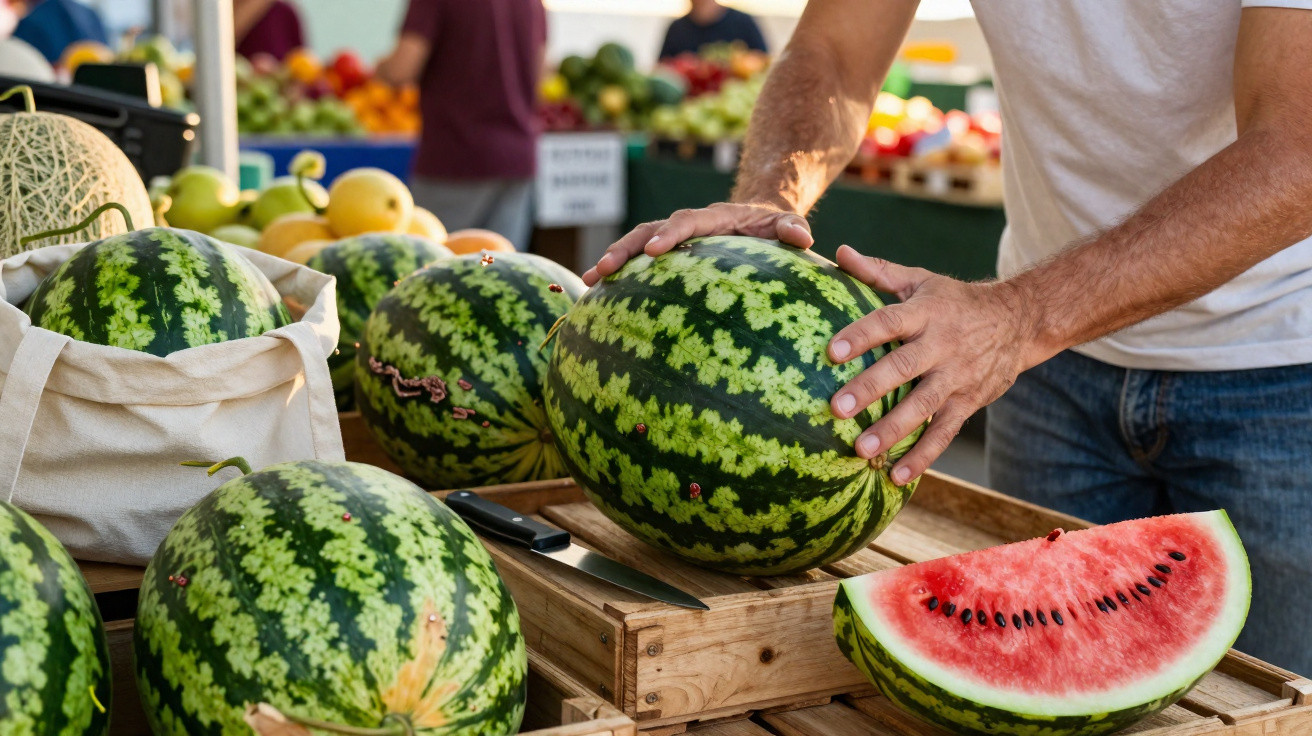
A single watermelon can contain the very essence of high summer.
In the busy produce aisle, choosing a watermelon need not feel like a gamble. By using a handful of signs recommended by chefs and growers, you can identify a ripe, sweet melon without slicing it open.
Why choosing the right watermelon matters
Watermelon is not merely a nostalgic picnic staple. The best examples are crisp, sweet and intensely refreshing, while poor ones taste faintly watery and can be chalky or strangely crunchy.
As a watermelon fully matures on the vine, its natural sugars develop, its flesh becomes firmer and its colour grows richer. Fruit harvested prematurely cannot truly make up for lost ripening time. Learning to assess the exterior therefore pays off when you finally cut it.
A ripe watermelon will feel heavy, show clear field marks and sound hollow when tapped, long before you grab a knife.
Six expert tips for picking a good watermelon
1. Respect the season
Watermelon is at its finest during summer. Across much of both the UK and US, its peak season is June to August, when the warmth and sunshine are ideal for growing the fruit.
- Best months: June, July and August
- Shoulder season: late May and early September (quality can vary)
- Off-season: autumn and winter (often bland, watery flesh)
Although shops may stock imported melons throughout the year, fruit sold out of season is frequently picked early so it can withstand transport. This commonly results in less sweetness and weaker flavour.
2. Check the stem end
Where a watermelon still has a short piece of stem, use it as an indicator. A dry, brown and lightly shrivelled stem suggests the melon remained on the vine long enough to ripen naturally. By contrast, a stem that looks green and fresh can indicate that it was harvested early.
Look for a small, dry, brown tail: it usually signals a melon that finished its growth on the vine, not on a lorry.
The stem can also reveal moisture loss. On a weighty melon, a very dry yet small stem often suggests concentrated flavour rather than fruit that is simply old and tired.
3. Read the stripes and “sugar scars”
The appearance of the rind is not purely decorative. A watermelon with good potential will generally have:
- Strong, sharply defined stripes with clear contrast between pale and dark green
- A dull, matte finish rather than glossy skin (very shiny rind may indicate early harvesting)
- Rough brown, web-like markings sometimes known as “sugar scars” or webbing
These coarse brown markings form in places where the flowers were pollinated. Greater webbing can mean more successful pollination and, usually, higher sugar levels in the fruit.
4. Locate the field spot
The field spot is the broad, flat patch on which the watermelon sat while it was growing. You should be able to spot this area clearly on one side of the fruit.
| Field spot colour | What it usually means |
|---|---|
| Deep creamy yellow or mustard | Melon ripened fully on the vine, good chance of strong flavour |
| Pale yellow | Partially ripe, flavour can be mild |
| White or very faint | Likely picked too early, often dull and watery inside |
A big, mustard-yellow field spot is one of the strongest visual signs that your watermelon has had time to sweeten in the sun.
5. Feel the weight and shape
Compare several watermelons of a similar size by lifting them. The melon that seems heaviest for its size will usually be the juiciest. Since watermelon consists largely of water, that additional weight points to dense, well-hydrated flesh.
Its shape matters as well. Choose a relatively even round or oval melon, without pronounced dents or unusual protrusions. Irregular lumps may reflect uneven development, which can sometimes produce inconsistent flesh inside.
6. Perform the “slap test”
There is good reason the tap or slap test remains a classic. Support the watermelon in one hand, then tap it firmly using an open palm.
- Good sign: a resonant, hollow sound with a slight vibration
- Warning sign: a dull, flat thud or no noticeable bounce
A hollow sound can indicate crisp flesh that has separated from the rind sufficiently to resonate. A lifeless thud might suggest thick rind, insufficiently developed flesh or a mealy consistency.
If the melon sounds like a small drum and feels like it’s gently bouncing back, you’re likely holding a ripe one.
What a ripe watermelon looks and feels like inside
Once the watermelon is cut, its condition becomes clear. A ripe melon has bright, consistent colour from the outer edge through to the centre. Most seeded and seedless supermarket varieties should have a deep pinkish-red interior, rather than flesh that is pale or streaked.
The pale layer between the dark green rind and red flesh should be fairly thin. A thick white section may indicate that the fruit did not ripen completely. Soft or dark areas, together with flesh that appears split or fibrous, are often signs of overripeness.
Texture cannot be compromised. Ripe watermelon should have a slight snap as you bite before melting in the mouth. Underripe flesh can resemble cucumber: firm, wet and lacking sweetness. Overripe melon becomes grainy and mealy, almost as though its cells have broken down.
The ideal bite is crisp, juicy and sweet with a faint tang, leaving you instantly thirsty for another piece.
How to grow your own watermelon at home
For gardeners, growing watermelon is hugely rewarding, although it does require a fair amount of space. These plants grow as trailing vines and thrive with heat, sunlight and generous watering.
Conditions watermelon plants need
- Full sun: 8–10 hours of direct light daily
- Warm air: roughly 21–29°C (70–85°F)
- Frost-free months only: seedlings are very sensitive to cold
- Well-drained soil: enough moisture, but no standing water
After planting, the vines spread extensively. Packing plants too closely increases humidity around their leaves, which can promote fungal disease. Allowing each plant sufficient room to trail improves air circulation and fruit quality.
Watching for disease and timing
Watermelons grown at home may develop powdery mildew, which appears as a dusty white coating on leaves. Checking plants regularly lets you intervene early with pruning or treatments before the disease affects the fruit.
Most varieties need 80 to 120 days between planting and harvest. Patience is essential: harvesting even one week prematurely can waste three months of attentive watering.
Smart ways to use every part of a watermelon
A ripe watermelon is excellent on its own, with a pinch of salt or some lime zest, yet the entire fruit offers more uses than many people expect.
- Flesh: salads with feta and mint, frozen cubes for cocktails, granita, ice pops
- Rind: pickles, quick stir-fries, chutneys
- Juice: margaritas, mocktails, chilled soups, sorbets
To make pickled rind, simmer peeled rind in a vinegar-and-spice brine until it becomes a sharp, crunchy condiment for grilled meat, cheese boards or rich seafood. Blended watermelon flesh with lime and a little vinegar can also make a tart granita for oysters or a refreshing palate cleanser between courses.
Think of watermelon as a three-part ingredient: fresh fruit, tart pickle and bright, drinkable juice.
Extra tips and handy explanations
What “seedless” really means
Seedless watermelons are not entirely without seeds. Most have soft, pale and immature seeds that are barely noticeable when eating a slice. In most mainstream varieties, they are bred through crosses that restrict the development of fully formed black seeds, rather than through genetic modification.
How to handle and store your melon
At home, keep a whole uncut watermelon at room temperature to preserve its best flavour. Refrigerate it only once it has been cut, then store the pieces in an airtight container in the fridge for up to three or four days.
For a weekend barbecue, try buying the melon one or two days in advance, checking it against all six signs and leaving it whole on the worktop. Chill large wedges for a couple of hours before guests arrive. This gives you both optimum flavour and a suitably refreshing temperature.
One final practical point: using a sharp, long knife provides neater cuts and safer handling, particularly with large melons. Place the fruit on a solid chopping board, remove both ends to make it stable, then slice it through the middle. Each half can then be turned flesh-side down and cut into wedges, cubes or spears to suit your plans.

















Comments
No comments yet. Be the first to comment!
Leave a Comment