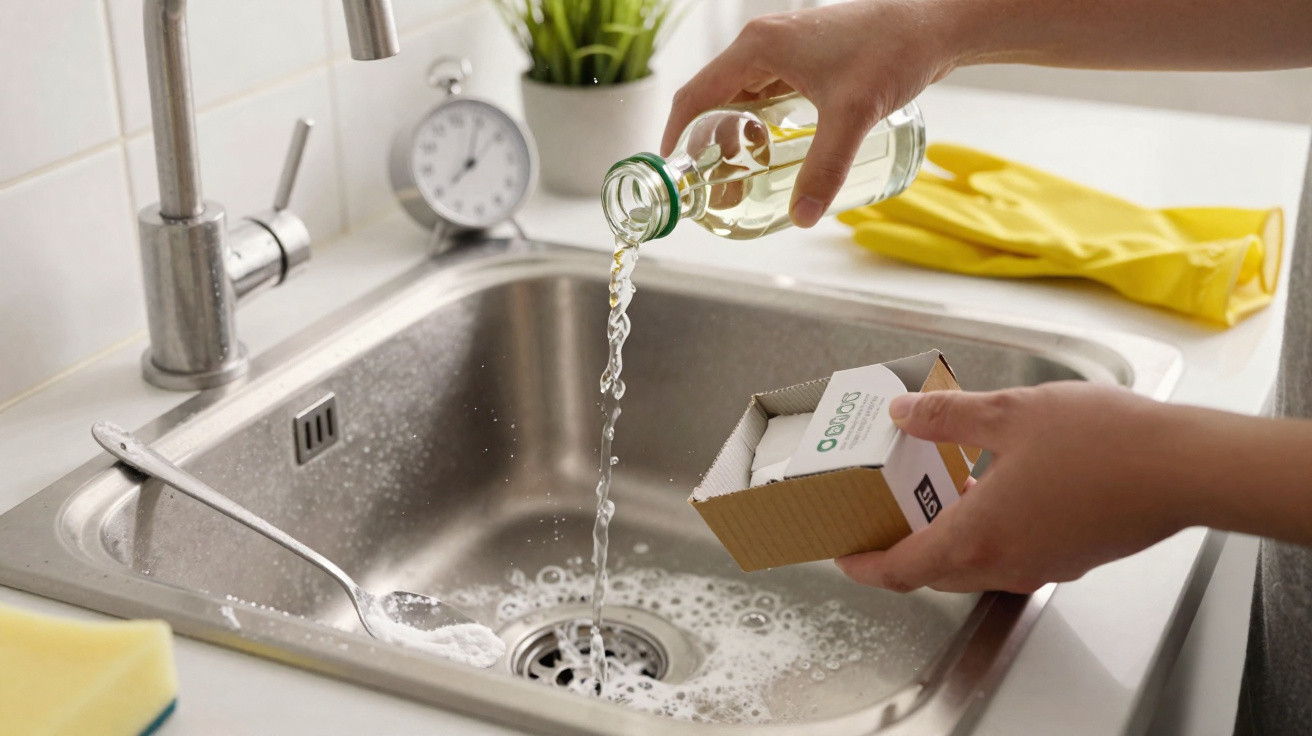
Unblocking sinks, drains and toilets is a regular task in many homes, and in 2026 there is growing interest in straightforward, less harsh solutions. One option is bicarbonate of soda and vinegar, which is seen as a way to protect plumbing, limit contact with strong chemicals and lessen environmental impact by partly replacing traditional corrosive products.
What is a homemade unblocker with bicarbonate of soda and vinegar?
A homemade unblocker made with bicarbonate of soda and vinegar combines two everyday products for light pipe cleaning and blockage prevention. Bicarbonate of soda works as an alkaline, mildly abrasive agent, while acidic vinegar reacts with the powder, producing bubbles that can help shift residue stuck to the pipework.
While it does not have the strength of an industrial product, this mixture may help with early build-ups of grease, soap and organic debris. It is often used in kitchen sinks, washbasins, showers and some floor drains, especially as a routine preventative treatment.
How do you make a homemade bicarbonate of soda and vinegar unblocker step by step?
To prepare and apply this unblocker safely, gather everything before you start. Amounts may vary, but the following quantities are generally suitable for most common household situations.
- Set aside the ingredients: prepare around half a cup of bicarbonate of soda, between half and one cup of white vinegar, and hot water for the final rinse.
- Remove excess water: if there is standing water, take out as much as possible using a bucket, container or sponge.
- Add the bicarbonate of soda: pour it directly into the drain opening, aiming to get the powder into the pipe.
- Pour in the vinegar: slowly add the vinegar over the bicarbonate of soda; the mixture will fizz inside the pipework.
- Leave it to work for a few minutes: wait 15 to 20 minutes for the reaction to act on grease and food remnants.
- Rinse with hot water: pour in very hot water, though not necessarily boiling, to flush away loosened debris.
- Repeat if needed: for light blockages, repeat the process once if the plumbing can tolerate the temperature change well.
For more stubborn blockages, many people pair this process with simple mechanical methods. A rubber plunger, cleaning cables or drain snakes can make use of the mixture to soften grime and make manual work easier.
Watch a video on the ZappeandoBr YouTube channel showing how to make this homemade mixture:
When does the homemade bicarbonate of soda unblocker work best?
This method is usually most effective for maintenance and prevention, particularly in kitchen sinks exposed to grease and washing-up liquid every day. Used weekly or fortnightly, it can reduce odours, prevent critical build-ups and help keep the drainage system in good condition for longer.
Where the issue involves large amounts of hair, trapped objects or heavily compacted grease, the reaction has limited reach. In these cases, other complementary measures are usually needed, such as:
- Mechanical methods: using rubber plungers, cables and drain snakes designed for pipework.
- Checking the plumbing: looking for damage, distortions or incorrect connections that contribute to recurring blockages.
- Professional help: in older buildings or complex installations, a plumber can identify structural causes of the issue.
What precautions and good practices improve the effectiveness of this homemade method?
Although it is less harsh, frequent use of very hot water can affect sensitive plastic pipes, particularly in older installations. It is better to use very hot water rather than water at a full boil, so that connections and joints are not damaged over time.
It is also important not to use too much bicarbonate of soda, as it may build up in the trap and turn into a hardened paste if it does not dissolve properly. Using small amounts, together with habits such as not pouring oil down the drain, fitting strainers to catch solids and cleaning the sink regularly, helps extend the lifespan of pipework and reduce emergencies caused by severe blockages.

















Comments
No comments yet. Be the first to comment!
Leave a Comment