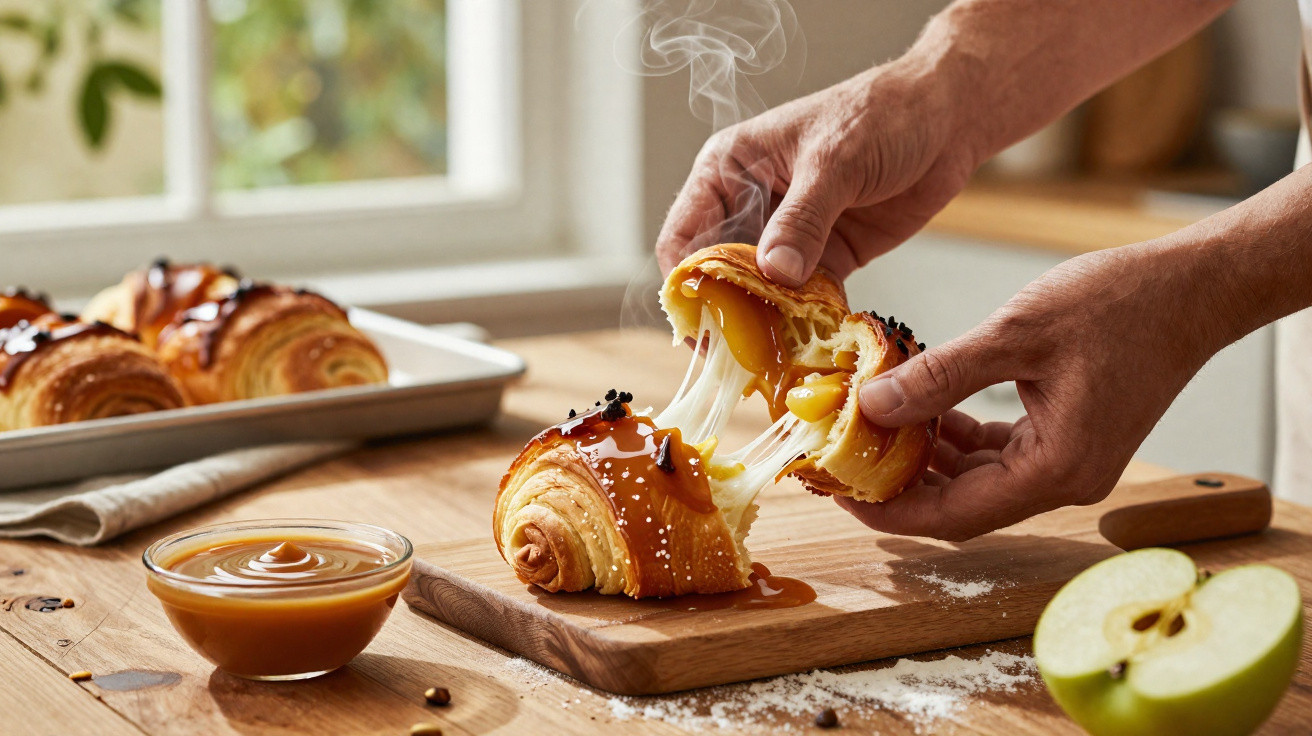
On a rainy weekend, warming up the kitchen and taking a golden-brown brioche from the oven creates the kind of memory that lasts. It is even more special when soft caramelised apples sit between the fluffy layers of dough, tasting gently tart as well as buttery and sweet. The result recalls a small country bakery, except it comes straight from your own oven.
Why this apple brioche is so irresistible
Plenty of baking recipes promise results “just like the baker’s”, only to produce a dry yeasted cake. This version delivers something quite different: a soft, rich brioche made with plenty of butter and yeast given time to rise. Layers of apple pieces caramelise in butter and brown sugar while still holding their shape.
“The combination of fluffy yeasted dough, buttery caramel and the fruity tartness of the apples creates precisely the flavour otherwise found only in a good artisan bakery.”
This brioche works for breakfast, as a sweet afternoon treat or served warm as a dessert with a dollop of cream. Children enjoy it, as do adults, and even people who do not usually like yeasted bakes are often won over by its apple and caramel filling.
Ingredients for apple brioche
Dough base for an airy finish
A tin or one large loaf needs only a few basic ingredients that many people already have at home:
- 300 g plain flour (German Type 550 flour gives especially good results)
- 3 eggs (medium)
- 150 g softened butter
- 10 g fresh yeast
- 40 g sugar
- 5 g salt
The relatively generous quantities of butter and eggs give the crumb its fine, rich texture – which is what separates it from an ordinary yeasted cake.
Caramelised apple filling
- 3–4 apples, such as Golden Delicious or Boskoop
- 40 g butter
- 50 g brown sugar or cane sugar
Golden Delicious remains firmer when cooked and offers a mild sweetness, whereas Boskoop brings greater acidity and therefore a stronger contrast with the caramel.
Apple brioche: step by step to perfect results
Kneading the brioche dough correctly
A good dough calls for time and a little effort. Put the flour into a bowl first. Make a well in the centre, crumble in the yeast, add the sugar and eggs, then gradually work in the flour with your fingers until an even dough forms. Only then should the salt be incorporated.
Now comes the most important stage: knead firmly for at least 15 minutes. Repeatedly fold and press the dough, bringing it in from the edges towards the middle. By the end, it should be smooth and elastic rather than sticky. Work in the softened butter a little at a time until it has been fully absorbed. The dough will now have a slight sheen.
Shape it into a ball, place it in a lightly oiled bowl, cover and leave for at least two hours, until it has roughly doubled in size. This extended rise develops both flavour and structure.
Caramelising the apples until golden
Prepare the apples while the dough is rising. Peel them, then cut them into evenly sized wedges so they cook at the same rate. Melt the butter in a frying pan, add the apple pieces and scatter over the brown sugar.
Cook gently over a medium heat for around eight minutes, stirring carefully. The pieces should be coated in a glossy golden caramel layer without breaking down. They are ready when soft inside but still retaining a slight bite on the outside.
“The trick: cook the apples for less time over a moderate heat rather than frying them until dark. This creates a delicate caramel flavour without bitter notes.”
Finally, transfer the apple pieces to kitchen paper to absorb any excess syrup. This keeps the brioche dough moist later on, rather than soggy.
Shaping, filling and the second rise
Once the dough has risen, gently press it down once with your fist to release excess gas. On a lightly floured surface, roll it into a rectangle measuring about 30 by 20 centimetres.
Spread the caramelised apples evenly over the dough. It is important to distribute as much of the caramel from the pan as possible too, so every slice is flavourful. Then roll up the dough tightly from the long side.
For a rustic, split surface with visible filling, cut the roll lengthways once and lightly twist the two strands around one another. Put the shaped brioche on a baking tray lined with baking paper and leave it to rise again for about one hour, until it has visibly expanded.
Baking to the ideal golden colour
Preheat the oven to 170°C conventional heat. Bake the brioche on the middle shelf for approximately 25 minutes. In most ovens, it is ready when the top is golden brown and gently domed.
If you are unsure, carefully press the surface with a finger: if it feels springy and bounces back slightly, the crumb will usually be baked through. Let the pastry rest for a few minutes before slicing. This allows its soft structure to settle and the aroma to develop fully.
Tips for making sure apple brioche succeeds
Choosing the right apple variety
The apple variety determines whether the brioche contains juicy pieces or turns into apple purée. More robust varieties such as Golden Delicious or Boskoop keep their shape and release moisture more slowly. Apples with very soft flesh break down quickly and make the dough wet.
- Golden Delicious: mild and sweet, ideal for children.
- Boskoop: tart and highly aromatic, offering the perfect contrast to caramel.
- Elstar or Jonagold: a good middle ground for anyone who likes both qualities.
Keep an eye on the oven temperature
An excessively high temperature will burn the surface while leaving the centre raw. 170°C is a useful guide; particularly powerful ovens may benefit from trying 160°C with a slightly longer baking time. Slow baking gives the yeast time to develop and lets the apples become properly soft.
How to make the dough extra airy
Patience and even kneading are essential. Anyone who tries to speed up the rise with excessive heat risks a flat, bland-tasting dough. Room temperature is sufficient, even if the dough takes a little longer.
“Yeasted dough that is allowed to rise undisturbed develops more flavour and gains the characteristic fibrous structure visible when a good brioche is pulled apart.”
Serving suggestions and storage
The best way to enjoy brioche
Apple brioche is most popular when served lukewarm and fresh from the oven. A cup of coffee or hot chocolate is often all it needs. For a more indulgent option, add a dollop of crème fraîche, lightly sweetened whipped cream or a scoop of vanilla ice cream, especially when serving the brioche as dessert.
At breakfast, spread a thin layer of butter over a lightly toasted slice. The butter melts into the crumb and blends with the apple pieces – little more is needed for a Sunday breakfast.
Storing and reheating gently
When well wrapped in a container or enclosed in baking paper and aluminium foil, the brioche stays pleasantly soft at room temperature for two to three days. To refresh it, warm it in the oven at about 160°C for a few minutes, preferably tightly wrapped in aluminium foil. This prevents it from drying out.
You can also freeze several slices. Once thawed, warm them briefly in a toaster or the oven, and they will taste almost as good as they did on the first day.
What makes this brioche different from shop-bought products
Industrially produced yeasted pastries often rely on additives, flavourings and shorter rising times. Although the finished product may look flawless, its flavour is less complex. With the home-baked version, you control every ingredient and can experiment with flour types, apple varieties or sugars.
Replacing part of the sugar with honey, for example, or adding a little cinnamon, vanilla or cardamom to the apple filling creates new flavours with very little effort. A handful of chopped walnuts or almonds among the apples also adds crunch and nutty notes.
More ideas using brioche dough
The basic dough described here is suitable for far more than the apple version. The same base can also make chocolate brioche, cinnamon rolls or a filled yeasted plait with a nut filling. Once you have overcome any hesitation about working with yeasted dough, you will have plenty of weekend baking projects ready to try.
Anyone who enjoys baking and likes the combination of hands-on work, aroma and anticipation will find this apple brioche a worthwhile project. The effort is manageable, but the effect when it is sliced is impressive – and its flavour recalls the moment a tray of fresh pastries is pulled from the oven at the back of a small bakery.

















Comments
No comments yet. Be the first to comment!
Leave a Comment