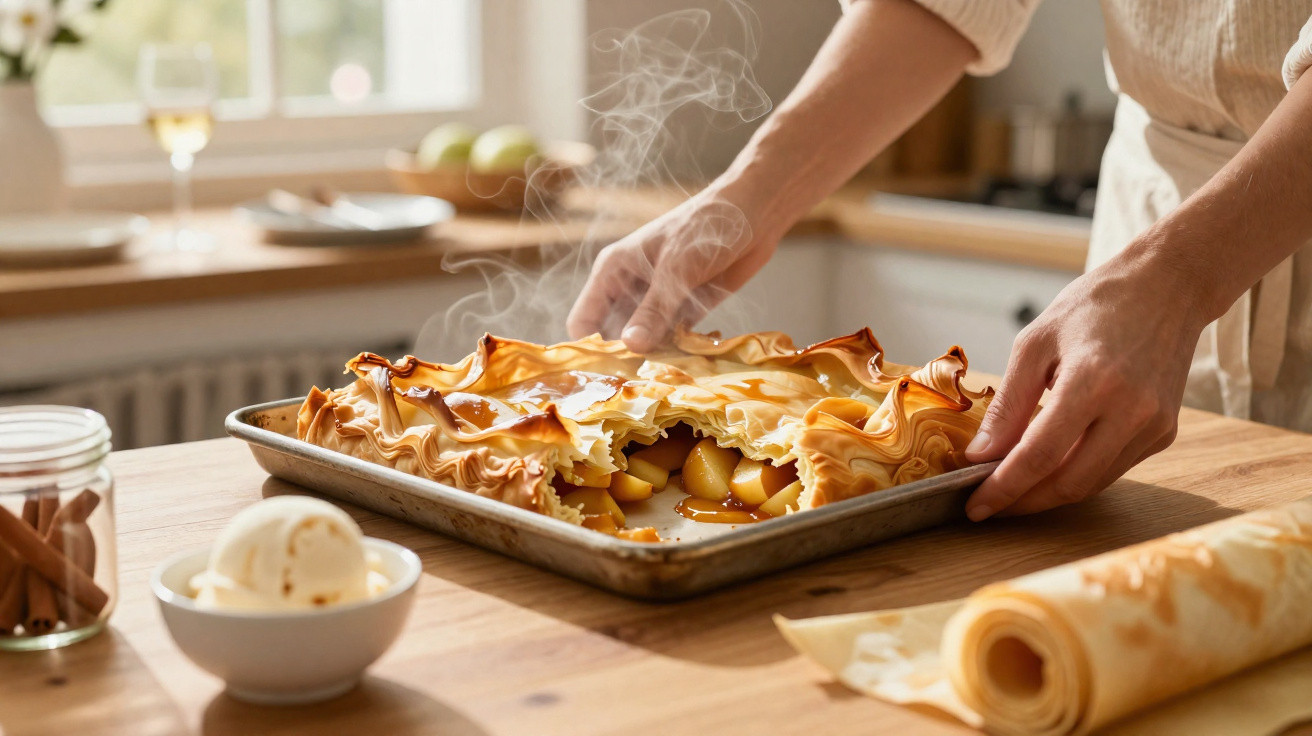
In this country, apple cake usually means shortcrust pastry, a crumble topping or perhaps a covered cake. In south-western France, however, there is a version so light and crisp that many people abandon their usual apple cake after one bite. Apple Croustade may look modest, yet it reliably prompts astonished looks around the table and leaves plates empty.
What Apple Croustade really is
Croustade has its roots in the old rural kitchens of what is now south-western France. Depending on the area, it was also known as Tourtière or Pastis gascon. All these names describe a type of cake made with extremely thin pastry, layered several times, brushed with butter and generously dusted with sugar. Fragrant fruit is added, with apples and a splash of Armagnac being the most popular version.
“The key lies in the contrast: a crisp pastry lid on top, with soft, juicy, warmly scented pieces of apple underneath.”
The name originally derives from the word for “crust” - and that is exactly what comes through in every mouthful. Instead of a thick shortcrust base, there is a nearly paper-thin pastry that crackles as you eat it, arranged in waves and folds before baking. This creates an airy, uneven surface that turns golden brown in the oven and caramelises lightly.
The basics: few ingredients, impressive results
What makes Croustade so appealing is how little is actually needed for such a striking result. In an everyday modern kitchen, ready-made filo pastry sheets from the chilled aisle usually replace the traditionally hand-stretched dough.
Typical shopping list for 4 to 6 people
- about 250 g filo pastry (approximately 12 sheets)
- 2 flavoursome apples, such as Golden Delicious or Elstar
- 50 g sugar, more or less according to taste
- 50 g butter, melted
- 50 ml Armagnac or another flavoursome fruit brandy (optional)
This puts it much closer to a quick everyday pudding than an elaborate pâtisserie project. The skill is not in the ingredient list, but in handling the wafer-thin pastry.
Turning filo pastry and apples into a crisp masterpiece
Anyone who has used filo pastry before will know that it dries out quickly, tears easily and offers little room for error. With Croustade, that becomes an advantage: the less perfect it looks, the better, provided butter and sugar are involved.
Apple Croustade step by step
- Prepare the apples: Wash, core and cut the apples into fairly thick slices. Put them into a bowl and pour over the Armagnac, or an alternative of your choice. Leave to infuse for around 30 minutes, stirring now and then.
- Melt the butter: Gently melt the butter in a saucepan or microwave. It will later act as both a “glue” and a flavour booster between the pastry layers.
- Brush the pastry sheets: Carefully lay out one filo sheet at a time, brush it generously with butter and scatter lightly with sugar. Repeat to prepare several layers.
- Line the tin: Line a tart tin or loose-bottomed cake tin with baking parchment. Loosely arrange around six buttered and sugared sheets in the tin, leaving some overhang at the edges - this will be folded in later.
- Add the filling: Spread the apple slices evenly over the pastry, using as much of the marinade as possible. The liquid will provide moisture and flavour later on.
- Create the lid: Butter and sugar the remaining pastry sheets, then place them over the apples. Fold any overhanging edges in loosely and feel free to crumple them slightly. These folds create the most appealing crisp patches as the Croustade bakes.
- Bake: Preheat the oven to 180°C conventional heat. Dot the surface with a few flakes of butter and sprinkle with a little sugar. Bake for around 25 to 30 minutes, until golden brown and crisp throughout.
“When it comes out of the oven, the Croustade should audibly crackle - that is when the balance of butter, sugar and heat is right.”
Variations that make classic apple cake look old-fashioned
One reason many people lose interest in their standard apple cake after their first Croustade is the dessert’s remarkable flexibility. Once the basic method is understood, it is easy to adapt.
Options for fruit and flavour
- Other fruits: Pears, peaches, apricots and mixed berries work equally well. The important thing is that the fruit does not release too much liquid.
- Alcohol-free: If you prefer to avoid alcohol, use orange juice, apple juice or a flavoured syrup, such as vanilla or elderflower syrup.
- Spices: Cinnamon, vanilla, tonka bean or cardamom can give the filling a personal touch.
- A nutty addition: Finely chopped almonds or hazelnuts between some of the pastry layers intensify the crisp texture.
The combination of slightly tart apples, cinnamon and a generous splash of Armagnac or Calvados is particularly popular. The result is a pudding that sits somewhere between strudel, baklava and apple cake, while remaining entirely distinctive.
Why many people change their habits after their first Croustade
Those used to quickly putting an apple cake in the oven for guests often realise after their first Croustade that it takes scarcely more effort, yet creates a completely different effect. The pastry is light, portions feel less heavy, and reheated leftovers taste almost even better.
| Classic apple cake | Apple Croustade |
|---|---|
| thick base, often quite heavy | ultra-thin pastry, exceptionally crisp |
| pastry takes centre stage | fruit and flavour take centre stage |
| generally even texture | a mix of crackle and melting softness |
| often rich and more wintry | feels lighter and suits every season |
Anyone wishing to impress guests without spending hours in the kitchen will soon reach for Croustade again. It appears more labour-intensive than it really is, and it can be prepared in advance: assemble everything at leisure, then put the tin in the oven shortly before serving.
Serving suggestions to complete the pudding
Croustade is best served warm rather than hot. At that point, the pastry is still crisp, the apples are tender without falling apart, and the flavours are at their best.
What to serve alongside
- a spoonful of crème fraîche for a gently tangy contrast
- a scoop of vanilla ice cream, slowly melting into the warm layers of apple
- whipped cream with a little vanilla sugar
- a dessert wine or a glass of sweet wine from south-western France for those who enjoy classic pairings
For a more rustic approach, simply place the tin on the table and let everyone cut their own portion straight from the tart tin. This highlights the sociable nature of the recipe - exactly how Croustade was originally served in village kitchens.
Background: how filo pastry differs from strudel pastry
Many home bakers wonder whether Croustade can simply be made with strudel pastry. In principle, it can, but the finished result will be different. Filo pastry is usually even thinner and drier, so it becomes crisp more quickly and crackles more loudly in the oven. Strudel pastry has slightly more bite and feels more bread-like in the mouth.
For a first attempt at Croustade, shop-bought filo pastry is a good choice. Later, you can experiment with stretching the dough yourself, as was done in traditional kitchens. For everyday baking, though, the chilled aisle is perfectly adequate.
Tips for successful everyday Croustade
- Always cover pastry sheets that are not yet being used with a lightly damp cloth so they do not dry out.
- With especially juicy fruit, use a little starch or semolina to prevent the base from becoming soggy.
- Adjust the sugar to suit the fruit and your own taste: sweet pears need less, while tart apples can take more.
- Briefly reheat leftovers in the oven to restore their crispness; the microwave tends to make the pastry soft.
Anyone who gives Croustade a chance quickly understands why so many fans say: “Since then, I only rarely bake my old apple cake.” It delivers exactly what you might want from a modern pudding: little heaviness, plenty of flavour and a surprise factor that gets people talking around the table.

















Comments
No comments yet. Be the first to comment!
Leave a Comment