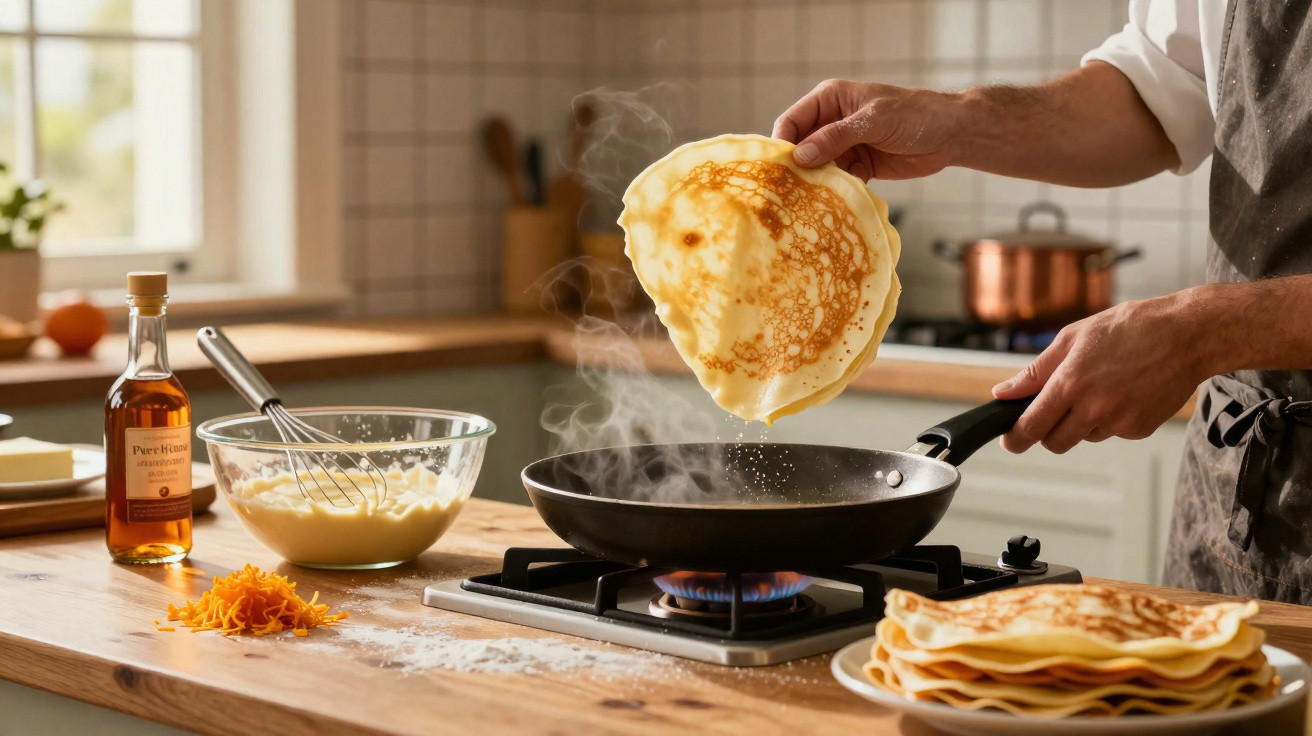
La Chandeleur is the Candlemas tradition that has evolved into an unofficial national day for crêpes. This year, plenty of French home cooks are relying on pastry icon Pierre Hermé’s approach to produce fragrant, feather-light crêpes with the appearance and flavour of a luxury patisserie creation rather than something made in a tiny flat kitchen.
Why this crêpe batter differs from the standard version
Most households have a crêpe recipe tucked away somewhere, yet the Pierre Hermé-inspired version makes intelligent adjustments to the fundamentals. Rather than prioritising volume, it centres on three essentials: flavour, tenderness and reliable results from the first ladleful through to the final one.
Think of it as a pastry chef’s batter: aromatic, thin enough to coat the pan, strong enough not to tear, and designed for repeat cooking.
Whole milk gives the mixture its richness, while a splash of water makes it lighter, and sugar and salt are carefully balanced. The batter is intentionally runny, allowing it to sweep around a heated pan within seconds and create exceptionally thin, evenly coloured rounds instead of substantial “pancakes” that become filling after a couple of mouthfuls.
Fragrance is the next important element. Vanilla, rum and Grand Marnier are not merely finishing touches. They elevate an everyday snack into a dessert that would not look out of place on a restaurant menu. As batter meets the hot metal, the scent rising from the pan becomes part of the pleasure.
Pierre Hermé-inspired batter: a careful yet easy-going approach
Pastry-school skills are not required. Provided you give the batter sufficient resting time, the process is perfectly manageable in a compact kitchen on a weekday evening.
Essential ingredients in chef-style ratios
- Whole milk, for a soft texture and fuller flavour
- A little water, to thin and lighten the mixture
- Eggs, for colour and structure
- Plain wheat flour, ideally a finely milled variety
- Sugar and a pinch of fine salt, to create balance
- Cooled melted butter, to enrich the batter
- Vanilla, plus an optional splash of rum or Grand Marnier
- Neutral oil, used sparingly for frying
The method is just as important as the ingredients. Begin by whisking the eggs, then combine them with the sugar, salt and flour to make a thick mixture. Add the milk gradually afterwards, in several additions. This stops lumps from forming, and lumps are the sworn enemy of refined crêpes.
Add the water later to refine the consistency, then stir in the vanilla and any alcohol. Incorporate the melted butter last, after allowing it to cool a little, so the eggs do not cook too soon.
The batter then rests for at least two hours at room temperature, giving the flour time to hydrate fully and the gluten to relax, which leads to more supple crêpes.
Once rested, give it a quick stir to check its finished texture. It should lightly coat the ladle rather than stick heavily to it. Should it seem too thick, a small amount of additional milk or water will correct it.
Cooking technique: taking home crêpes to chef level
Even an excellent batter can be spoiled by poor cooking, which is why Pierre Hermé-style guidance demands a disciplined approach at the hob.
Temperature, oil and pace
- Choose a proper crêpe pan or a sturdy non-stick frying pan.
- Warm it over a medium-high heat rather than at maximum temperature. It must be hot but not smoking.
- Use kitchen paper to wipe on the finest possible coating of oil.
- Stir the batter gently before each batch so it remains even.
When the pan is ready, pour a small ladleful into its centre and immediately tilt the pan in circles to spread it. Your goal is an extremely thin, consistent layer. Cook the first side for 30 to 60 seconds. Turn it when the top is no longer shiny and the edges begin to lift.
A wooden or silicone spatula helps with turning, although many seasoned cooks use a swift flick of the wrist. The second side requires only a few seconds to develop a little colour.
Stack the finished crêpes on a plate and cover loosely with a clean cloth, so they stay warm and retain their pliable, melt-in-the-mouth texture.
The right temperature seals the batter rapidly without scorching its edges. When you locate that ideal point, the work settles into a calm sequence: pour, swirl, wait, flip, stack, repeat.
How to eliminate lumps and ensure every crêpe stays tender
Lumps generally occur when every drop of liquid is tipped onto the flour in one go. The chef-style solution is straightforward:
- First combine the flour with the eggs and only a smaller quantity of liquid.
- Pour in the rest of the milk in stages, whisking briskly throughout.
- Briefly use a hand blender if stubborn pieces remain visible.
- If necessary, strain the batter through a fine sieve.
Tenderness relies on two main factors: the pairing of whole milk with water, and the extended resting period. Milk provides flavour and mild creaminess, whereas water prevents the mixture becoming stodgy, which matters if you intend to enjoy more than one or two crêpes.
How you serve them also changes their texture. Exposed crêpes dry rapidly. Keeping them warm and covered ensures they can be folded or rolled without splitting, even after they have sat on the table briefly.
Adapting the recipe for children, guests and savoury fillings
As Chandeleur is a family occasion, the batter should suit different people. When children are eating, the alcohol can easily be omitted or replaced.
Fragrant alcohol-free alternatives
- Replace rum or Grand Marnier with orange blossom water.
- Boost the vanilla by using both the seeds and extract.
- Mix in finely grated zest from an untreated orange or lemon.
These changes preserve the aromatic quality while keeping the crêpes entirely suitable for families.
Making the batter savoury
The same starting batter can be altered for crêpes filled with ham and cheese or vegetables. Simply leave out the sugar so it does not conflict with savoury fillings. Some cooks also reduce or omit the vanilla, while others substitute a pinch of dried herbs to create a more neutral flavour.
| Type | Adjustment | Typical fillings |
|---|---|---|
| Sweet | Keep sugar, vanilla, optional alcohol | Chocolate spread, sugar-butter, fruit, caramel |
| Savoury | Remove sugar, reduce vanilla, add herbs if desired | Ham, cheese, egg, mushrooms, roasted vegetables |
| Kids’ party | No alcohol, extra vanilla or citrus zest | Jam, honey, banana-chocolate, berries |
Filling ideas that allow the batter to shine
After you have made a stack of golden crêpes, the enjoyment shifts to the table. The key principle is to let the base remain the star, rather than concealing it beneath excessive toppings.
- Butter and sugar, using salted butter, for an uncomplicated, nostalgic treat.
- Chocolate and hazelnut, made with a chocolate spread, chopped toasted nuts and sliced banana.
- Orange style, featuring folded crêpes topped with a quick sauce of reduced orange juice, sugar and butter.
- Fresh fruit, including pears, berries or finely sliced apples, finished with honey or maple syrup.
With a well-scented batter, even a teaspoon of plain sugar becomes enough for a satisfying crêpe.
Beyond Chandeleur: practical advice and minor pitfalls
For cooks outside France, this technique works equally well for a weekend brunch or an enjoyable weekday supper. Prepare the batter earlier in the day, leave it to rest, and it will be ready as soon as people begin gathering around the kitchen.
There are several mistakes worth avoiding. Once the flour has been properly incorporated, excessive mixing can make the crêpes tough, particularly when the batter rests for an especially long time. An overheated pan creates dark, bitter patches, while insufficient heat produces pale, rubbery crêpes. Applying too much oil before every crêpe will soon make them greasy rather than delicate.
The recipe is forgiving, however. If you add a little too much milk, correct it with a spoonful of flour. A batter that is somewhat thick can still make more substantial, almost pancake-like crêpes. Any leftover crêpes store well in the fridge when wrapped, and can be reheated in a dry pan or oven before being filled with whatever is available: leftover roasted vegetables, ends of cheese or straightforward jam.
For anyone accustomed to thick American-style pancakes, this finer French style offers a valuable alternative: it is easier on the stomach, gives fillings a leading role and promotes a more sociable, build-your-own way of eating. On a chilly February evening, the combination of sizzling pans, perfumed steam and people lining up for “just one more” is precisely what makes Chandeleur special.

















Comments
No comments yet. Be the first to comment!
Leave a Comment