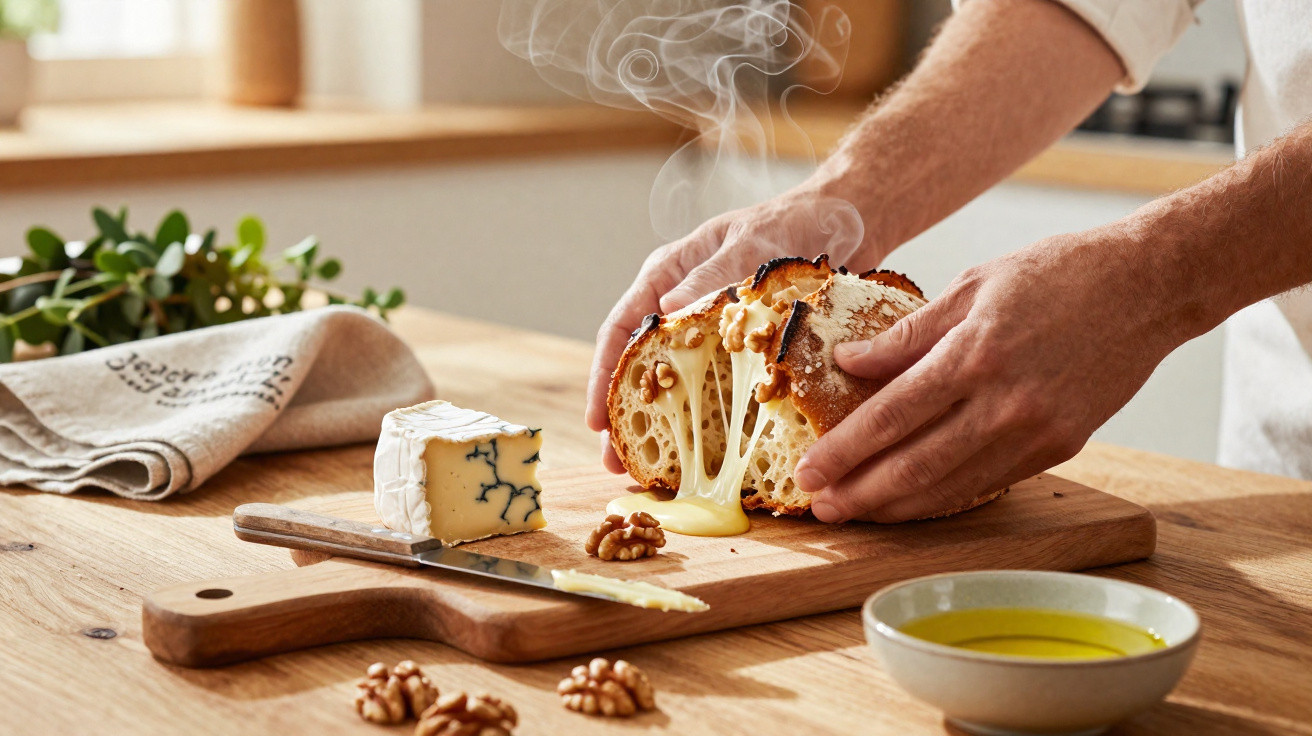
Across France this winter, an unassuming savoury loaf is gradually taking quiche’s place at the table. Made with blue cheese and walnuts, prepared in less than an hour and ideal for impromptu dinners, this cake-like bake is emerging as a dependable winter favourite for many home cooks.
Why this modest savoury cake is outdoing quiche at its own game
For years, quiche has been a staple of weekday suppers: shortcrust pastry, an egg custard filling and perhaps lardons with onions. It is comforting, certainly, but can feel rather laborious when you are tired, hungry and faced with a nearly empty fridge.
This fourme d’Ambert and walnut loaf skips the pastry, speeds up the prep, and still feels like proper, sit‑down food.
Its style is nearer to a traditional French savoury cake: one simple batter mixed in a bowl, boosted with cheese and nuts, then baked in a loaf tin. There is no pastry to chill, no blind baking and no need to manage several stages at once. After 10 minutes of active preparation, it goes into the oven, leaving you time to lay the table, pour a drink or reply to emails as it browns.
The combination of fourme d’Ambert, a mild blue cheese from Auvergne, and generous walnut pieces is what distinguishes this version. Combined, they create a creamy middle with an enjoyable crunch that an ordinary quiche does not often offer.
The basic formula: a French winter loaf
The mixture is deliberately uncomplicated, which explains why many French home cooks regard it as a “panic dinner” option. Learn the quantities once and you can almost make it by heart.
| Component | Typical quantity | Role in the loaf |
|---|---|---|
| Plain flour | 150 g | Structure and a soft crumb |
| Eggs | 3 medium | Bind and enrich the mixture |
| Milk | 100 ml | Moisture and tenderness |
| Neutral oil | 50 ml | Soft texture and easy slicing |
| Baking powder | 1 sachet (about 10–11 g) | Lift and lightness |
| Fourme d’Ambert | 100 g, roughly crumbled | Melting pockets of flavour |
| Walnuts | 60 g, chopped | Crunch and nuttiness |
Seasoning is kept to a minimum. Fourme d’Ambert already has natural saltiness, so a grind of pepper will usually do. This preserves balance and prevents the loaf from becoming overly rich.
How the preparation remains genuinely quick
Its main attraction is speed. The method barely varies, and that predictability is part of its charm.
- Heat the oven to 180°C as you collect the ingredients.
- Beat the eggs in a large bowl until they become lightly frothy.
- Sift over the flour and baking powder, then whisk into a smooth paste.
- Slowly add the milk and oil, stirring until the batter is glossy and falls in slight ribbons.
- Using a spatula, carefully fold through the crumbled fourme d’Ambert and chopped walnuts.
- Spoon the mixture into a lined or greased loaf tin, then bake for around 35 minutes until golden throughout.
From cracking the first egg to shutting the oven door, most home cooks clock barely 10 minutes of effort.
Because the preparation is so brief, this cake suits late arrivals home, unexpected guests and evenings when rolling pastry for a quiche base feels impossible. As it bakes, a salad or speedy soup is all that is needed to make a complete meal.
The blue cheese and walnut pairing that makes it so moreish
The filling determines whether the loaf succeeds, and this recipe relies on a pairing familiar at French cheese counters: mild blue cheese with walnuts.
What fourme d’Ambert really adds
Fourme d’Ambert, produced in France’s central Auvergne region, is among the country’s oldest cheeses. Although it is a blue cheese, it is not an especially forceful one.
Instead of an aggressive hit of blue, you get a slow, creamy melt with soft mushroom and hazelnut notes.
Within the loaf, it acts almost like little pools of sauce. The cheese melts through the crumb, producing irregular gooey ribbons that remain soft even after the cake has cooled. That change in texture, from bread-like crumb to a rich flowing centre, is where the recipe has an advantage over quiche, which may become slightly rubbery when overbaked.
Why walnuts are essential for texture and balance
Walnuts contribute much more than crunch. Their faint bitterness offsets the richness of both the cheese and egg-based batter. They also complement the earthy qualities of fourme d’Ambert, stopping the flavour from becoming flat or sickly.
It is important to leave the walnut pieces reasonably large. If they are chopped too finely, they become soggy flecks. Larger pieces retain their character and provide a pleasing bite. For many people who make this recipe regularly, the toasted edge of a walnut is the best part of a slice.
Making a simple loaf into a complete winter meal
Presented on a platter and cut into tidy slices, the cake can serve as an elegant apéritif nibble. Add suitable accompaniments and it becomes a balanced dinner with very little additional washing-up.
Fresh and crisp: a salad that cuts through the richness
French cooks commonly serve the loaf warm beside a chicory or endive salad. Slightly bitter leaves with finely sliced apple and a walnut-oil vinaigrette are particularly well suited.
- Endive or chicory for crunch and mild bitterness
- Apple or pear slices for sweetness and acidity
- A walnut oil and mustard dressing to mirror the nuts in the cake
Every forkful then brings contrast: warm, cheesy crumb alongside cool, sharp greens. It also allows one loaf to serve more people without making the meal seem insubstantial.
The soup pairing for a fireside supper
On particularly cold evenings, this loaf is often served with squash soup, whether pumpkin, butternut or potimarron. Roasted squash’s sweetness balances the salty, tangy blue-cheese notes, making the meal feel almost restaurant-planned despite coming together in under an hour.
A thick slice of the loaf, still slightly warm, next to a small bowl of orange soup delivers colour, comfort and enough carbs to keep you full until morning.
Keeping it soft for days while retaining the crust
This cake keeps well for a short time, making it useful for Sunday batch cooking, packed lunches and late-night snacking.
When the loaf has cooled completely, wrap it closely in cling film or foil so the crumb does not dry out in the fridge. Kept this way, it will generally last for two to three days. By the second day, the cheese flavour may even become slightly deeper.
Reheating requires some attention. A rapid microwave blast can leave the crust soft and limp. Instead, briefly heat slices in a moderately hot oven or mini oven, only until the edges crisp up again and the cheese softens. With almost no effort, it will taste close to freshly baked.
Smart alternatives when fourme d’Ambert is unavailable
Beyond France, fourme d’Ambert is not always stocked in supermarkets, though closely related cheeses work well in this recipe.
- Gorgonzola dolce: softer and sweeter, producing a very creamy, mild loaf.
- Danish blue: more powerful and saltier, so reduce any added seasoning slightly.
- Mild Stilton: an excellent UK choice that becomes crumbly and aromatic when baked.
The objective is to choose a blue cheese that melts readily without dominating the batter. Very sharp or dry, crumbly blues can overpower everything else and make the loaf taste one-dimensional. When using a stronger cheese, some cooks add a handful of grated Emmental or Cheddar to soften the overall flavour.
Nutrition, considerations and enjoying it in moderation
For all its appeal, this remains a rich bake, as the cheese, eggs, nuts and oil soon add up. However, it is not simply made up of empty calories. Walnuts supply fibre, plant fats and some omega-3, while fourme d’Ambert provides protein and calcium, although it also contains sodium and saturated fat.
Portion size and what you serve alongside it make the real difference between a heavy meal and a satisfying, balanced one.
Serving the loaf with raw vegetables, light salads or broth-based soups helps keep the plate balanced overall. Replacing some of the white flour with wholemeal flour, or mixing a spoonful of ground walnuts into the batter, can increase the fibre content a little without greatly affecting the texture.
Anyone monitoring their salt intake should choose a milder blue cheese and taste the batter before seasoning it. In most cases, the cheese provides all the salt the loaf requires.
How this recipe suits busy modern cooking habits
The growing popularity of this fourme d’Ambert and walnut loaf reflects a broader change in home cooking: fewer complicated techniques and more adaptable, fridge-led recipes based on a small number of good ingredients. A handful of leftover roasted vegetables, half a leek or a few spare herbs can be added without changing the dish’s character.
That flexibility is likely the reason so many French homes now include it in their winter repertoire. It meets several demands at the same time: quick enough for a Tuesday evening, polished enough for visitors, robust enough for a lunchbox and comforting enough to enjoy after a long commute.

















Comments
No comments yet. Be the first to comment!
Leave a Comment