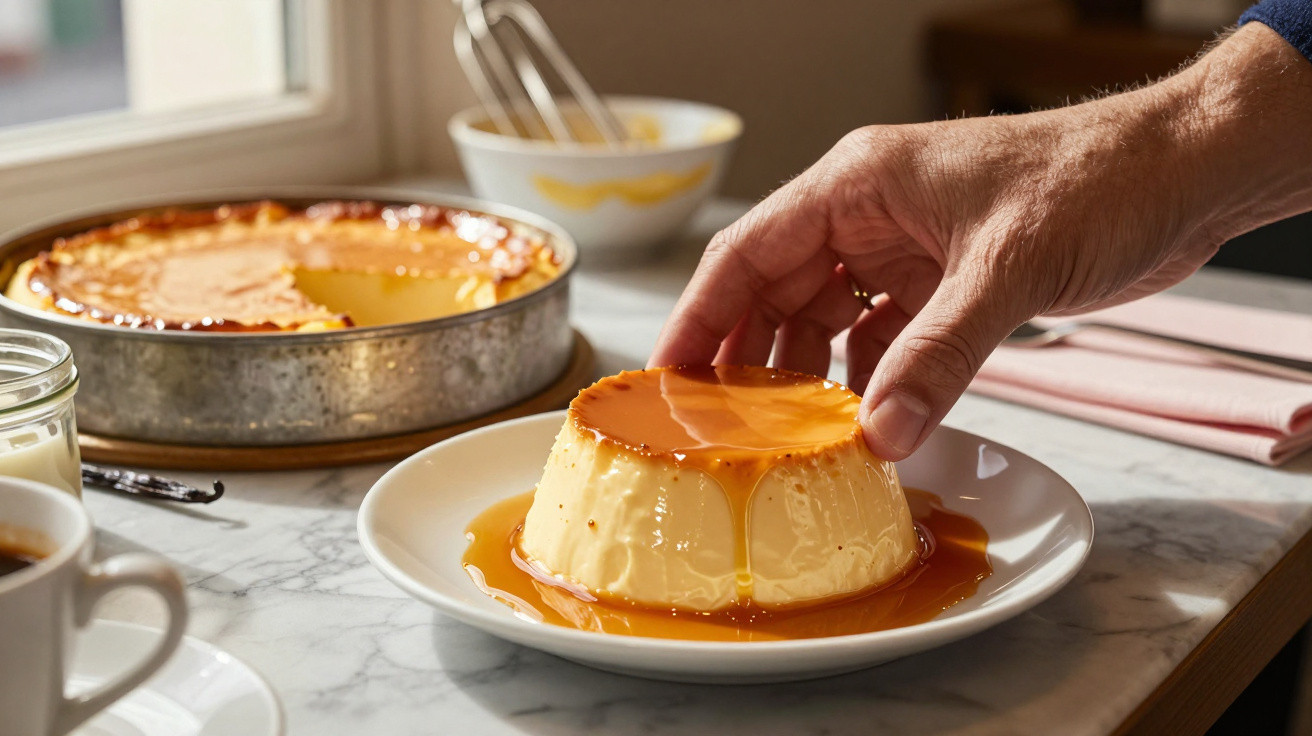
This pastry flan has everything needed to turn heads: it is tall, golden, richly scented with vanilla and, above all, exceptionally creamy. The good news is that it is far less daunting than it looks when you follow the right method. Even at home, using an ordinary tin and a little patience, you can achieve an impressive result.
Why this pastry flan is so popular
Laurent Mariotte-style pastry flan is so appealing because of its contrasts: crisp pastry, a smooth and substantial custard filling, and a deeply coloured top. It looks like something from a bakery, without the level of difficulty people often assume is involved.
The real key is balance. Overbake it and the flan will turn dry; give it too little resting time and it will not hold its shape properly. The filling should be firm enough to slice neatly, while melting in the mouth. That is precisely what makes every bite so enjoyable.
Ingredients for an ultra-creamy pastry flan
This recipe makes 8 servings in a 24–26 cm deep-sided tart tin. Use straightforward ingredients, but choose good-quality ones. Whole milk and vanilla make a genuine difference.
For the pastry:
- 250 g flour
- 120–150 g softened unsalted butter
- 60 g sugar
- 1 large egg
- 1 pinch of salt
- a little butter and flour for the tin
For the flan custard:
- 1 litre whole milk
- 4 egg yolks
- 2 whole eggs
- 200–250 g caster sugar
- 90–100 g cornflour
- 200 ml full-fat pouring cream
- 1–2 vanilla pods or 2–3 tsp vanilla extract
Making the pastry without mistakes
First, cream the softened butter and sugar together. The mixture should be soft and almost creamy. Then add the egg and the pinch of salt, mixing only until everything is evenly combined.
Add all the flour at once. Work it quickly with your fingertips or in a food processor. Stop as soon as the dough comes together. Shape it into a disc, wrap it, and chill it in the fridge for at least 30 minutes. This resting time helps the pastry stay neatly in place during baking.
Preparing a smooth, creamy flan custard
Pour the milk into a large saucepan. Split the vanilla pod, scrape out the seeds and add both the seeds and pod to the milk. Add a small portion of the sugar too, around 50 g. Warm gently until the first bubbles appear. The milk should fill the kitchen with vanilla aroma, not come to a vigorous boil.
Meanwhile, whisk the yolks, whole eggs, remaining sugar and cornflour in a large bowl. The mixture should become paler and slightly thicker. Gradually pour in the hot milk in a thin stream, whisking continuously. This is the step that prevents lumps from forming.
Return everything to the saucepan and cook over a medium-low heat, stirring constantly. The custard will gradually thicken. Once it is smooth, glossy and properly thick, take it off the heat. Stir in the full-fat pouring cream. It should remain supple, with an almost velvety consistency.
Lining the tin and baking successfully
Preheat the oven to 180°C on conventional heat. Butter the tin, then dust it lightly with flour. Roll the pastry to a thickness of 3–4 mm. Place it in the tin, pressing it well up the sides. Prick the base lightly with a fork.
Pour the cooled-to-warm flan custard into the pastry case and smooth the surface with a spatula. Bake for 45–55 minutes. The top should be richly golden, sometimes with a few darker patches. That is entirely normal: this colouring creates the distinctive flavour of a proper pastry flan.
When it comes out of the oven, the centre may still wobble slightly. There is no need to worry. Allow it to cool at room temperature first, then refrigerate for at least 6 hours-ideally overnight. This resting period is what takes a good flan and makes it an excellent one.
Small tips that make all the difference
If you prefer desserts that are less sweet, reduce the sugar to 180 g, or even a little below that. The vanilla will stand out even more. You can also add very finely grated lemon or orange zest to the warm milk. It brings a fresh note without overpowering the vanilla.
If you do not have a vanilla pod, vanilla extract works well too. Add it at the end of cooking the custard, once it is off the heat. Its flavour will remain more pronounced. For an even richer flan, replace 200 ml of milk with an additional 200 ml of cream. The result will be denser and almost irresistible.
How to serve it to make an impression
This pastry flan works beautifully as a Sunday dessert, an uncomplicated afternoon treat or part of a family buffet. It appeals to almost everyone. Its gentle flavour, clean slices and golden crust immediately make people want another portion.
Serve it well chilled, but not ice-cold. Take it out of the fridge 15–20 minutes before eating. It can be served with strawberries, a red berry coulis or a spoonful of unsweetened whipped cream. The contrast works particularly well.
For clean slices, run the knife blade under hot water and wipe it dry before cutting each piece. This small step really improves the dessert’s appearance. You will have a beautifully neat flan, just like one in a bakery display, yet completely homemade. Honestly, it is the sort of recipe you soon make again-and share even sooner.

















Comments
No comments yet. Be the first to comment!
Leave a Comment