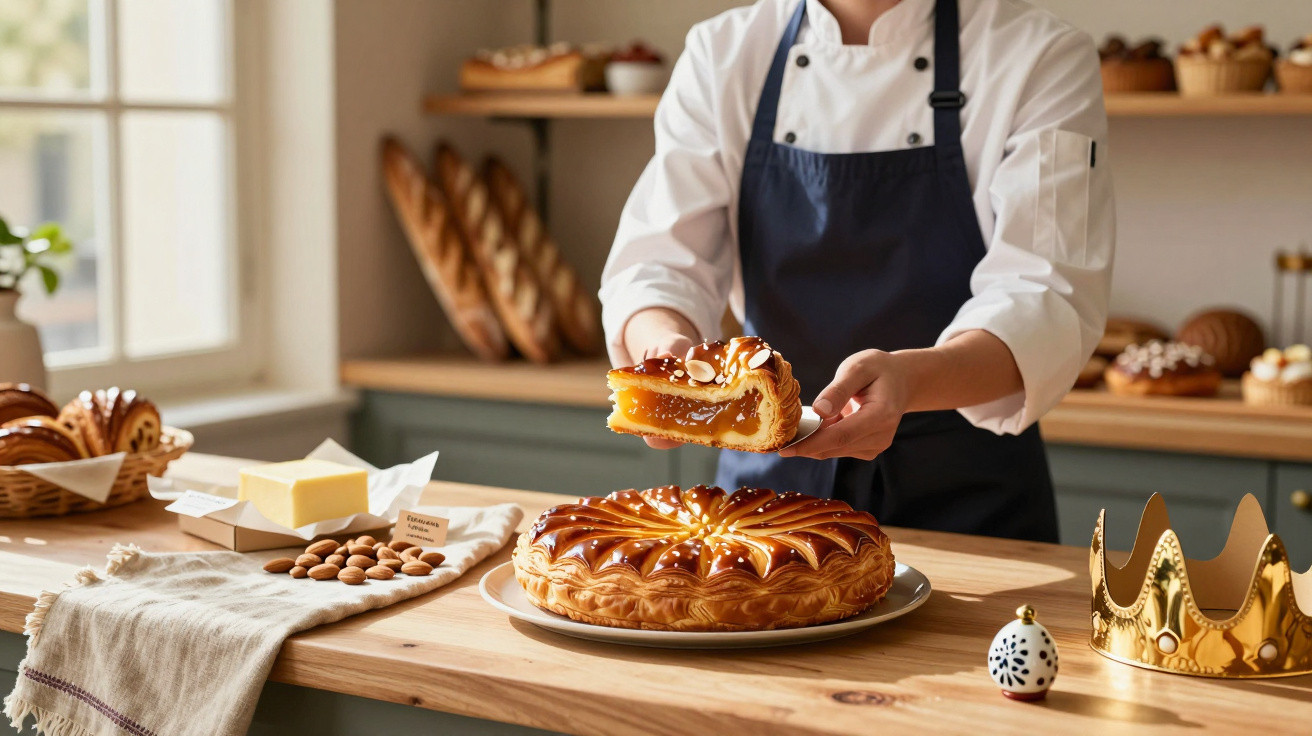
On a quiet street in Paris, an unassuming-looking galette has become a talking point among gourmets and fine-dining critics.
The traditional frangipane galette, the pastry associated with France’s Epiphany celebrations, has become a star after winning over one of the country’s most discerning palates: food journalist François‑Régis Gaudry. The accolade has shone a spotlight on a neighbourhood bakery and prompted an enticing question: what makes this recipe special enough to be named “galette of the year”?
A neighbourhood galette with national recognition
At the centre of the story is the frangipane galette from Pleincœur boulangerie, in Paris’s 17th arrondissement. The bakery announced on social media that François‑Régis Gaudry had selected its creation as “galette de l’année”. Gaudry is an influential voice on the French food scene, known for his critical yet enthusiastic approach to classic recipes.
What impressed him was the balance between the Viennese puff pastry and the frangipane filling, enhanced with rum and almonds. There are no theatrical flourishes or excessive decoration: the recipe’s appeal lies in its technique, precisely baked pastry and the creamy consistency of its filling.
The pairing of ultra-crisp pastry with generous, aromatic frangipane has turned a familiar dessert into a benchmark for 2026.
At a time when grand hotels and luxury patisseries compete for attention with ever more elaborate creations, the success of a local bakery brings a sense of a “return to well-executed basics”, underlining the importance of craftsmanship in French patisserie.
The secret of balancing crispness and softness
According to reports in the French press, the puff pastry used for Pleincœur’s galette is Viennese-style: lighter, carefully layered and baked until it produces an audible crunch. Each layer separates easily, without becoming heavy or greasy.
Inside, the frangipane is applied in a generous layer. Its base combines almonds, butter, sugar, eggs and a hint of rum, which adds fragrance without taking over. The result is a dense yet soft cream that remains moist even after baking.
The contrast between the layered crust and soft centre creates the impression of a “rich” dessert that is still easy to eat to the final slice.
Achieving this balance demands close control of oven temperature, pastry resting time and careful butter selection. None of this is apparent to someone standing at the counter, but it becomes clear with the first cut of a knife: the pastry does not collapse, the filling does not run, and the almond aroma rises immediately.
Chef Maxime Frédéric’s touch
The galette bears the signature of Maxime Frédéric, the pastry chef at Cheval Blanc Paris, who was also named World’s Best Pastry Chef in 2025. At Pleincœur, he works alongside his “family of the heart”, as he refers to the team, bringing high-level techniques into a more relaxed setting.
The principle is straightforward: take a comforting recipe tied to the childhood memories of many French people and apply the same exacting standards used for an elaborate dessert in a Michelin-starred restaurant. While retaining the feel of a neighbourhood bakery, the finished product reaches a technical standard that attracts critics and pastry enthusiasts alike.
Three galettes, three ways to celebrate Epiphany
The award-winning frangipane version is the headline act, but it is not the only option. For the 2026 Epiphany season, Pleincœur created three galettes des rois, each made with the same Viennese puff pastry base.
- A classic frangipane galette with almonds and a hint of rum;
- A more creative variation, not detailed by the source, for those who enjoy bolder flavours;
- A further modern interpretation for people seeking different textures without leaving tradition behind.
The bakery aims to satisfy both customers who would not forgo the traditional recipe and those curious about more contemporary combinations. In every case, the promise remains the same: carefully worked puff pastry, butter from a controlled source and fillings with a high concentration of flavour.
The importance of ingredient provenance
The bakery particularly stresses the quality of its raw ingredients. Its butter comes from Normandy, a region renowned for dairy products with an intense flavour. The almonds are selected for their aromatic strength, while the rum is measured to provide fragrance rather than conceal shortcomings.
When the ingredient list is short, every shortcut becomes obvious on the palate. That is why everything depends on good butter, well-chosen flour and fresh nuts.
This approach illustrates how closely French patisserie remains tied to terroir, the concept that links flavour to an ingredient’s place of origin. Even in a product sold from a neighbourhood display case, a chain of producers and suppliers lies behind every slice.
Where to find the “galette of the year” in Paris
Anyone in Paris during the galette des rois season can try the creation named “galette of the year” at a very specific address in the Batignolles area:
| Venue | Address | Area | Opening hours |
|---|---|---|---|
| Pleincœur boulangerie | 64 rue des Batignolles, 75017 | 17th arrondissement | Monday to Sunday, 8 am to 8 pm |
The bakery’s aim is to offer a product with “palace” standards without the formality of a major hotel. Customers can walk in, select a galette at the counter and take it home or share it nearby in a neighbourhood setting.
Those planning to buy for a large group may wish to order in advance, as the “galette de l’année” label tends to bring queues and can cause certain sizes to sell out more quickly, especially at January weekends.
How to enjoy galette at home
Even an expertly made galette can lose some of its appeal if it is served at the wrong temperature. The usual recommendation in Paris is to warm it briefly in an oven at between 150°C and 160°C for a few minutes, just long enough to restore crispness to the pastry and release the fragrance of the frangipane.
Accompaniments are another consideration. A fuller-bodied filter coffee, black tea or brut sparkling wine generally pairs well with the buttery, lightly alcoholic character of the filling. Those who prefer a non-alcoholic option can choose dried-fruit tea or a vanilla infusion with milk.
What exactly is frangipane?
For anyone unfamiliar with the term, frangipane is an almond-based cream used to fill tarts and galettes. The classic version brings together:
- Almond cream, made with ground almonds, sugar, butter and eggs;
- Crème pâtissière, which gives it a lighter, silkier texture.
In practice, the result resembles a softer, moister and more aromatic marzipan filling, without the heavy quality that some almond pastes can have. Rum, a common addition in French recipes, reinforces the dried-fruit notes and adds another layer of complexity.
Why this type of award matters to patisserie
A title such as “galette of the year” is more than praise. For a neighbourhood bakery, it can mean more visitors, a need to reorganise production and even changes to customer service, as tourists and curious newcomers begin queuing alongside long-standing local residents.
For Brazilian audiences following French gastronomic trends, this kind of recognition helps identify broader movements: greater appreciation of classical technique, a return to family recipes with refined finishing, and growing attention to the origin of butter, flour and nuts.
People who enjoy baking can also take inspiration from this example. Trying a frangipane galette at home, even with local ingredients, offers a practical way to understand how texture, pastry lamination and cream consistency work together. Even without reaching the level of a Parisian patisserie, the exercise provides lessons in balancing fat, sweetness and aroma that can be applied to many other puff-pastry desserts.

















Comments
No comments yet. Be the first to comment!
Leave a Comment