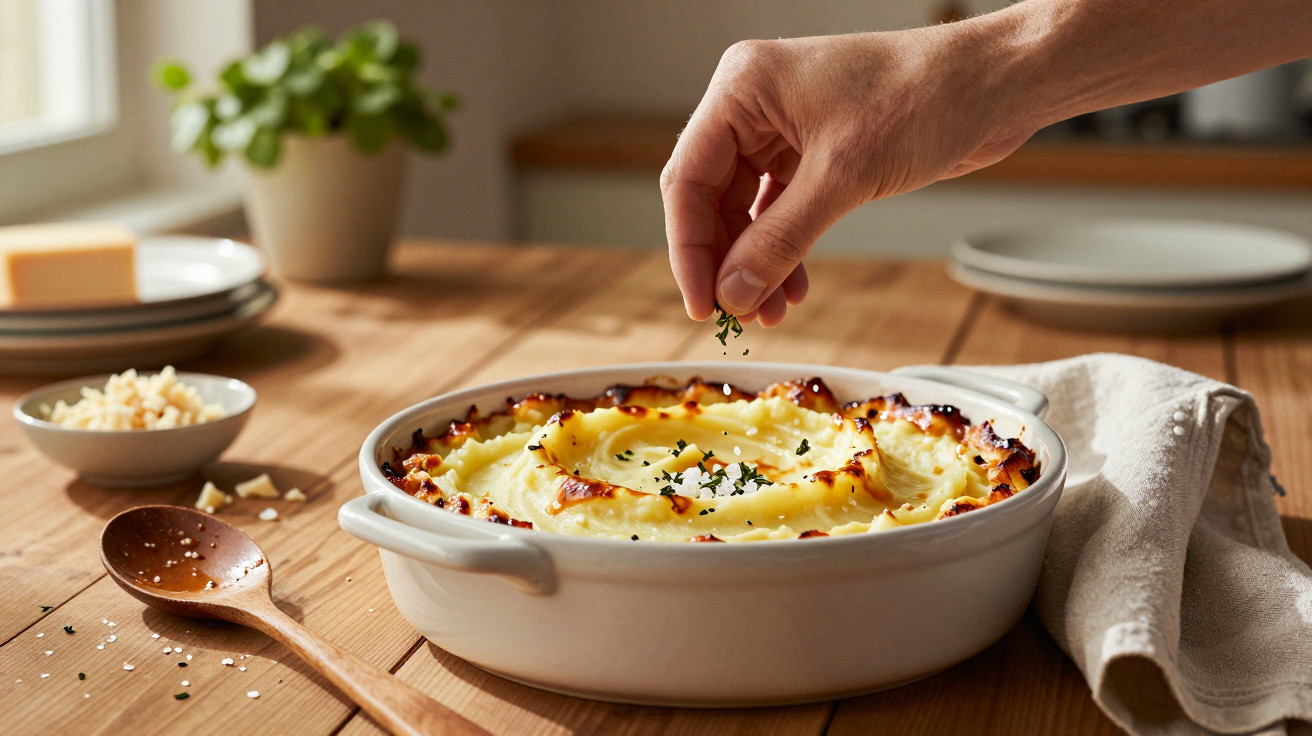
There are evenings when the kitchen already smells of warm butter before coats have even been draped over a chair. Fine rain taps at the windows, the children ask what is for dinner and, in the oven, the hachis parmentier is slowly turning golden. There is nothing showy about this dish on paper, yet it has that rare ability to silence everyone after the first mouthful. Creamy mash wraps around slow-cooked meat, the topping gives just enough of a crack beneath the fork, and people go back for more without really thinking. We all know that moment when a simple meal seems to put the household back on track. Hachis parmentier does not solve everything, but it certainly helps. Here is the detail that makes all the difference.
Hachis parmentier, the quietly unifying dish
A good homemade hachis parmentier often begins with a very practical situation: a piece of leftover meat, a few potatoes at the bottom of the basket and the wish to make something generous without spending the entire evening at the hob. It is a dish for unhurried Sundays, but equally for busy Wednesdays when you want to treat everyone without ordering a takeaway. Its appeal lies in the contrast: a rustic, almost humble filling concealed beneath smooth, airy mashed potato. Once the bake comes out of the oven with lightly caramelised edges, nobody asks whether the recipe is sophisticated. Everyone pulls up a chair.
For many families, hachis is also about making the most of leftovers. A serving of pot-au-feu, a slightly dry beef roast or minced beef bought that day can all enjoy a proper second life with softened onion and a little stock. For six people, allow around 800 grams of floury potatoes, 500 grams of minced meat, 20 centilitres of whole milk, 80 grams of butter, two onions and a generous handful of grated cheese. It may sound straightforward, and that is precisely the dish’s charm: ordinary ingredients do not need disguising.
The distinction between an acceptable hachis and one people are still talking about the next day comes down to texture. The meat should remain tender, lifted with a touch of tomato purée, thyme, pepper and, sometimes, a spoonful of mild mustard; the mash, meanwhile, must never become a thick glue. When chosen well, potatoes take on hot milk and butter with surprising generosity. Bintje, Agria or Manon potatoes work particularly well. Successful mash is soft and yielding, rather than runny, and should still hold its shape slightly as it is spread over the meat.
Homemade hachis parmentier with ultra-creamy mash and a golden crust
Begin by peeling the potatoes and cutting them into similarly sized pieces so that they cook evenly in cold salted water. During the twenty to twenty-five minutes they need to cook, gently fry the finely sliced onions in a drizzle of oil and a knob of butter. Then add the meat, along with a grated carrot if you prefer a sweeter filling. Pour in a small glass of stock, leave it to reduce for five to eight minutes and taste it properly: the filling needs to be flavoursome before it is covered. Once the potatoes are tender, drain them thoroughly, then return them to the hot pan for one minute to drive off any remaining moisture.
Next, mash the potatoes with a potato ricer or masher, never a blender. Heat the milk separately with the butter, then add it gradually while the mash is still steaming. This simple step makes all the difference: cold milk sets the mixture, while a blender releases too much starch. Add a pinch of nutmeg, a little white pepper and adjust the salt. Let us be honest: hardly anyone does this every day, especially after a long day. Even so, taking three minutes to warm the milk turns an ordinary hachis into a truly comforting meal.
In a buttered oven dish, spread out the meat, pressing it down lightly, then cover it with the mash using a spatula or a piping bag if you want an attractive finish. Make waves across the surface with a fork, scatter over fine breadcrumbs, grated Comté or Parmesan, add a few shavings of butter and bake at 200 °C for around twenty-five minutes. If needed, finish it with two minutes under the grill.
“The secret is not to use too much, but to let each layer retain its character: juicy meat, soft mash and a crust that sings beneath the spoon.”
- For especially smooth mash: use floury potatoes and gradually work in the hot milk.
- For less dry meat: keep a little cooking juice or reduced stock in the filling.
- For an irresistible gratin: combine grated cheese with breadcrumbs instead of relying on cheese alone.
- For a family touch: add a few diced carrots, celery or mushrooms fried with the onions.
The small touches that bring everyone back to the table
Hachis parmentier benefits from resting for five to ten minutes out of the oven before serving. This brief pause lets the layers settle, helps the meat retain its juices and stops the mash from collapsing as soon as the first portion is served. Offer it with a sharply dressed green salad, a few rocket leaves or crisp lamb’s lettuce: the acidity provides a welcome lift against the richness of the dish. It also keeps very well in the fridge for two days, and some people swear it tastes even better when reheated the next day. The crust loses a little of its crunch, but the flavours blend more fully.
| Essential point | Detail | Added value for the reader |
|---|---|---|
| Suitable potatoes | Bintje, Agria or Manon, cooked in cold salted water | Light mash with no elastic texture |
| Hot milk and butter | Gradually incorporated after careful draining | An ultra-creamy result that is easy to spread |
| Controlled gratin | Cheese, breadcrumbs and a few touches of butter at 200 °C | A golden, crisp and appetising topping |

















Comments
No comments yet. Be the first to comment!
Leave a Comment