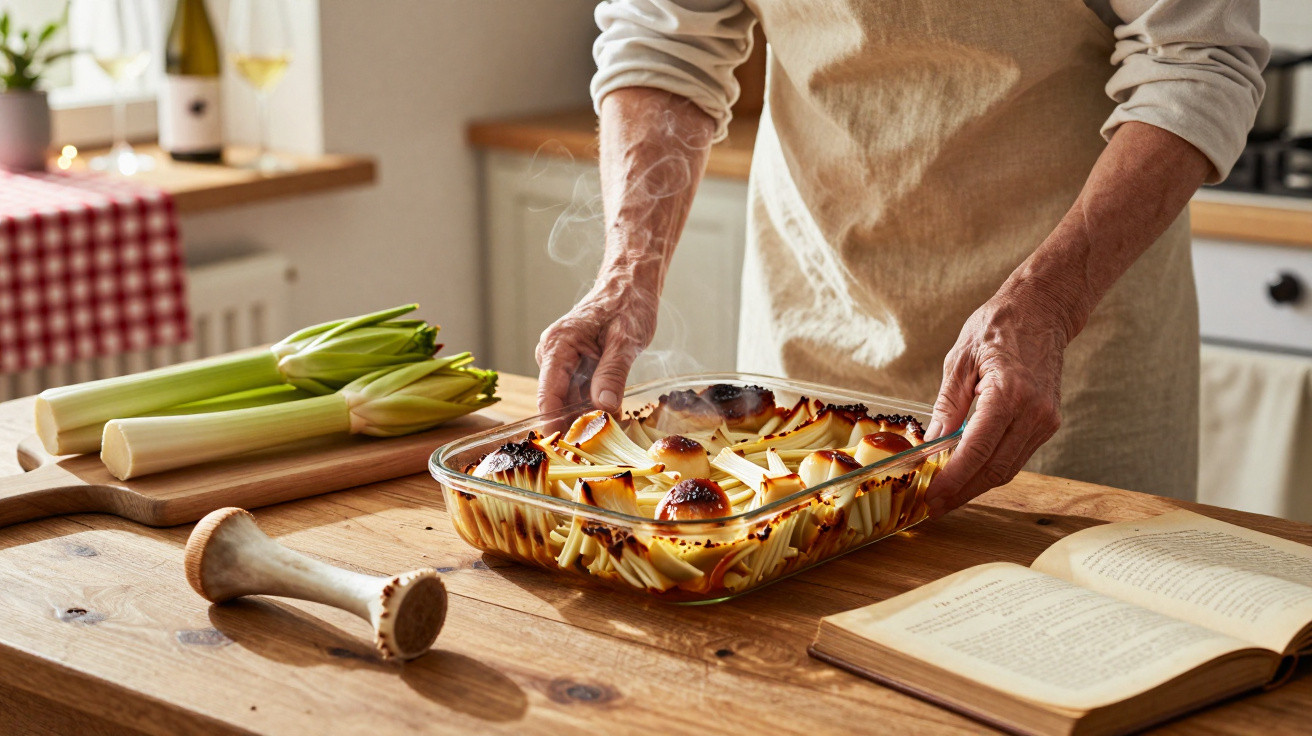
In Lyon, there is a very particular moment, a few days before Christmas, when the kitchen begins to smell of warmed milk, melted butter and browning cheese. Cardoons sit on the worktop, long, pale and slightly daunting, while an old casserole dish receives marrow bones. Children ask what they are, and the adults reply with a smile: “You’ll see.” In many families, this dish looks far from spectacular before it goes into the oven, yet one mouthful is enough to bring back whole memories of festive meals, overly white tablecloths and conversations that stretch into the evening. Elsewhere in France, cardoon is barely known. In Lyon, it tastes of Christmas.
In Lyon, cardoon is no ordinary vegetable
Cardoon with marrow often reaches the table between roast poultry and the cheese course, but it is far more than a side dish. Its stalks resemble those of the artichoke, its close relative, and require time, careful handling and a real desire to cook for others. That is probably why it is so endearing: it makes no shortcuts. The stalks must be peeled, stripped of their strings, blanched, watched as they cook, then covered in a velvety sauce before being baked. A Christmas dish that demands a little effort often tastes all the better for it.
In some Lyon households, the recipe is handed down without ever being written, passed on verbally between instructions called out from the kitchen. A grandmother says it needs “a little more marrow”, a father insists on nutmeg, while an aunt firmly rejects overly industrial grated cheese. With its pale stalks and beige sauce, the dish can look humble, almost rustic. Yet fine fresh cardoons are easy to spot at December markets: their stalks should be firm, weighty and free from dark marks, and they sometimes sell out before Christmas Eve. In Lyon, nobody buys them by chance.
What surprises visitors is the almost emotional place this gratin holds within the meal. The marrow brings a deep, subtly meaty richness that softens the cardoon’s gentle bitterness and turns it into a festive dish. The pairing makes perfect sense in a city whose everyday cooking has always known how to elevate simple cuts, butter, offal, winter vegetables and generous sauces. Cardoon with marrow is not a curiosity from a Lyon bouchon designed for tourists: above all, it belongs in family kitchens, where people still cook for eight even when perhaps only five will be there.
Cardoon with marrow: the proper recipe mainly requires patience
To recreate this Lyon flavour at home, the first rule is not to rush the cardoon. Once the stalks have been separated, carefully remove the strings with a small knife or vegetable peeler, then place them in lemony water to prevent discolouration. Cook them in a large pan of gently simmering salted water until tender, but not reduced to mush. Depending on their freshness, this generally takes between forty-five minutes and one hour. Meanwhile, make a loose béchamel seasoned with nutmeg, then stir in cooked or poached marrow.
The most common mistake is trying to hurry the process, particularly when the cardoons have not been properly cleaned. One forgotten string can ruin the texture and make the vegetable seem tough when it has simply been badly prepared. Let us be honest: nobody really makes this every day. It is equally tempting to bury the gratin beneath a mountain of cheese, but marrow is already rich and deserves to remain noticeable. A handful of well-chosen Comté, Parmesan or Gruyère is more than enough to create the golden crust that draws everyone into the kitchen.
The right balance rests on a few details, the sort that written recipes rarely explain clearly enough.
“The cardoon should remain meltingly tender while retaining some character: if it becomes completely soft, it loses its story.”
Keep these pointers in mind before putting the dish in the oven:
- choose cardoons that are very pale and firm;
- add lemon as soon as they are cut to retain their colour;
- taste the sauce before adding the marrow, which is often already salty;
- leave the gratin to rest for five minutes after taking it from the oven.
A festive flavour that deserves to travel beyond Lyon
Cardoon with marrow may capture Christmas better than some more famous dishes precisely because it refuses to be easy. It asks you to slow down, cook for a while and accept that a winter vegetable can become the quiet centrepiece of a meal. First-time diners are sometimes taken aback by its flavour, somewhere between artichoke, celery and a faint vegetal bitterness. Then comes the second mouthful, the one that changes everything, as the hot sauce and yielding marrow find their place. It is a dish that does not try to win you over immediately.
At a time when festive menus often look alike from one region to another, this Lyon speciality retains something valuable: it resists standardisation without making a fuss. It is a reminder that a Christmas Eve supper can be built around a humble ingredient, an inherited recipe and a dish that appears a little old-fashioned. Serve it with poultry, roast veal or even on its own, alongside a sharp salad to lighten the meal. If a guest asks what they are eating, the conversation has already begun.
Sometimes, one forgotten dish is enough to bring back everyone else’s memories. Lyonnais may recognise family cooking that is occasionally debated but often passionately defended; those from elsewhere may find a very practical reason to view winter market stalls differently. Between the fresh cardoon from the market and the gratin crackling behind the oven door lies an entire way of welcoming people: generous, patient and free of unnecessary decoration. When Christmas comes around again, this unusual vegetable may become the one everyone is still talking about at the table.
| Key point | Detail | Added value for the reader |
|---|---|---|
| Cardoon | A winter vegetable related to the artichoke, emblematic of Lyon Christmas tables. | Discover a regional speciality that remains little known in the rest of the country. |
| Marrow | It enriches the béchamel and softens the cardoon’s natural bitterness. | Understand the indulgent signature of this traditional recipe. |
| Preparation | Meticulous peeling, slow cooking and light gratinating make all the difference. | Avoid mistakes that can leave the dish stringy or overly heavy. |

















Comments
No comments yet. Be the first to comment!
Leave a Comment