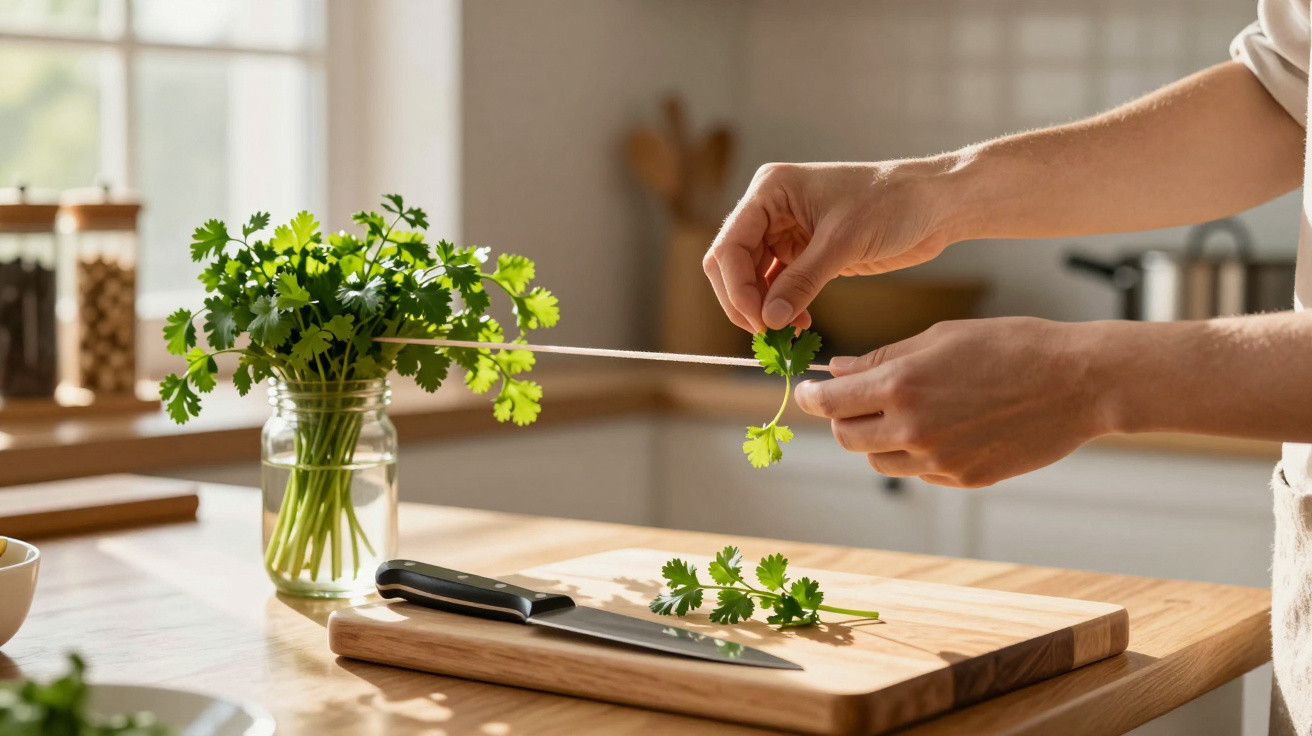
The step is almost absurdly simple: remove the elastic band from the bunch as soon as you get home from the shops. Parsley, coriander, mint and basil are often kept tightly bound, damp and delicate in their packaging. A few days later, all that remains is a dark, soggy clump at the bottom of the salad drawer. Yet this small habit can genuinely extend the life of fresh herbs.
We have all experienced it: on Sunday, you buy a lovely bunch of coriander, planning homemade tacos, tabbouleh or perhaps a fragrant soup. By Wednesday, the packet is still there, forgotten behind the yoghurt, while the leaves start sticking together and giving off that slightly miserable smell of wet greenery. You then wonder why fresh herbs cost so much when they so quickly end up in the bin. The issue is not always the fridge, or even how fresh the bunch was. Sometimes it starts with a simple piece of rubber. Five seconds can be enough to make a difference.
The elastic band: a small detail that crushes and rots leaves
At markets and supermarkets alike, herbs are often sold in very tightly packed bunches. The elastic band holds the stems together for transport, which is useful, but it also presses the leaves against one another. As soon as there is any moisture, it becomes trapped in the folds of the bunch, where almost no air can circulate. Crumpled leaves become damaged, turn brown and then go slimy far sooner. Fresh herbs do not like being suffocated or left wet. It is an obvious point, yet the tie is often left in place until it is time to cook.
Claire, who does plenty of cooking at weekends, had eventually stopped buying fresh mint: “It lasted two days, no longer.” One day, having noticed that the leaves always blackened in the middle of the bunch, she removed the elastic band as soon as she unpacked her shopping. She gently separated the stems without washing them, then laid them on a clean tea towel before putting them away. Her mint lasted almost a week. This is not a magic guarantee for every bunch, especially if the herbs were already tired-looking on the shelf, but the difference is often noticeable from the first few days.
The reasoning is straightforward: a damaged leaf releases water and breaks down more easily. When it touches the surrounding leaves, moisture and micro-organisms spread quickly through the tightly packed bunch. Taking off the elastic band releases that pressure, reveals any stems that are already soft and lets the whole bunch breathe. The task literally takes as long as opening a drawer. Let us be honest: nobody does this every day with laboratory-level discipline. But doing it straight after the shopping already helps prevent that familiar greenish bundle you hesitate to touch two days later.
Storing fresh herbs: the right method depends on what you bought
Once the elastic band is off, do not automatically wash the entire bunch. If the leaves are clean, keep them dry until you need them: water often speeds up softening when it remains trapped in a bag. For parsley, coriander, dill or mint, trim a very small amount from the bottom of the stems, then stand them in a glass containing a little fresh water. Loosely cover the top with a clean bag, without tightening it, and place it in the fridge. It works like a miniature vase, although the amount of water should be kept modest.
Basil needs different treatment. Many people put it in the fridge automatically, only to find black leaves the next day. This cold-sensitive herb generally prefers a glass of water at room temperature, away from direct sunlight and very ripe fruit. Rosemary, thyme, sage and oregano, meanwhile, cope better when loosely wrapped in barely damp kitchen paper and kept in a container or partly open bag in the fridge. A common mistake is storing every herb in exactly the same way. They do not all have the same temperament, and basil makes that perfectly clear.
A quick check while putting them away can also save the rest of the bunch: remove yellowed, sticky or already blackened leaves before they affect the others.
“The best storage method is the one that keeps stems hydrated without turning the leaves into a tiny tropical greenhouse.”
- Remove the elastic band as soon as you arrive home.
- Set aside damaged leaves before storing the herbs.
- Never leave the leaves soaking in water.
- Change the water in the glass every two days if it becomes cloudy.
- Where possible, wash only the portion you are about to cook with.
This tiny habit can change the way you cook, too
Keeping herbs alive for longer is not simply about reducing a little waste. It means that on an ordinary Tuesday evening, you still have lively parsley to brighten up eggs, a few sprigs of mint for a salad or coriander to lift roasted vegetables. You start cooking more spontaneously, without waiting for an ambitious recipe or a dinner party. A handful of fresh herbs makes a simple dish feel more considered. That pleasure is often worth more than the cost of the bunch.
There is also something satisfying about these tiny household routines. Removing an elastic band, checking the condition of the stems and changing a small amount of water are unglamorous, almost invisible actions. Still, they remind us that fresh food remains alive, or nearly so, after it has passed through the checkout. Next time a bunch arrives in your kitchen, look at its centre before putting it in the fridge. Five seconds, a glass and a little care may be all it takes to stop your herbs being forgotten at the bottom of the salad drawer.
| Key point | Detail | Benefit for the reader |
|---|---|---|
| Remove the elastic band | The bunch loosens, so the leaves are no longer compressed. | Less trapped moisture and fewer leaves turning black. |
| Keep the leaves dry | Washing can wait until you are preparing the food. | The herbs stay firm for longer. |
| Adapt the storage method | Keep parsley in water in the fridge, while basil is better at room temperature. | Each variety retains its flavour and texture more effectively. |

















Comments
No comments yet. Be the first to comment!
Leave a Comment