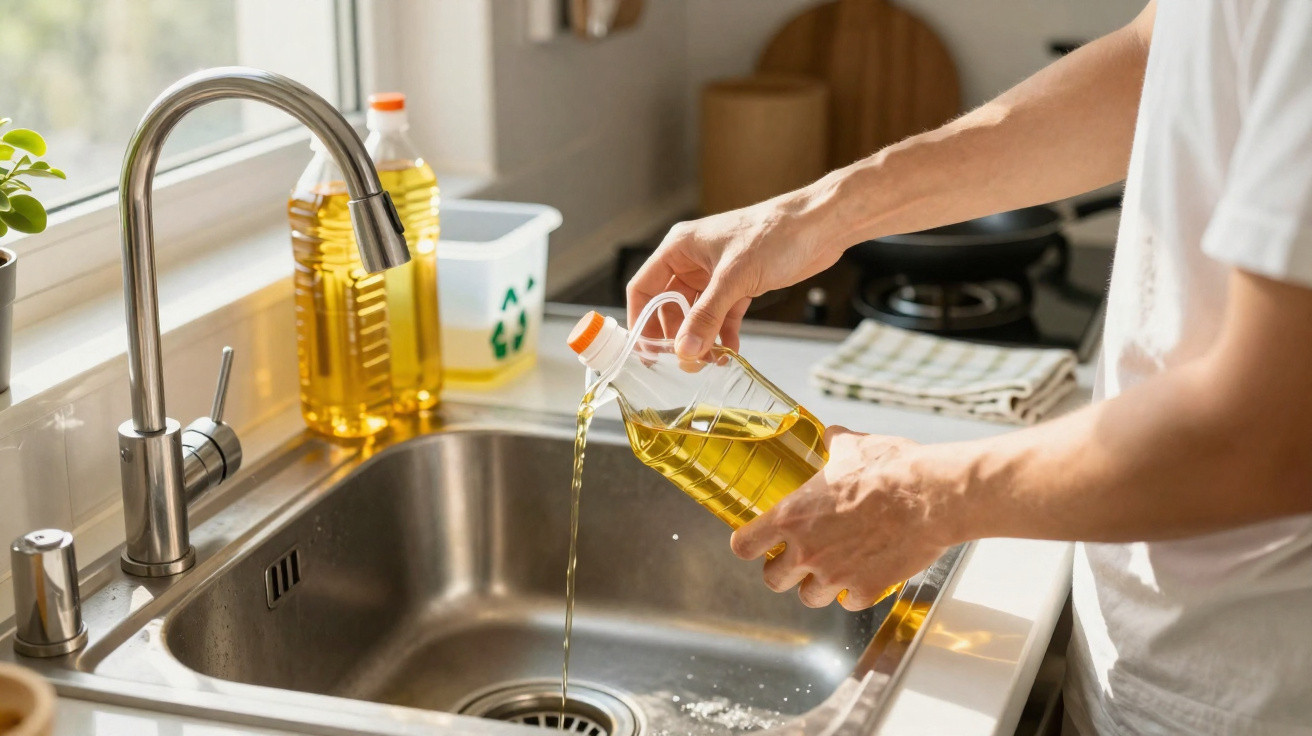
For years, I poured frying oil straight into the kitchen sink drain, assuming a little hot water would deal with it. Only when the kitchen pipe began blocking regularly did I realise how serious that mistake was. Used cooking oil is one of the biggest causes of household maintenance issues, yet few residents understand why.
Why does oil stick to the inside of pipes?
Cooking oil does not combine with water, so it does not simply travel down the pipe like other liquids. As it cools, it solidifies and clings to the inner pipe walls, creating a greasy coating that builds up with every disposal. Eventually, this layer narrows the flow of water and causes the blockages that so many households experience without knowing the reason.
This build-up often combines with soap residue and food particles washed down the sink drain, creating solid clumps inside the pipework. Once the issue reaches that stage, the remedy is no longer straightforward: it may require a pressure drain cleaner or even replacement of part of the pipe.
The issue extends beyond your kitchen sink
Oil poured down the drain does not vanish once it is out of sight. It travels through the sewer network to treatment works, where it disrupts filter operation and raises the cost of water purification. One litre of cooking oil can contaminate thousands of litres of water, making treatment slower and more expensive for the entire town or city.
How should cooking oil be disposed of correctly?
The first step is to let the oil cool completely after use; never pour it into any container while it is still hot. Afterwards, there are several easy ways to dispose of it without damaging household pipework or the environment:
- Store the oil in a sealed PET bottle and clearly label the contents on the outside.
- Take the full bottle to a used-oil collection point, often found at supermarkets and petrol stations.
- Look for local recycling co-operatives that accept oil to turn into biodiesel or soap.
- Do not combine the oil with other kitchen waste in the same container.
In smaller towns, where collection points may still be uncommon, it is worth asking the local council or health centres whether a regular collection scheme exists for this type of waste.
Can cooking oil be used again before disposal?
Before deciding to throw it away, consider how much of the oil can still be used. Quick frying at controlled temperatures leaves oil less degraded, making it suitable for more than one preparation before disposal. Straining the oil after each use to remove flour, breadcrumbs or batter residue extends its useful life in the kitchen and reduces how often it needs to be discarded.
The habit that prevents costly plumber visits
Replacing sink-drain disposal with proper cooking oil disposal is a change that takes no real effort, only attention when cleaning the pan. Keeping a dedicated container near the hob makes this part of the routine easier and removes the temptation to pour everything into running water.
The benefits are clear in everyday life: fewer drain-cleaner call-outs, less smell from grease accumulating in the drain and pipework that lasts longer without major maintenance. It is the difference between dealing with the issue before it occurs and literally paying the price later, when the plumber arrives.

















Comments
No comments yet. Be the first to comment!
Leave a Comment